Después de la Batalla de Curupaytí — History & Analysis
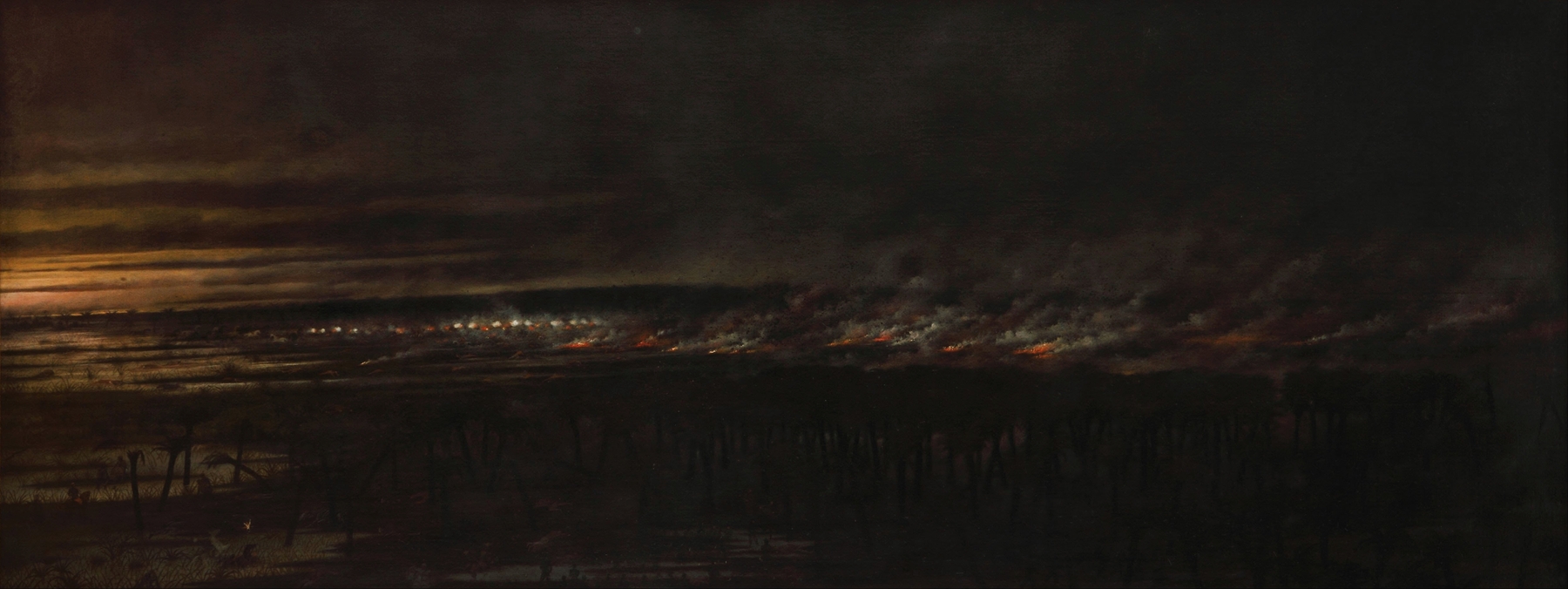
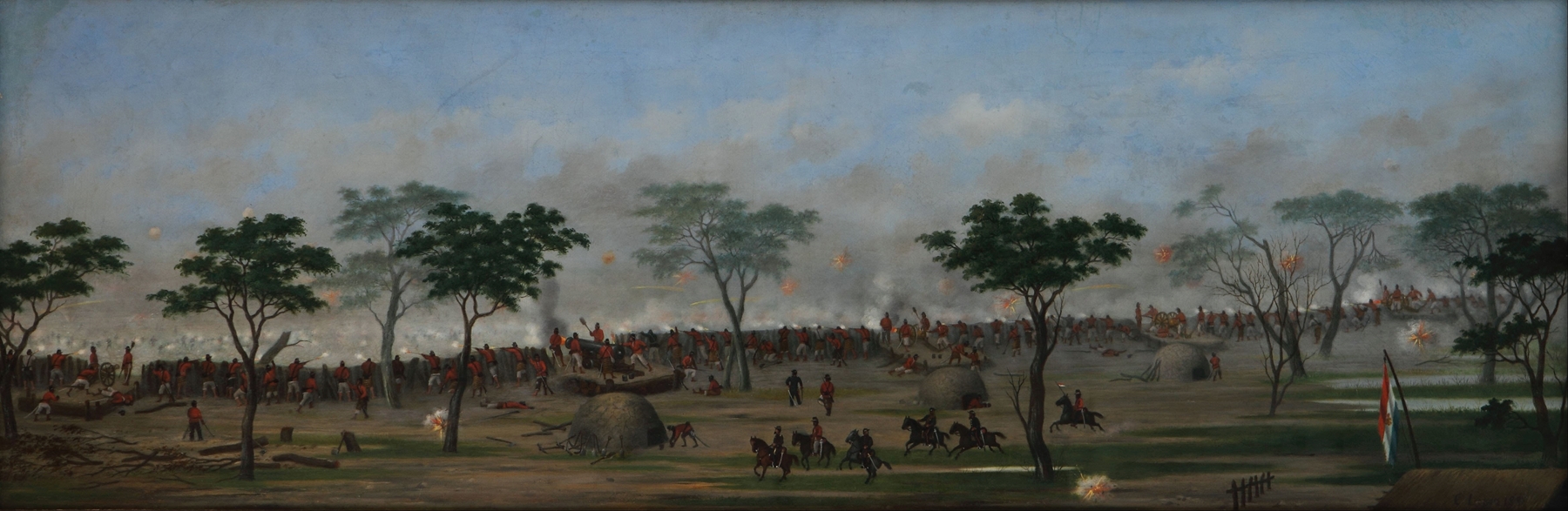
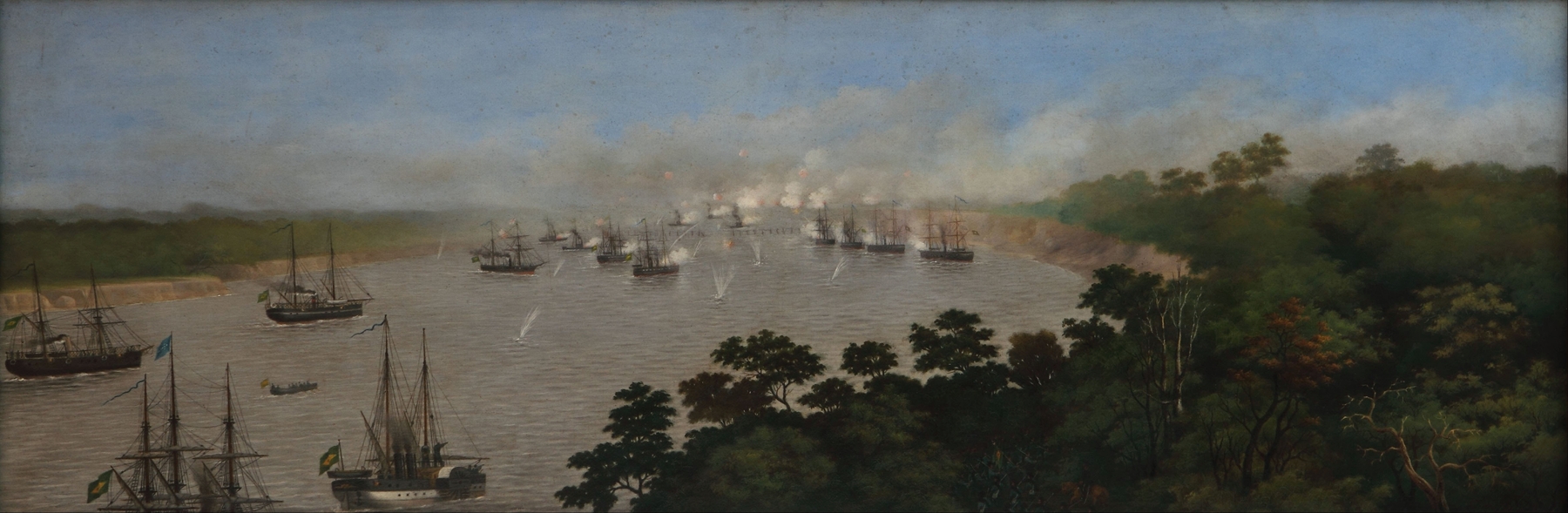
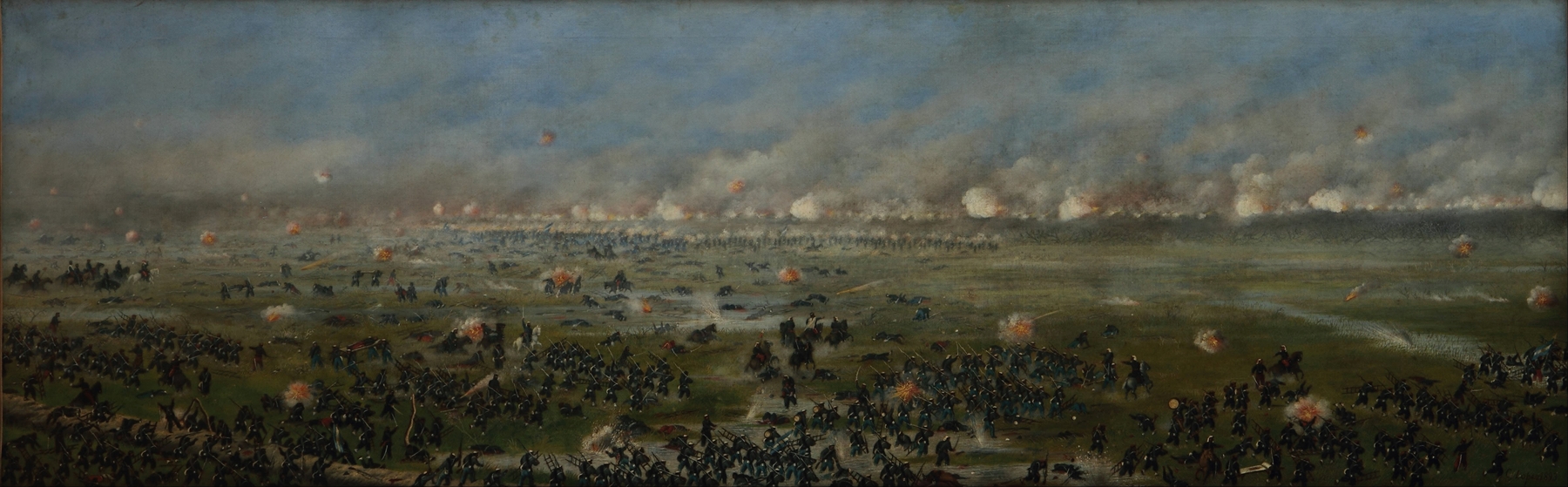
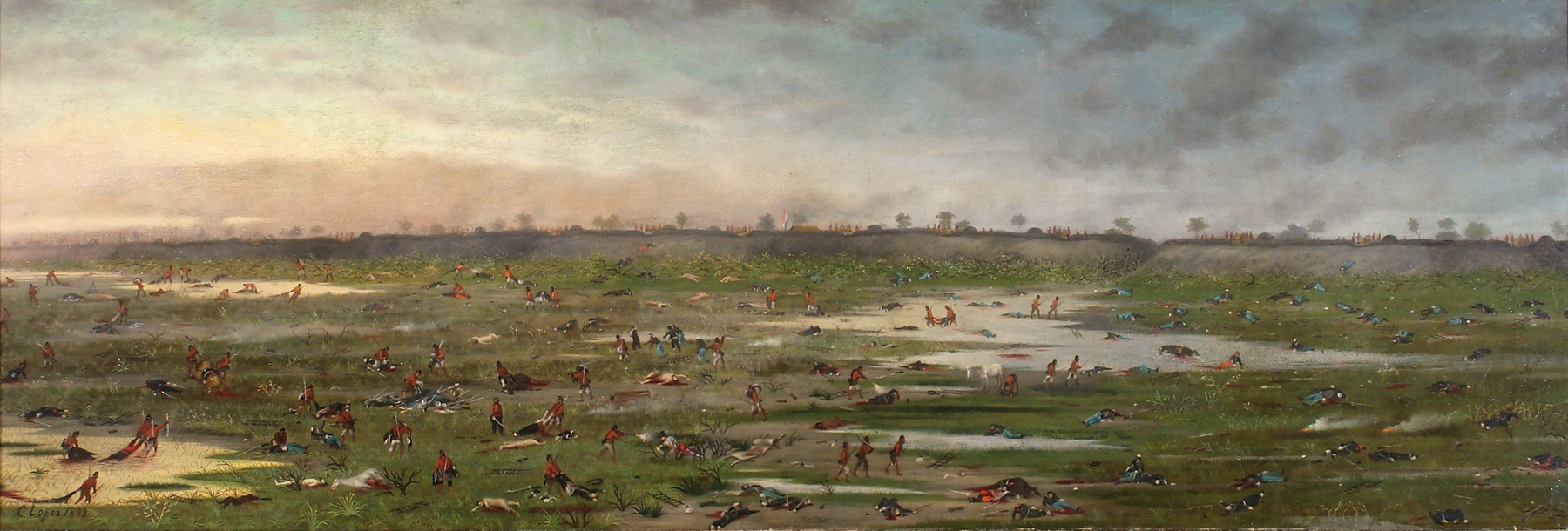
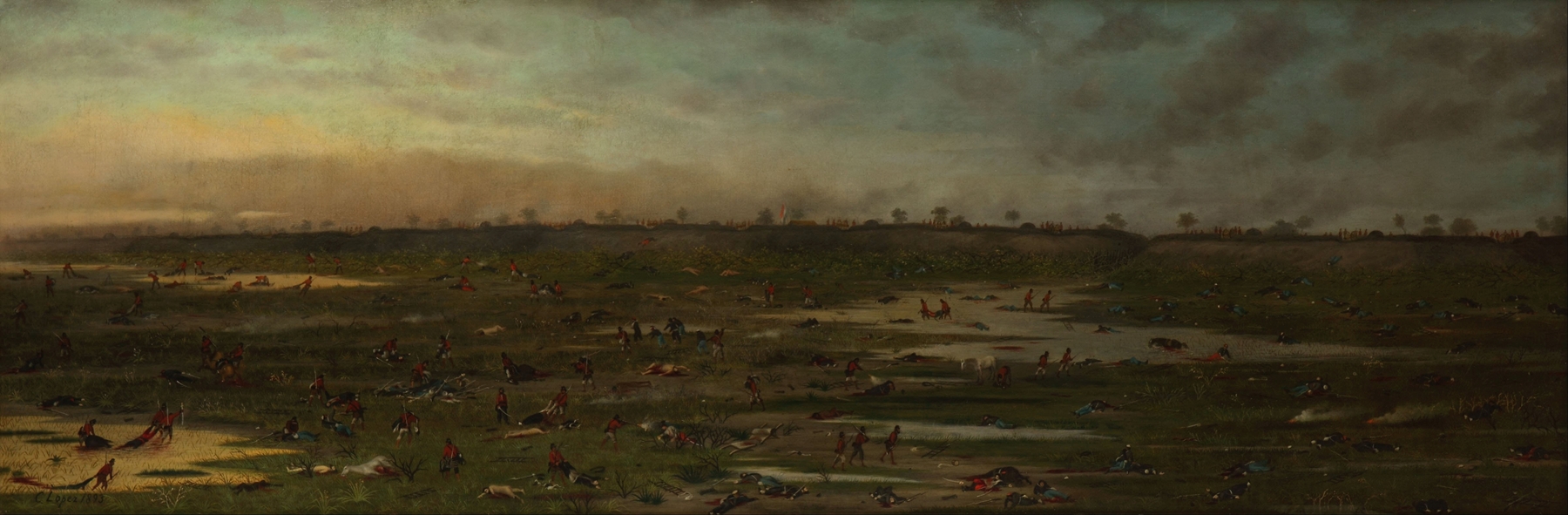
Can beauty exist without sorrow? In Después de la Batalla de Curupaytí, Cándido Lopez invites us to ponder this question as we witness the aftermath of conflict—a moment suspended in time, drenched in the poignant glow of twilight. Look closely at the center of the composition, where the remnants of battle lie stark against the landscape. The muted palette, dominated by earthy browns, deep greens, and the soft light of a setting sun, draws our gaze to the figures—wounded soldiers and the grieving, depicted with an exquisite attention to detail.
The way light dances on their faces creates a stark contrast between the brutality of war and the fragility of human life, highlighting individual stories within the collective tragedy. Amidst the chaos of fallen bodies and fragmented weapons, small gestures resonate powerfully. A soldier's outstretched hand, reaching for something lost, speaks of longing and despair. The delicate interplay of light and shadow emphasizes the emotional scars that linger long after the battle is over, suggesting that healing is often a slow, painful process.
This tension invites viewers to reflect on the duality of existence, where beauty can emerge from the darkest corners of experience. Cándido Lopez painted this work in 1893, shortly after the Paraguayan War, during which he served as a soldier. Struggling with the memories of violence, he sought to translate his trauma into art—transforming raw, painful experiences into a visual narrative that resonates with humanity. This period marked an evolving landscape in Argentine painting, as artists began to explore deeper emotional themes and the impact of war, forever changed by their personal encounters with its harsh realities.