At the Baltic coast — History & Analysis
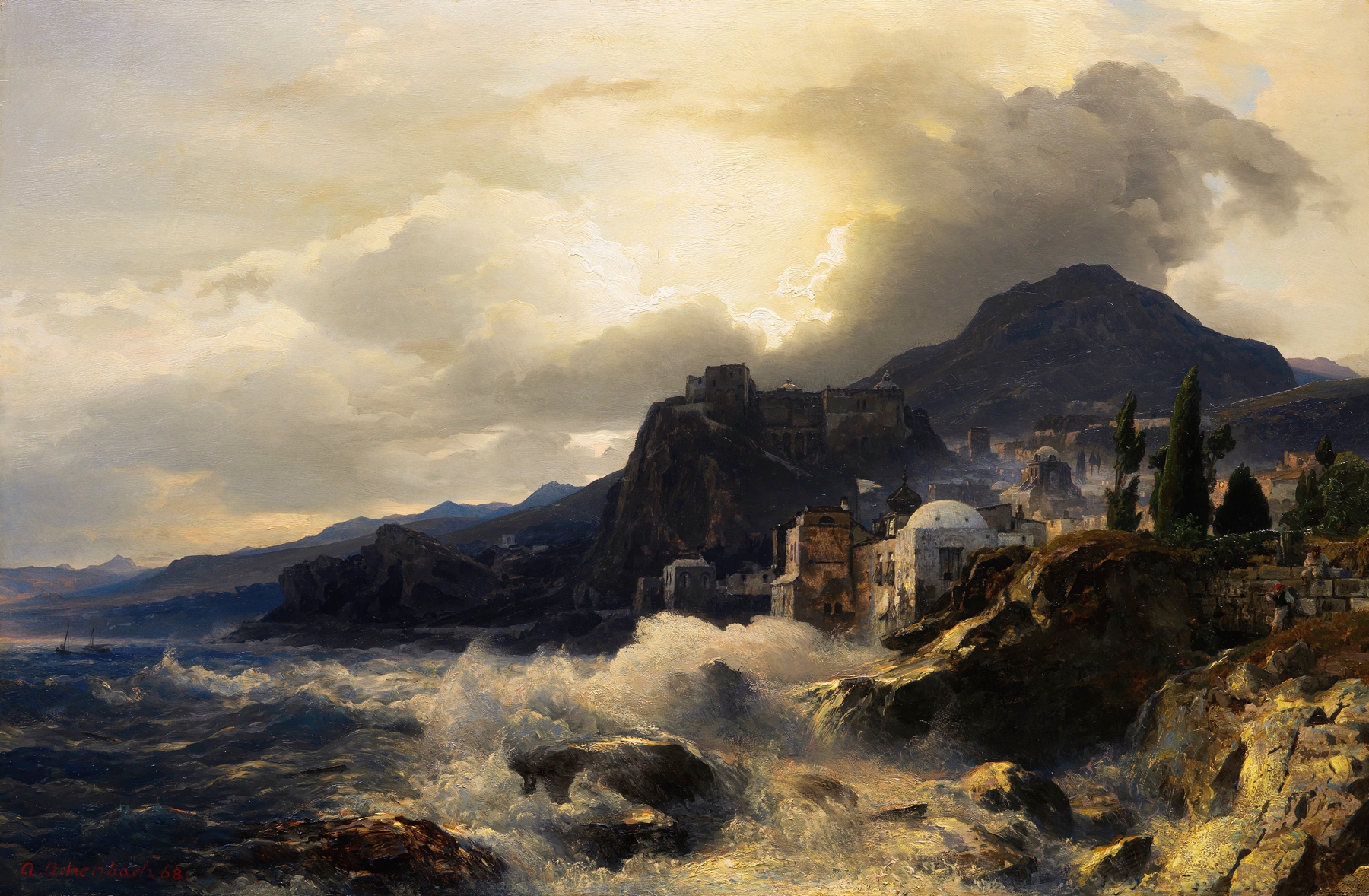
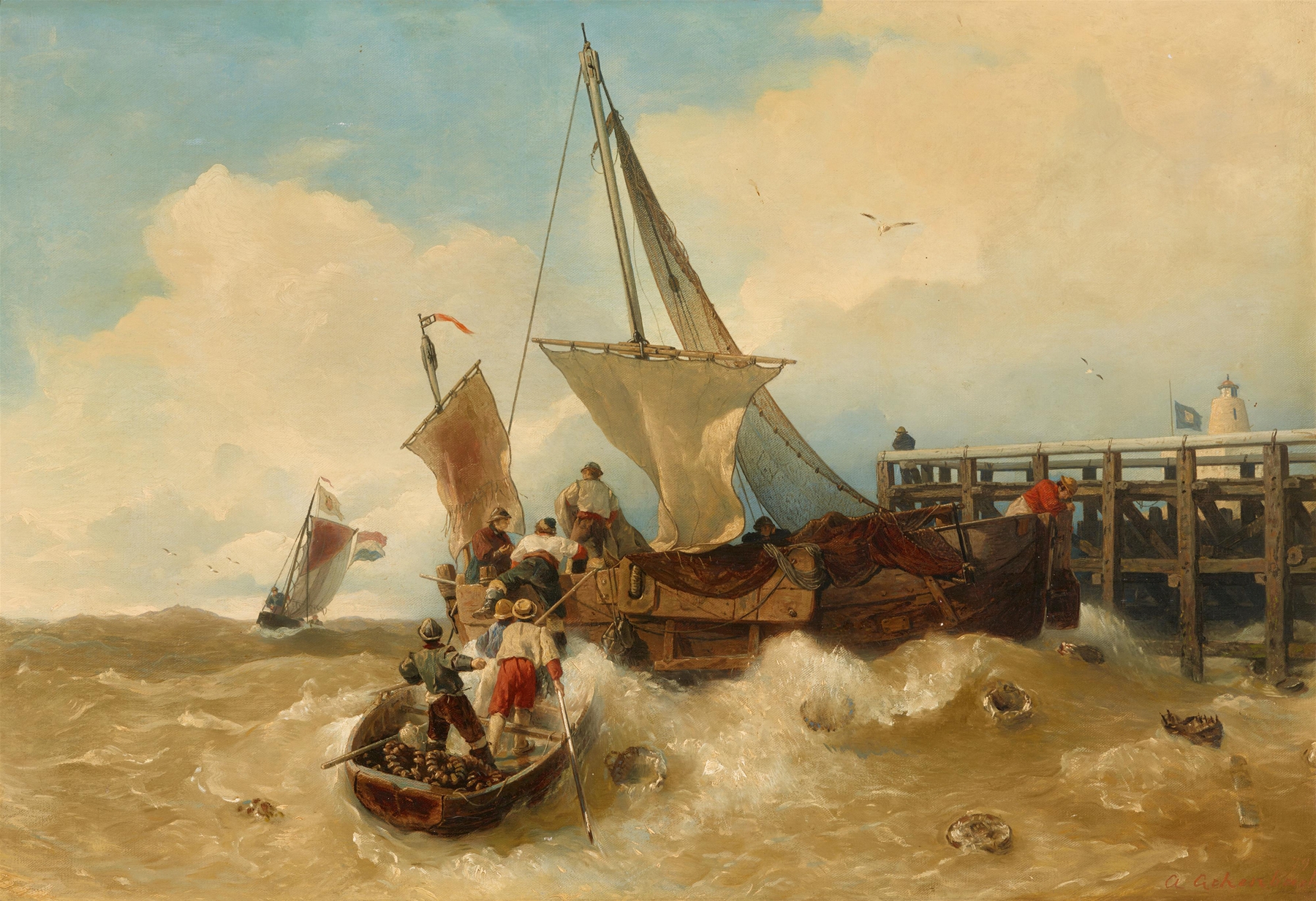
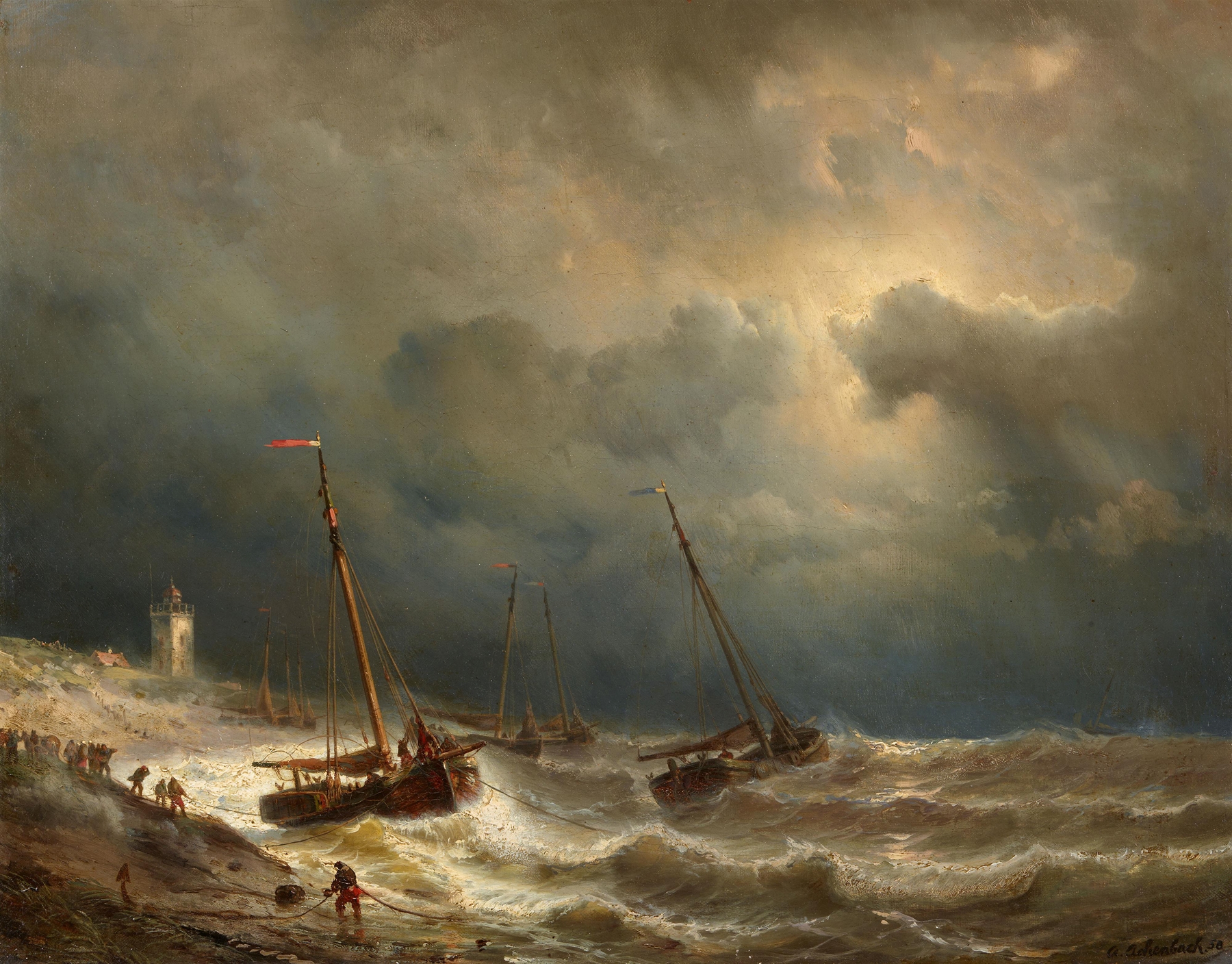
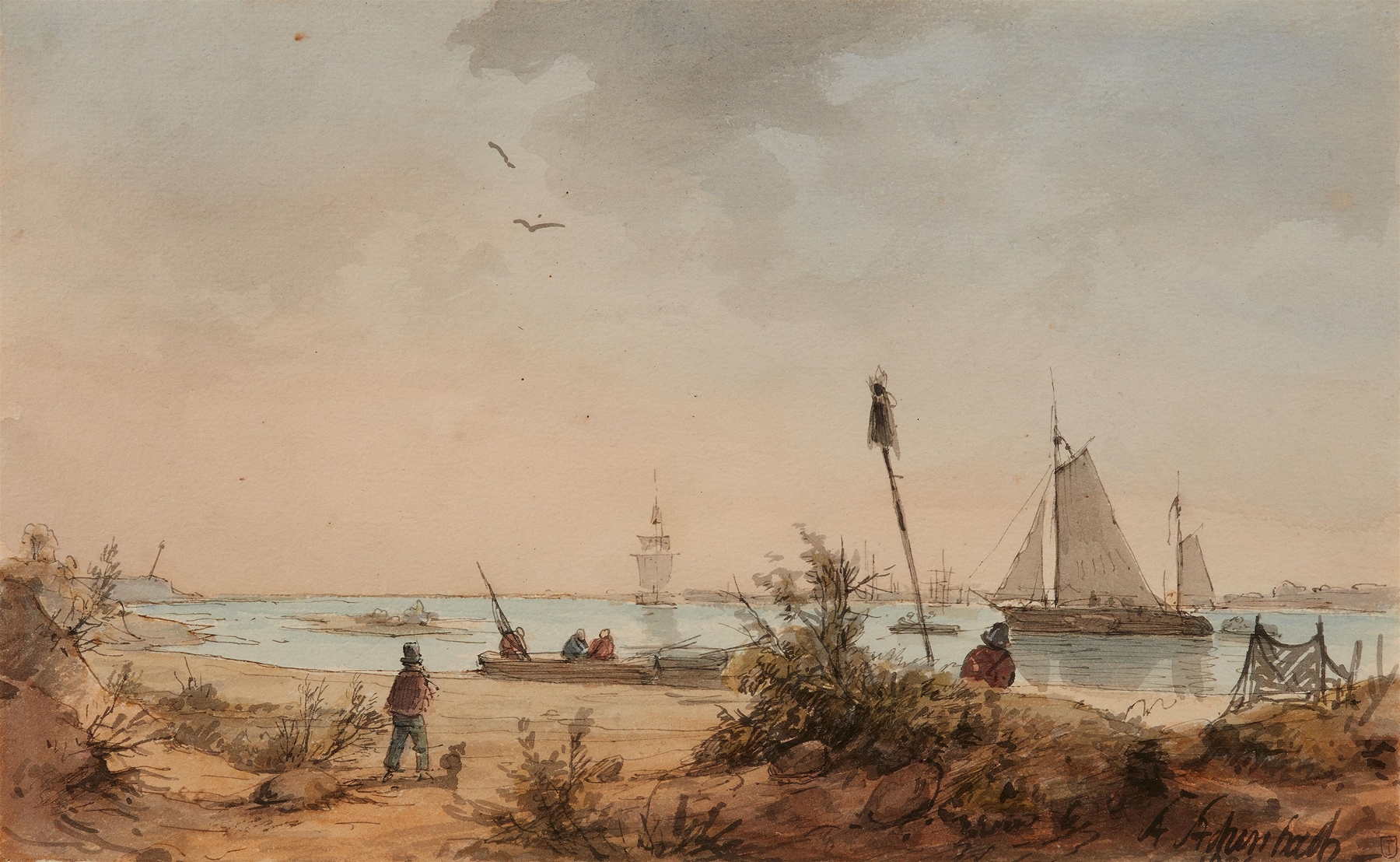
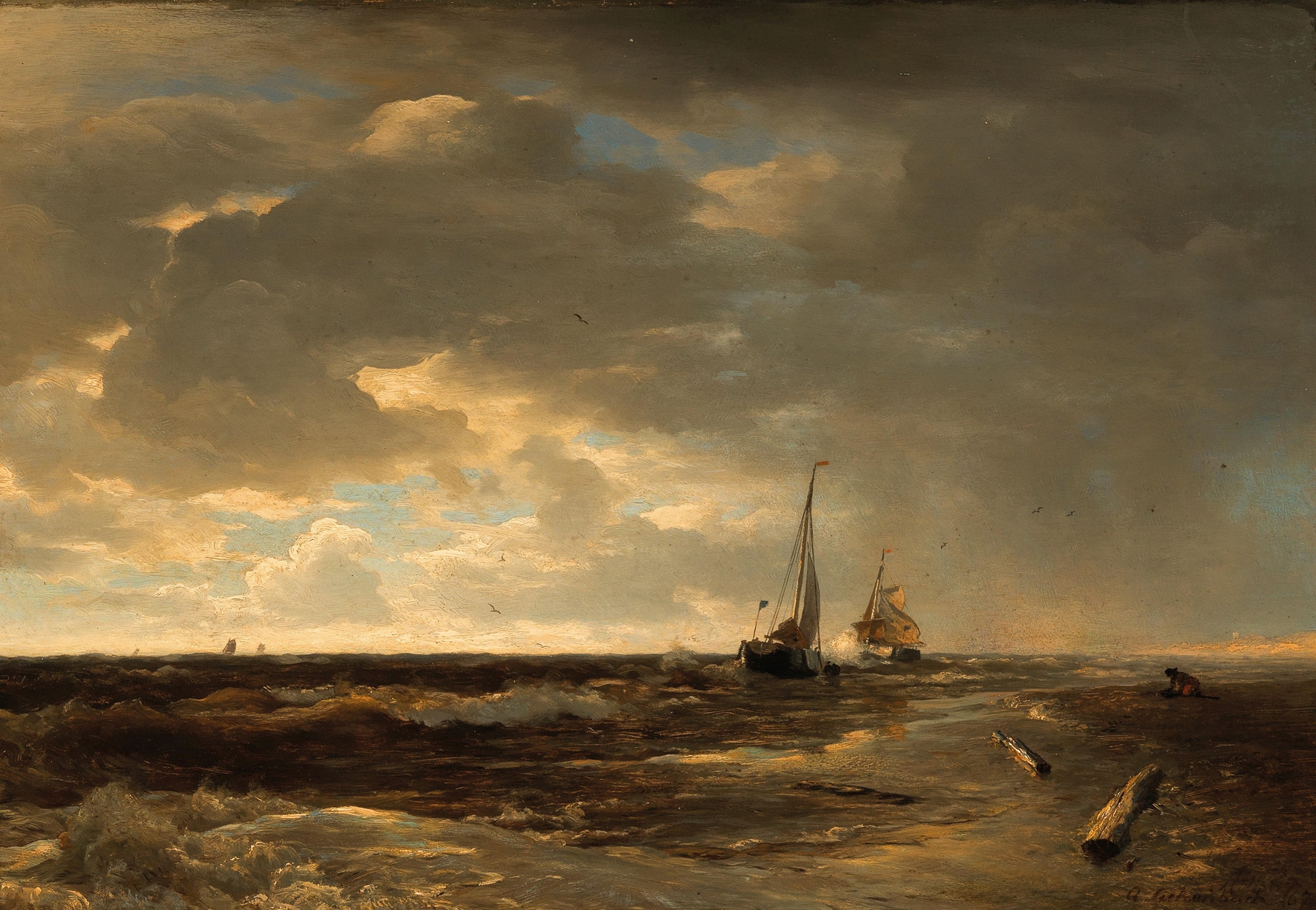
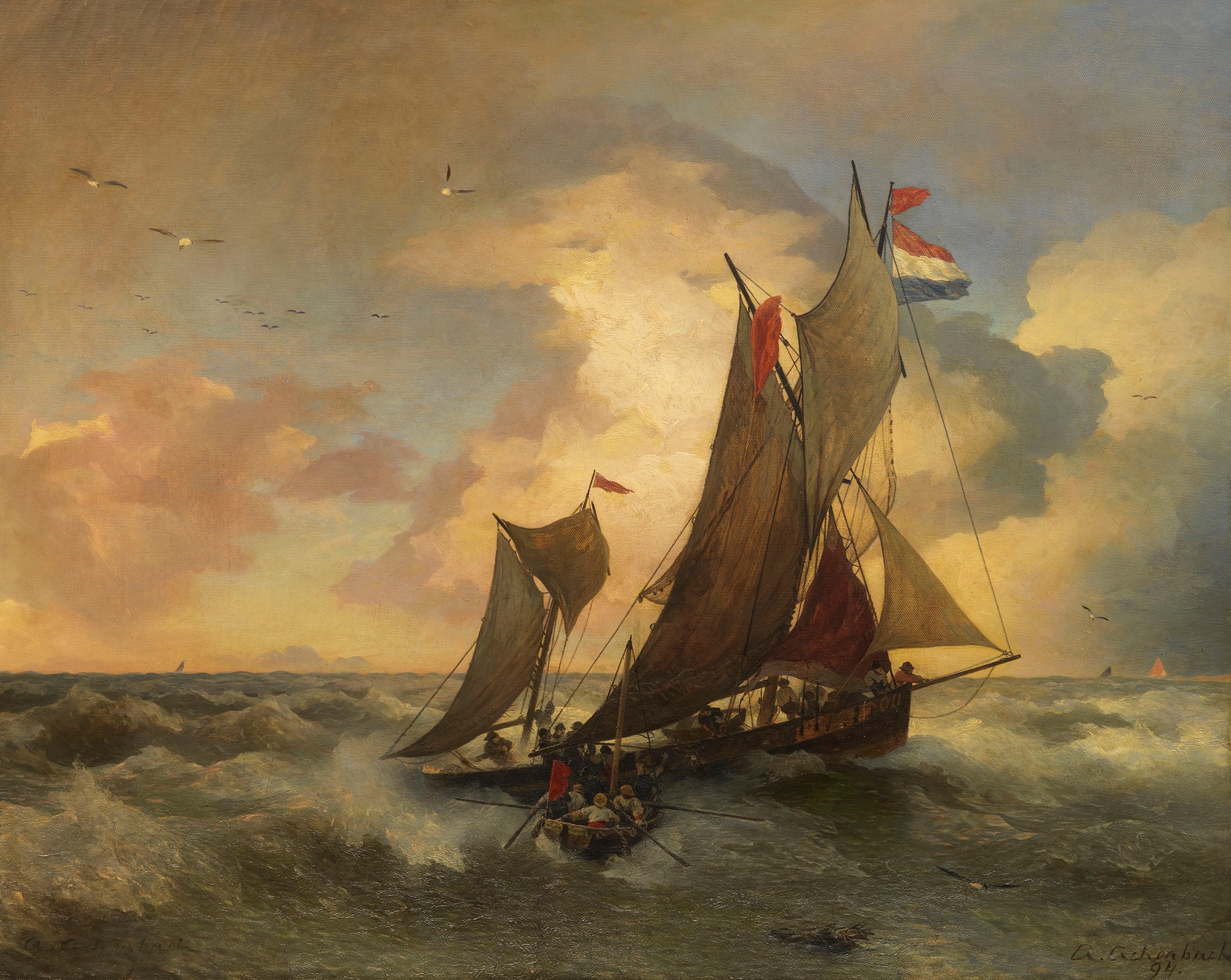
What if beauty was never meant to be finished? In At the Baltic Coast, the fragility of nature unfolds, revealing a delicate balance between tranquility and impending change. Look to the horizon where the gentle undulation of water meets the sky, a blend of soft blues and grays taking center stage. Notice how the clouds, heavy with moisture, cast fleeting shadows across the sea, their texture contrasting with the smoothness of the waves. The play of light creates an ethereal quality, drawing the eye to the distant boats that appear almost ghostly in their grace.
Achenbach's meticulous brushwork and harmonious color palette reflect his deep appreciation for the natural world, inviting viewers to linger in this serene moment. Yet, beneath the surface, there exists a palpable tension. The gentle waves, while calming, suggest a looming storm, a reminder of nature's unpredictability. The solitary figure on the shore, gazing out towards the horizon, embodies a sense of contemplation and vulnerability, capturing the emotional weight of coexistence with the elements.
This juxtaposition of beauty and foreboding reveals a deeper meditation on the passage of time and the ephemeral nature of life itself. In 1836, Andreas Achenbach painted this work while living in Germany, a time marked by a burgeoning Romantic movement that sought to explore the relationship between humanity and nature. The artist was experiencing a period of personal growth, as he began to establish himself as a prominent landscape painter. The Baltic Sea, often representing the sublime in art, served as a fitting muse, as the world around him was simultaneously evolving and confronting the complexities of the natural landscape.