Au bois de Boulogne — History & Analysis
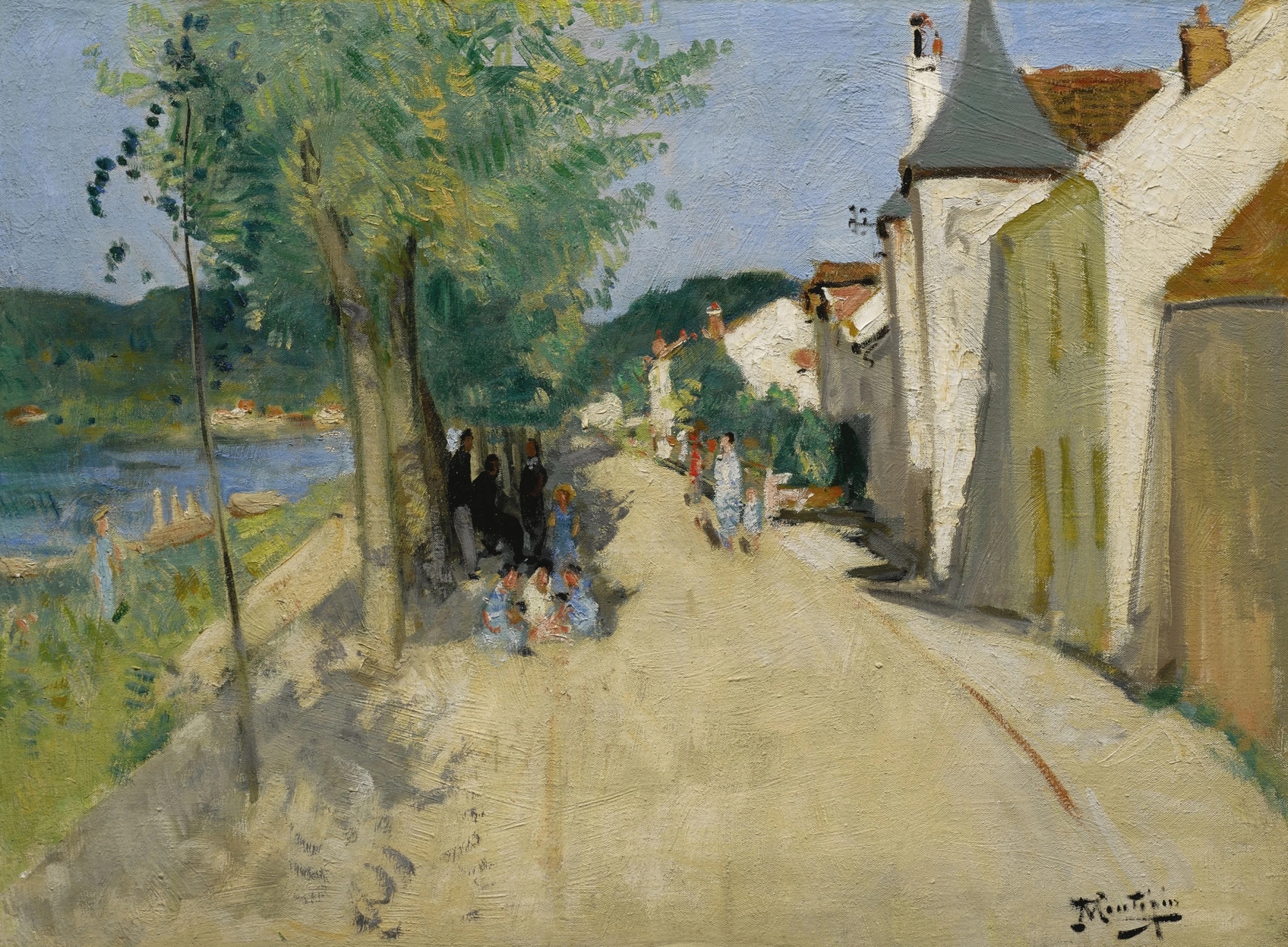
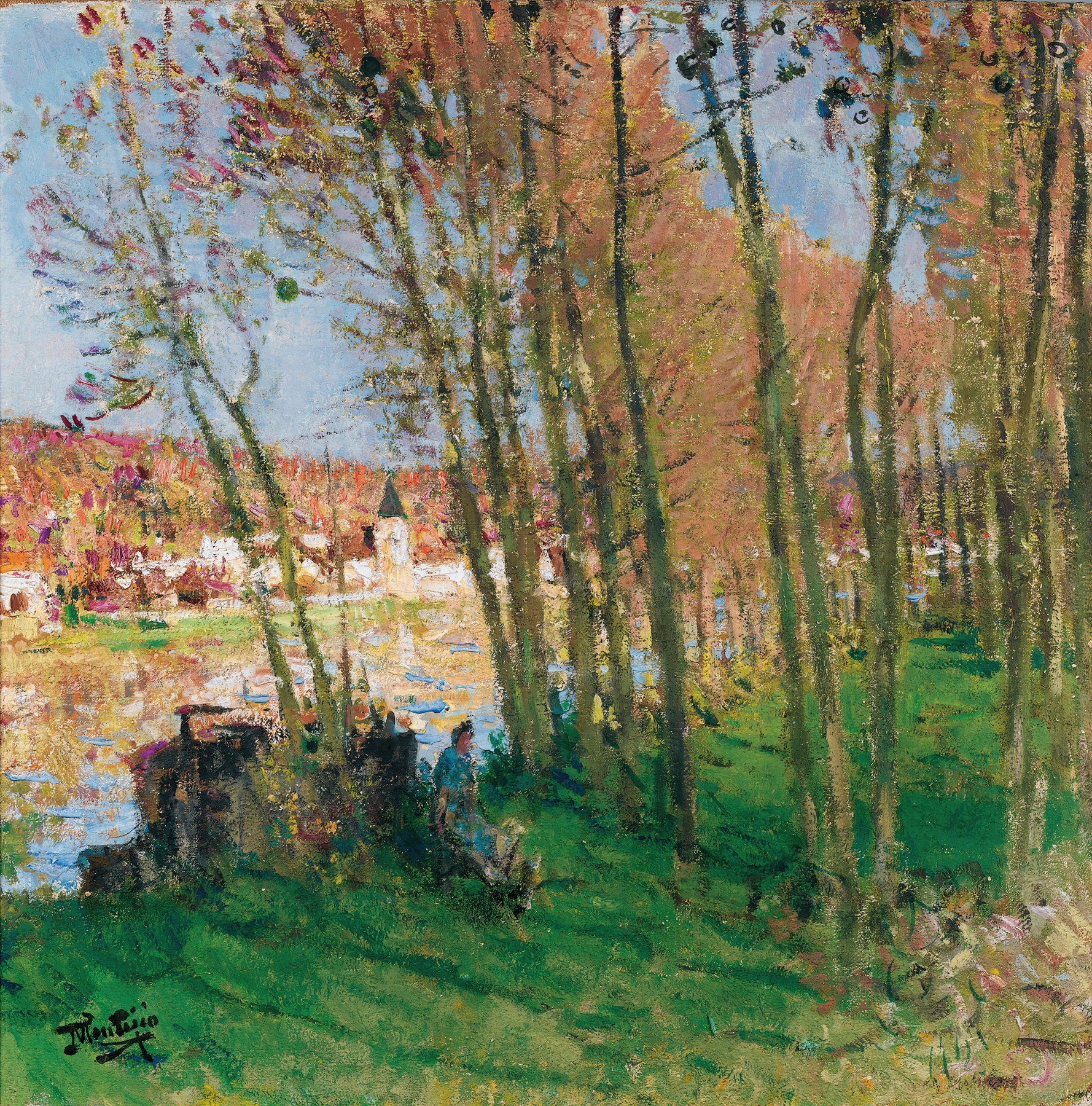
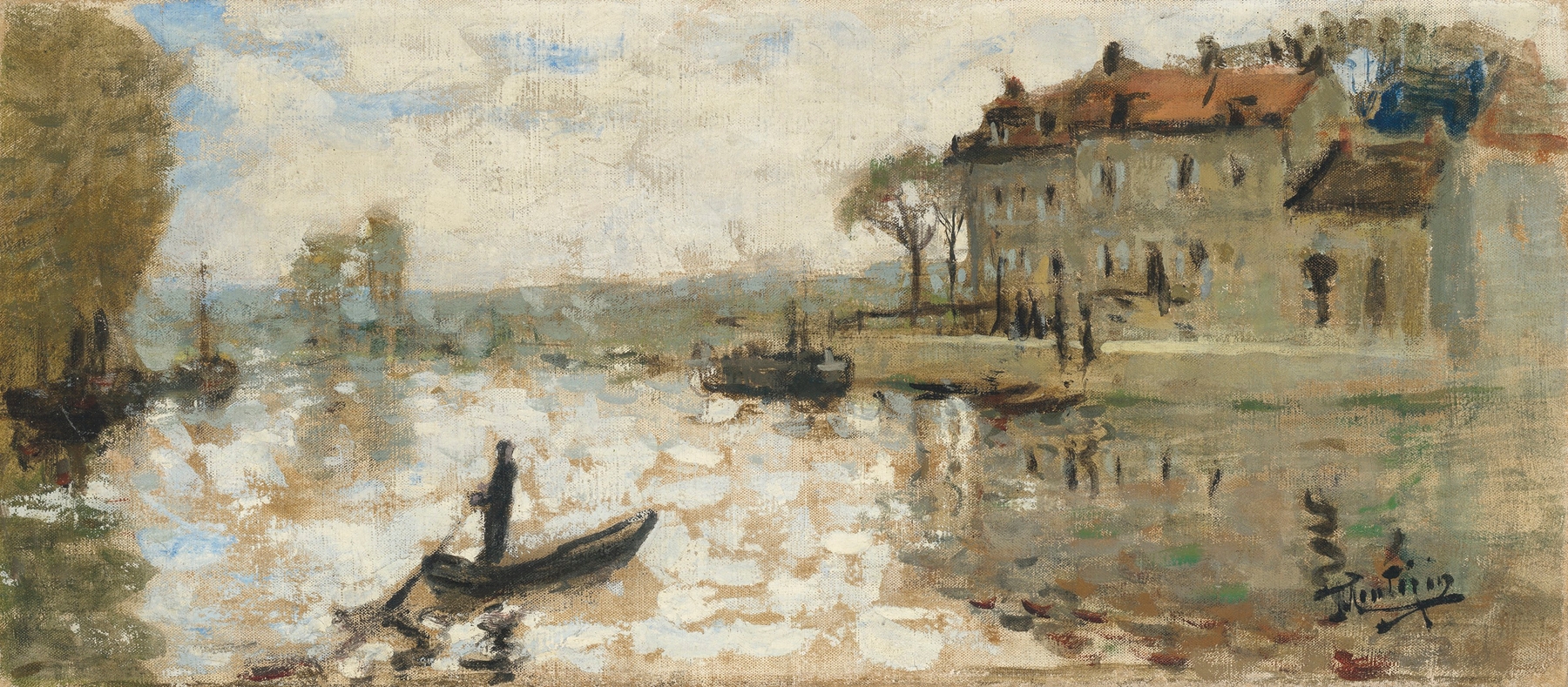
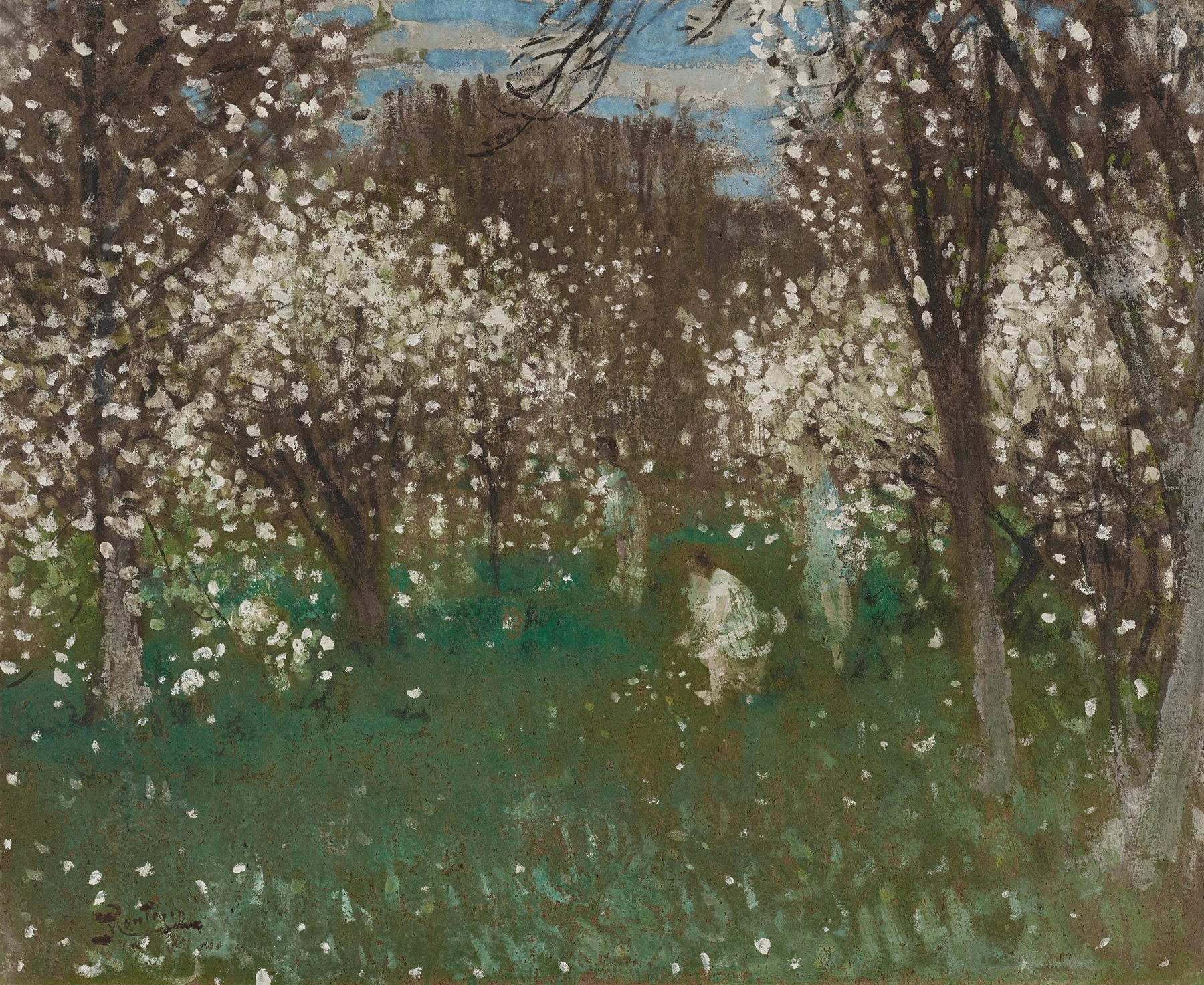
When did color learn to lie? In a world where beauty often masks deeper truths, the radiance of nature can both enchant and deceive. Look to the left at the vibrant greens and soft blues that envelop the scene, where delicate brushstrokes weave together a tapestry of foliage and reflection. Notice how the light dances across the water, creating a shimmering surface that beckons viewers to linger.
The gentle ripples ripple with hints of gold and silver, offering a dynamic interplay between movement and stillness that serves as a visual contrast to the serene landscape. Beneath this lush beauty lies an emotional tension, where the tranquility of the setting juxtaposes the underlying isolation often felt within nature. The figures present are mere silhouettes, hinting at stories untold and lives not fully realized, emphasizing a sense of solitude within the vibrancy.
This contrast between exuberance and loneliness invites contemplation on the nature of happiness and the masks we wear in our lives. In 1920, Montézin created this piece during a period marked by post-war recovery in France, as artists began to explore new expressions of emotion through color and light. The art world was shifting towards modernism, while Montézin focused on translating the beauty of the natural world with an Impressionist approach, capturing both the revelatory and elusive qualities of beauty that continue to resonate today.