Autumn Landscape. Frederiksborg Castle in the Middle Distance — History & Analysis
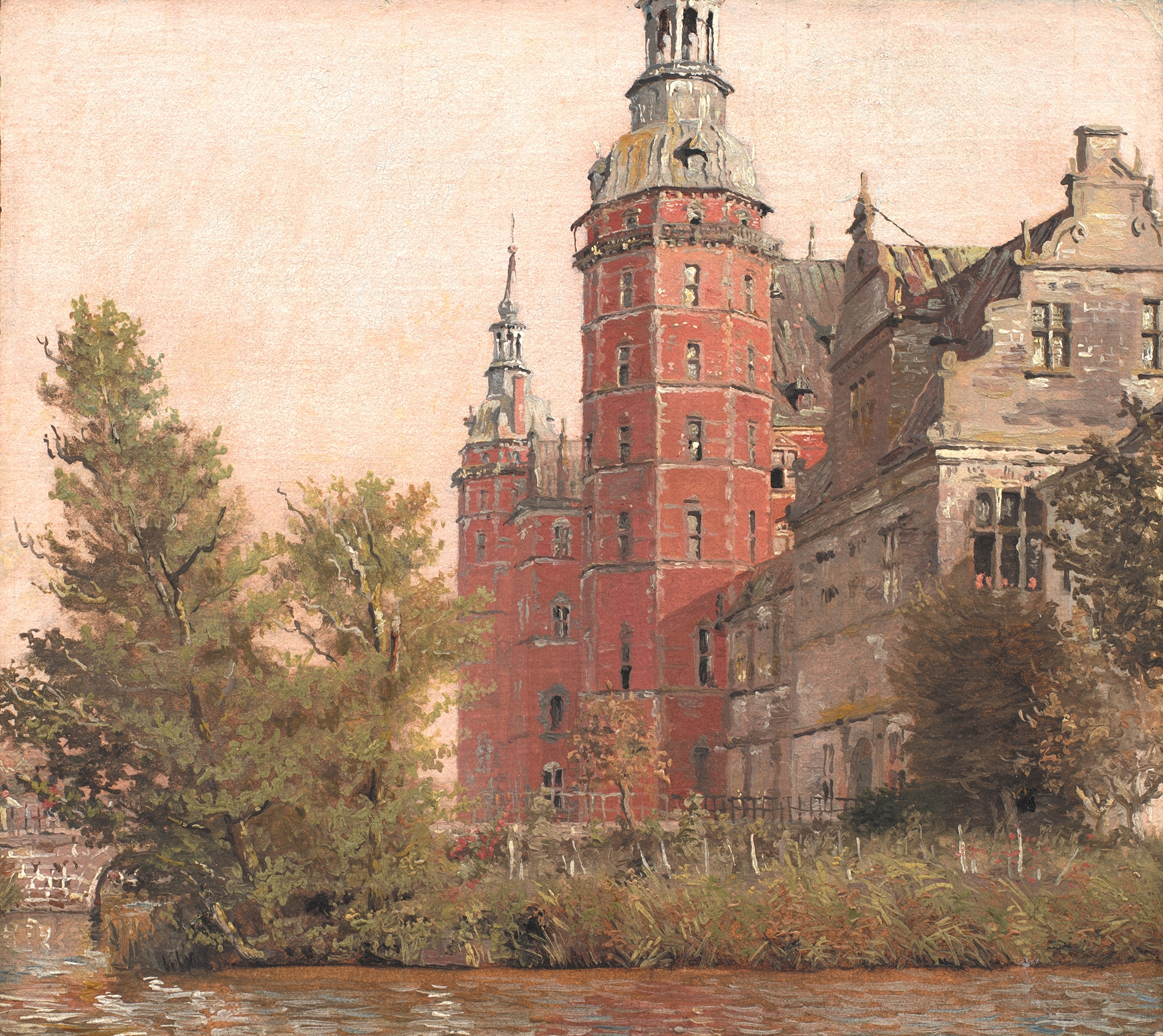
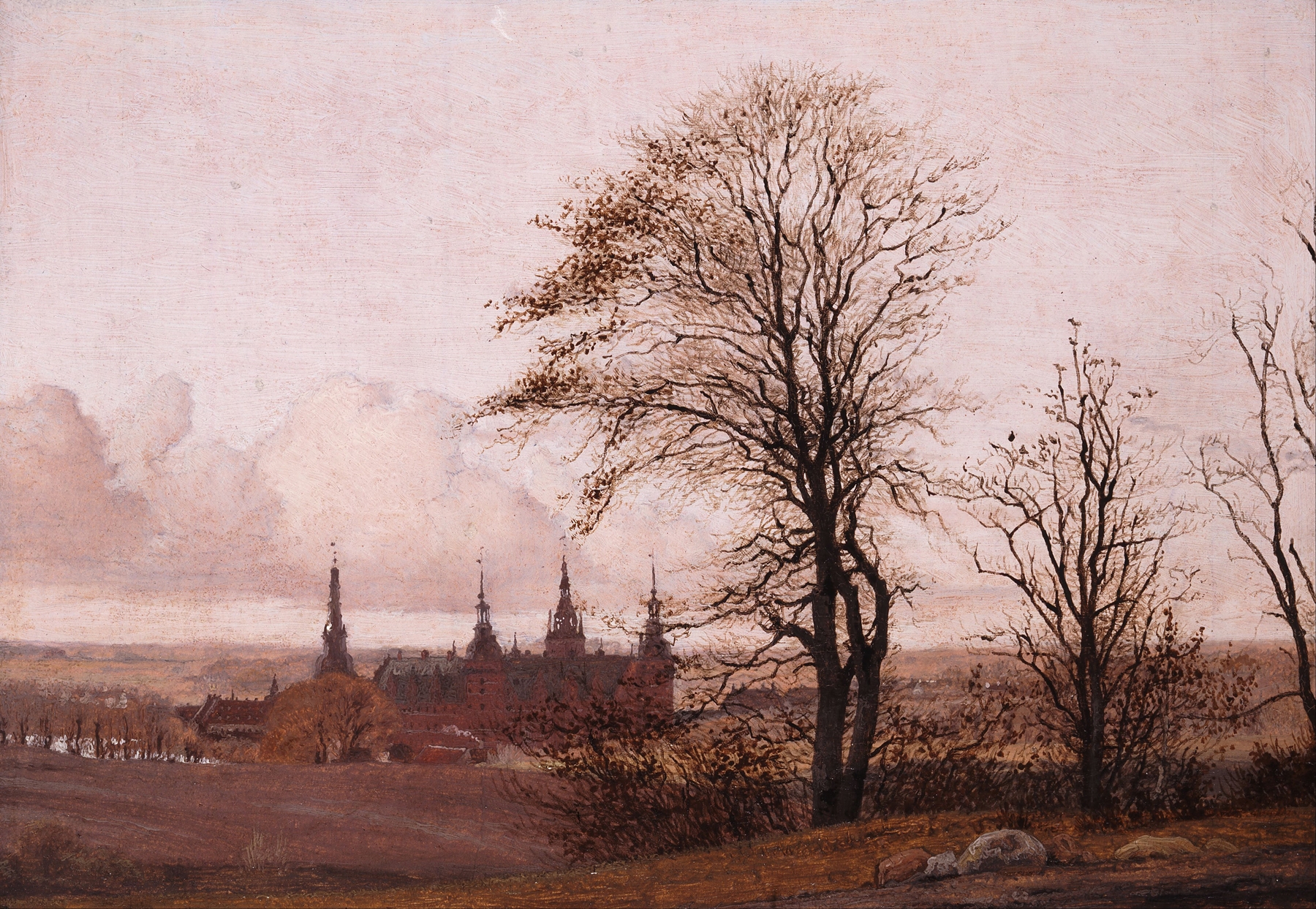
Could a single brushstroke hold eternity? In Autumn Landscape. Frederiksborg Castle in the Middle Distance, the artist encapsulates a fleeting moment where nature and structure converge in captivating harmony, urging us to reflect on the illusion of time and permanence. Look to the left at the vibrant bursts of amber and gold that emerge from the autumn foliage, each leaf meticulously crafted to evoke a sense of seasonal transition.
The castle, standing resolutely against the backdrop of a softening sky, draws the eye to its intricate details, where light dances across the turrets, revealing a delicate interplay of shadow and illumination. The artist's technique, employing fine brushwork and layered colors, creates a rhythmic flow that guides the viewer’s gaze through the serene landscape. Notice the gentle contrast between the lush, lively foreground and the more subdued tones of the castle and sky, each element resonating with its own emotional weight. The overall composition subtly speaks of the passage of time—the vibrant autumn colors hinting at decay and change while the steadfast structure of the castle represents endurance and memory.
This duality enriches the experience, prompting contemplation of both nature's cycles and humanity's lasting imprints upon it. In the years 1837 to 1838, the artist painted this work amid a period of personal growth and reflection, marking his ascent within the Danish Golden Age of painting. The world around him was shifting, with Romanticism gaining prominence, yet Købke found inspiration in the tranquil beauty of his homeland, translating his experiences into landscapes that resonate with both nostalgia and hope.