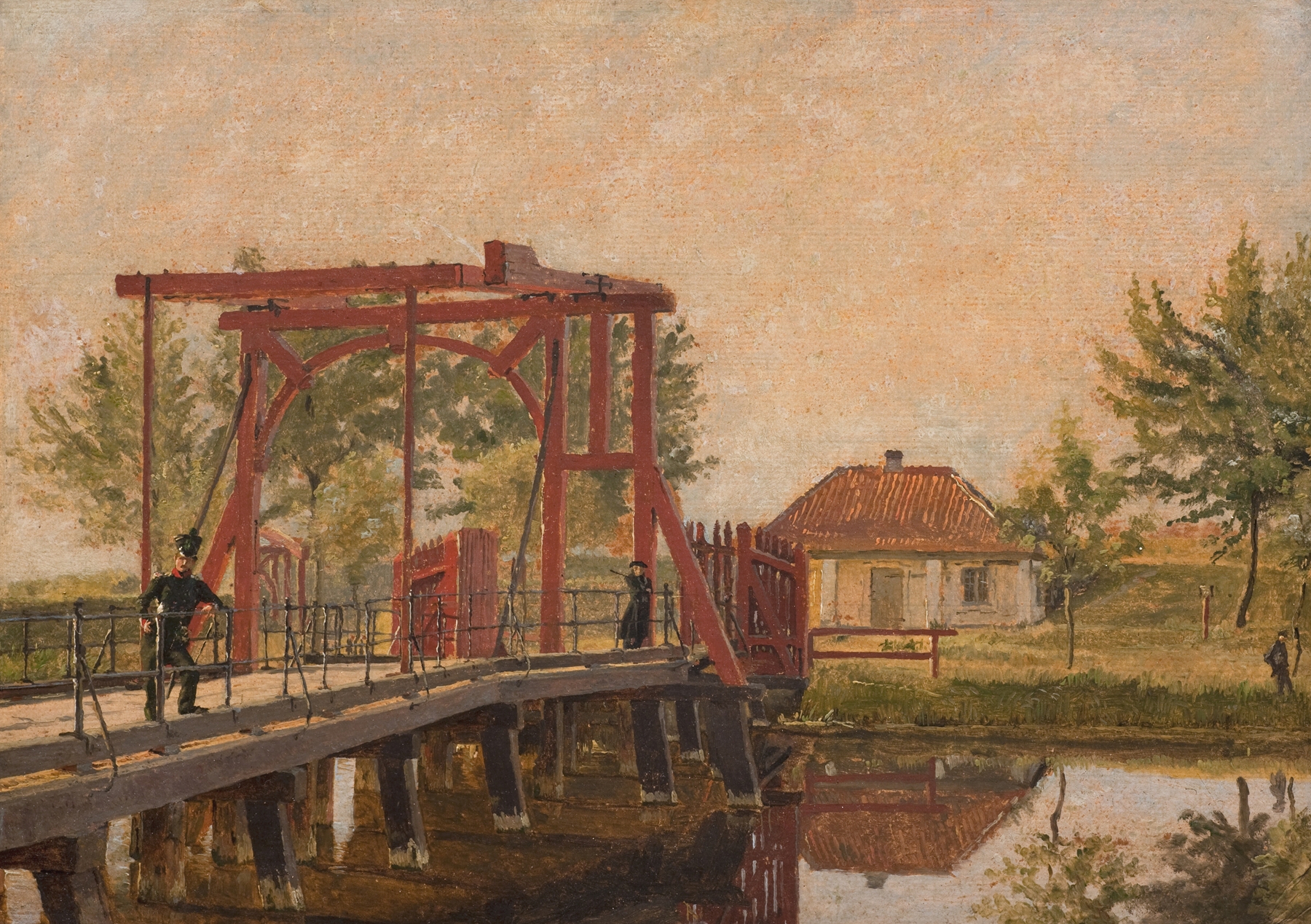
The Northern Drawbridge to the Citadel in Copenhagen — History & Analysis
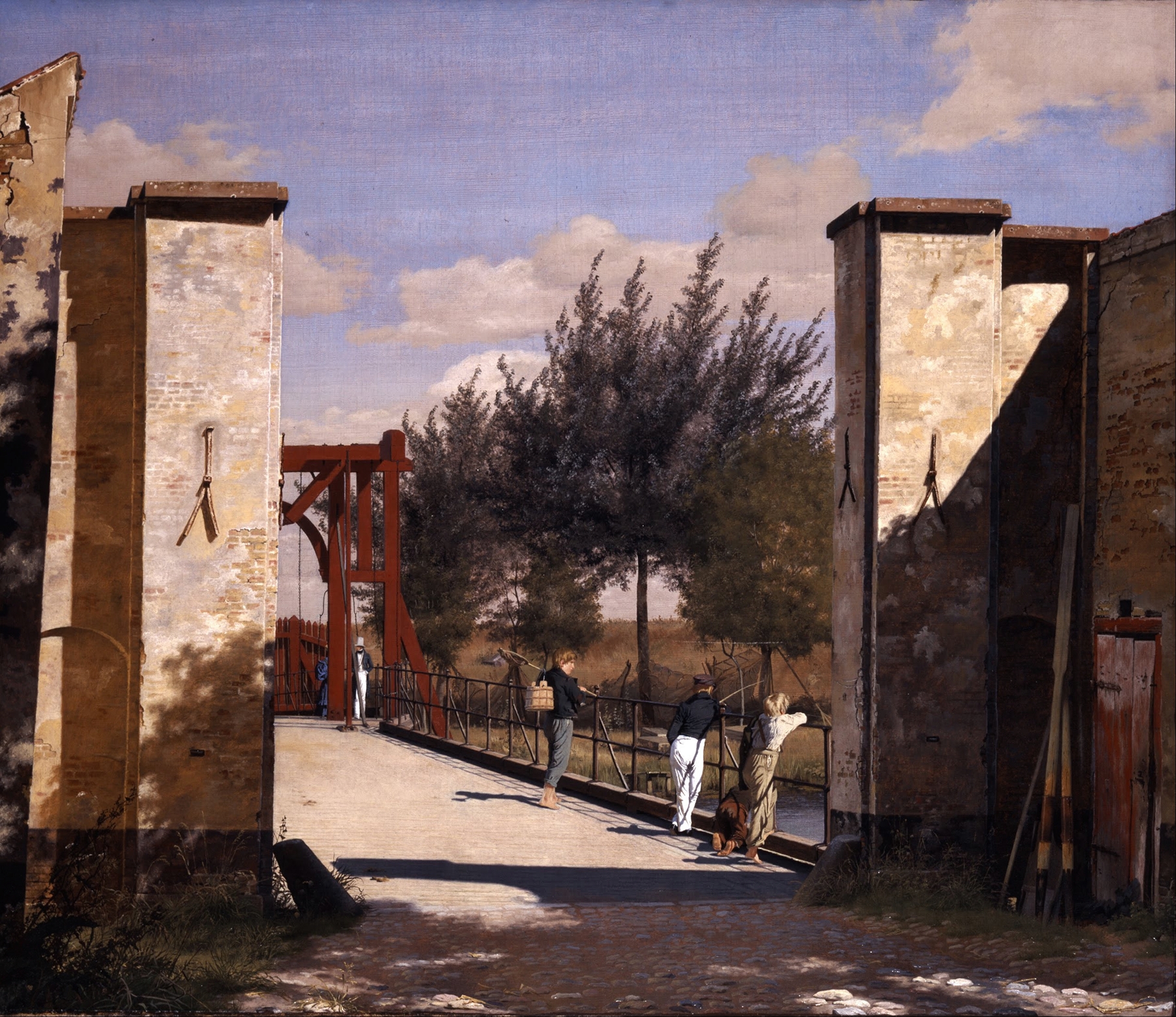
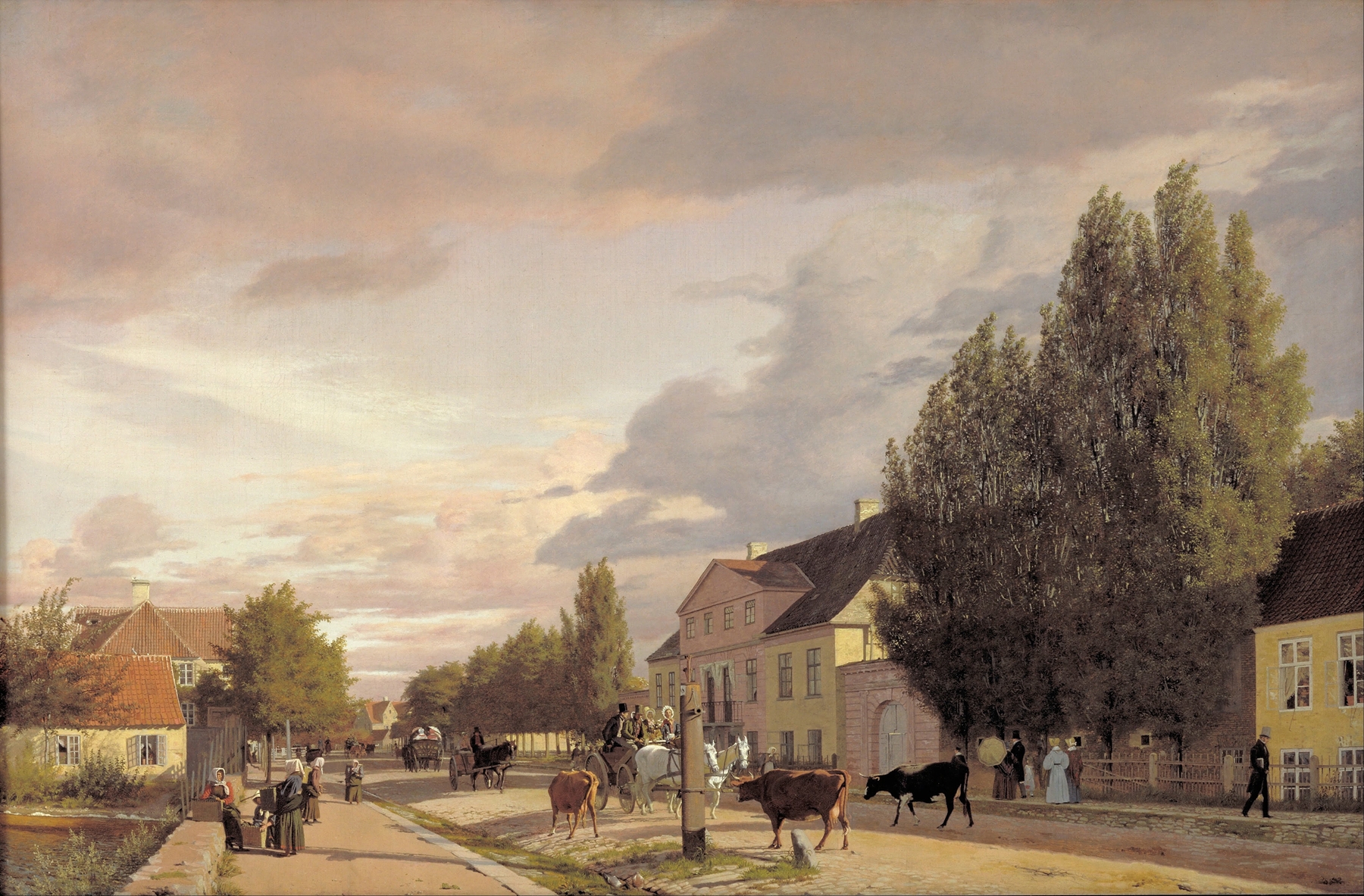
“Between color and silence, truth hides.” In the quiet expanse of this painting, movement is both a whisper and a shout, where subtle brushstrokes convey the energy of life and passage. Look closely at the foreground, where the drawbridge stretches across the water, inviting you into the scene. The meticulous detail of the cobblestones, each one defined by shadow, guides your gaze to the figures traversing the bridge. Notice how the vibrant blues and greens of the landscape contrast starkly with the muted tones of the structures, creating a dynamic interplay that breathes life into the stillness.
The play of light dances across the water’s surface, capturing a moment where serenity meets transition. Delve deeper, and you can sense the tension between permanence and impermanence. The bridge, a symbol of connection, stands firmly against the fluidity of the water, hinting at the transient nature of human endeavors. Each person crossing appears caught between worlds, embodying movement yet suspended in time.
The careful arrangement of elements evokes a narrative of both isolation and community, suggesting the ongoing journey of life against the backdrop of a steadfast city. During the years from 1835 to 1839, the artist painted this piece in Copenhagen, a city grappling with modernization and the reverberations of change. While navigating a burgeoning artistic identity, he found himself influenced by Romanticism’s embrace of emotion and natural beauty. This work reflects not only his personal growth but also the shifting tides of an era rich in artistic innovation and the complexities of urban life.