View of the Bay near the Copenhagen Limekiln Looking North. A Quiet Summer Afternoon — History & Analysis
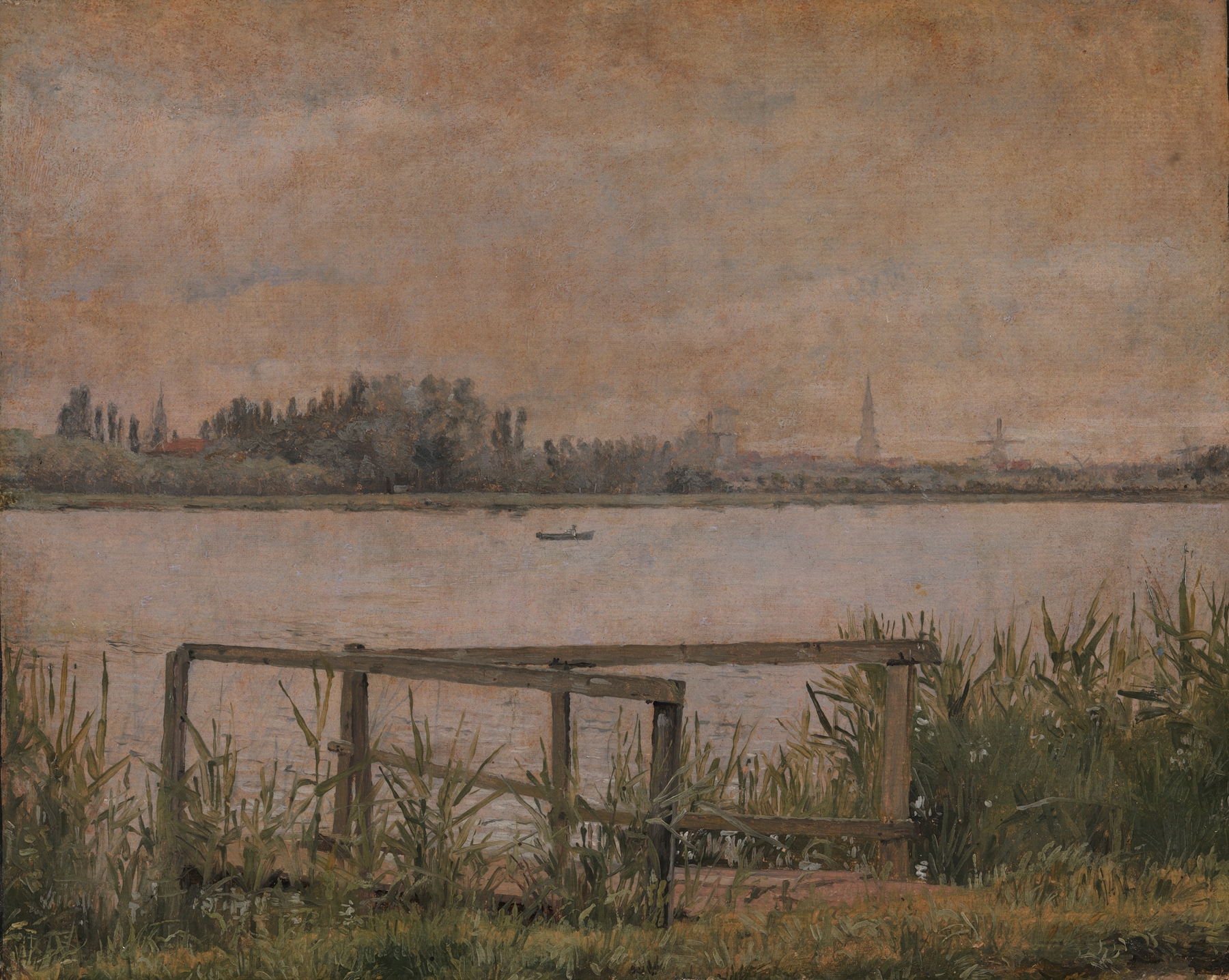
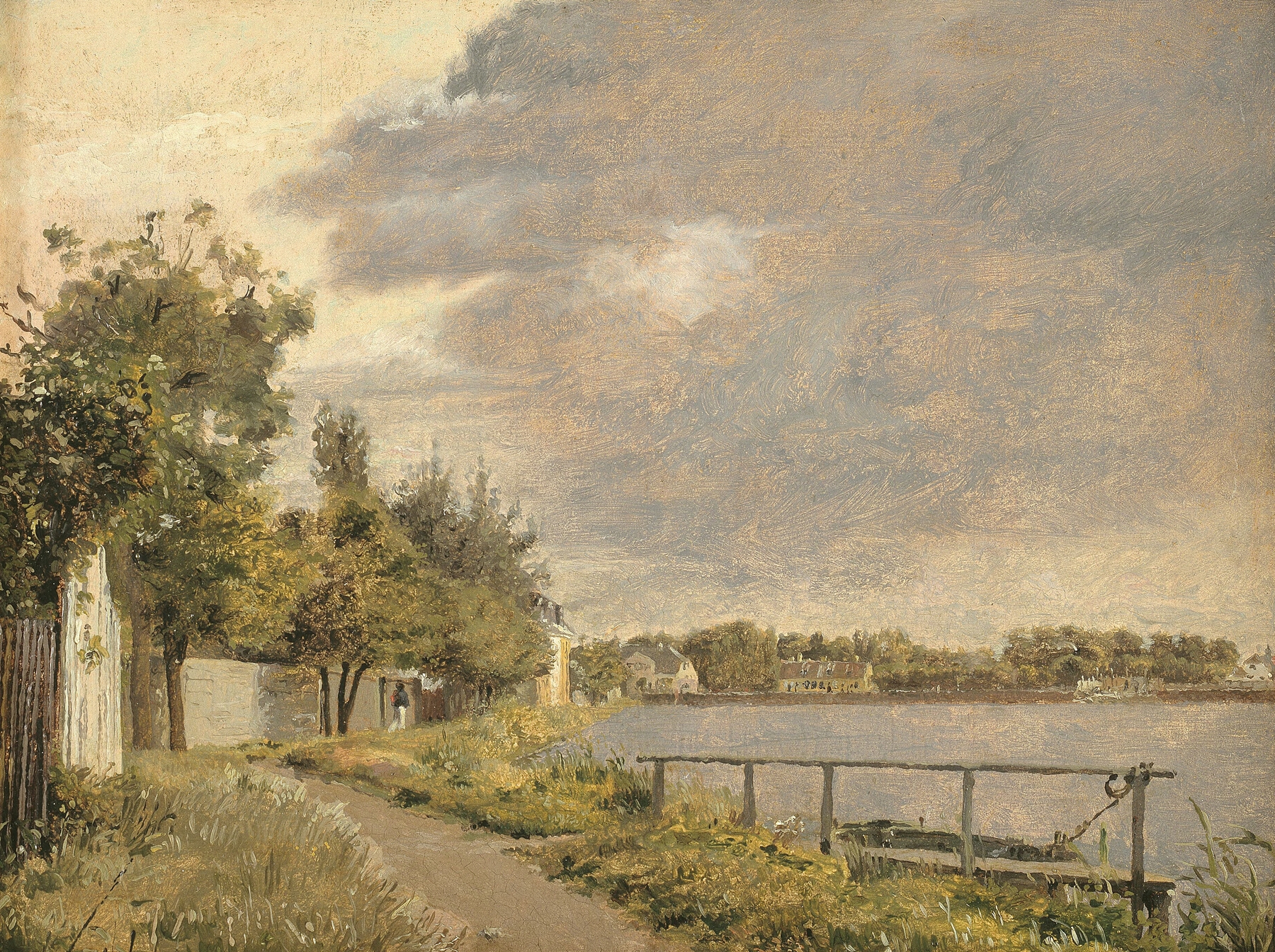
What secret hides in the quiet of the canvas? In View of the Bay near the Copenhagen Limekiln Looking North. A Quiet Summer Afternoon, tranquility cloaks an unsettling tension, inviting reflection beyond mere pastoral beauty. Focus on the serene bay, where gentle ripples dance across the water's surface, reflecting soft hues of blue and green. Look to the left, where a humble limekiln stands, its rugged form juxtaposed against the delicate landscape and vibrant flora.
The light, filtered through the leafy branches overhead, paints a soothing yet deceptive calm, whispering tales of nature's duality. However, within this idyllic scene, a tension simmers beneath its surface. The limekiln, a relic of industry, hints at humanity's disruptive hand on nature. These symbols of labor and progress cast a shadow over the serene beauty, revealing the violence that often lurks behind human advancements, even in a summer afternoon's embrace.
The softness of the colors belies the harsh realities of life — a juxtaposition of peace and the potential for destruction that the industrial world brings. In 1837, Christen Købke painted this piece during a period of significant change in Denmark, where industrialization began to reshape landscapes and lives alike. This era marked a transition in art, as artists started to depict not just beauty but also the underlying complexities of their environment. The work reflects his keen observation of the world around him, capturing both the serenity of a summer afternoon and the silent struggles that lay just beyond the horizon.