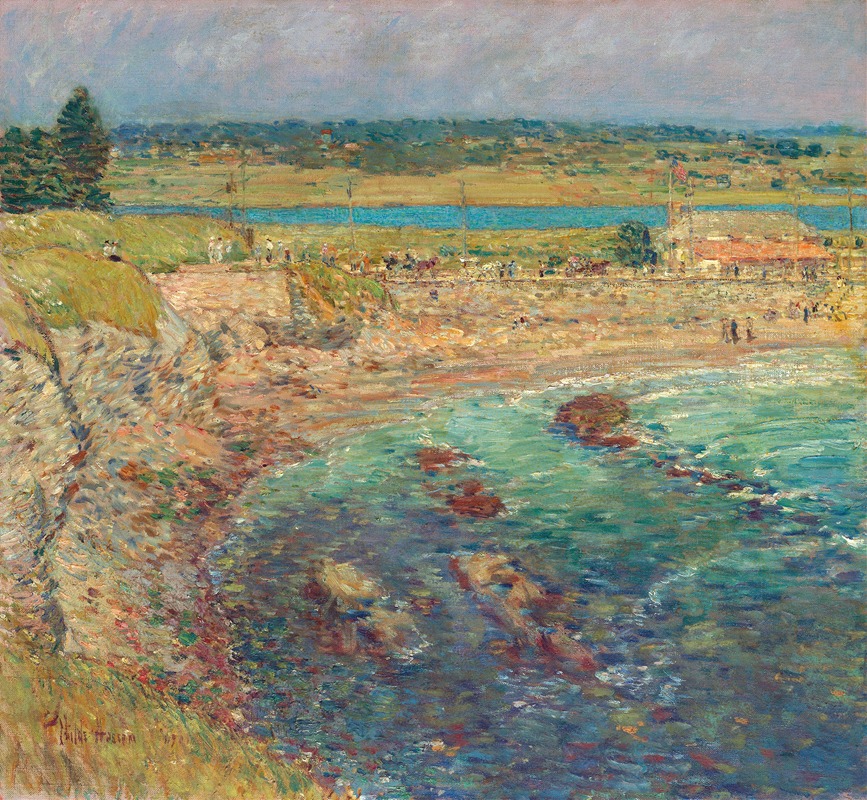
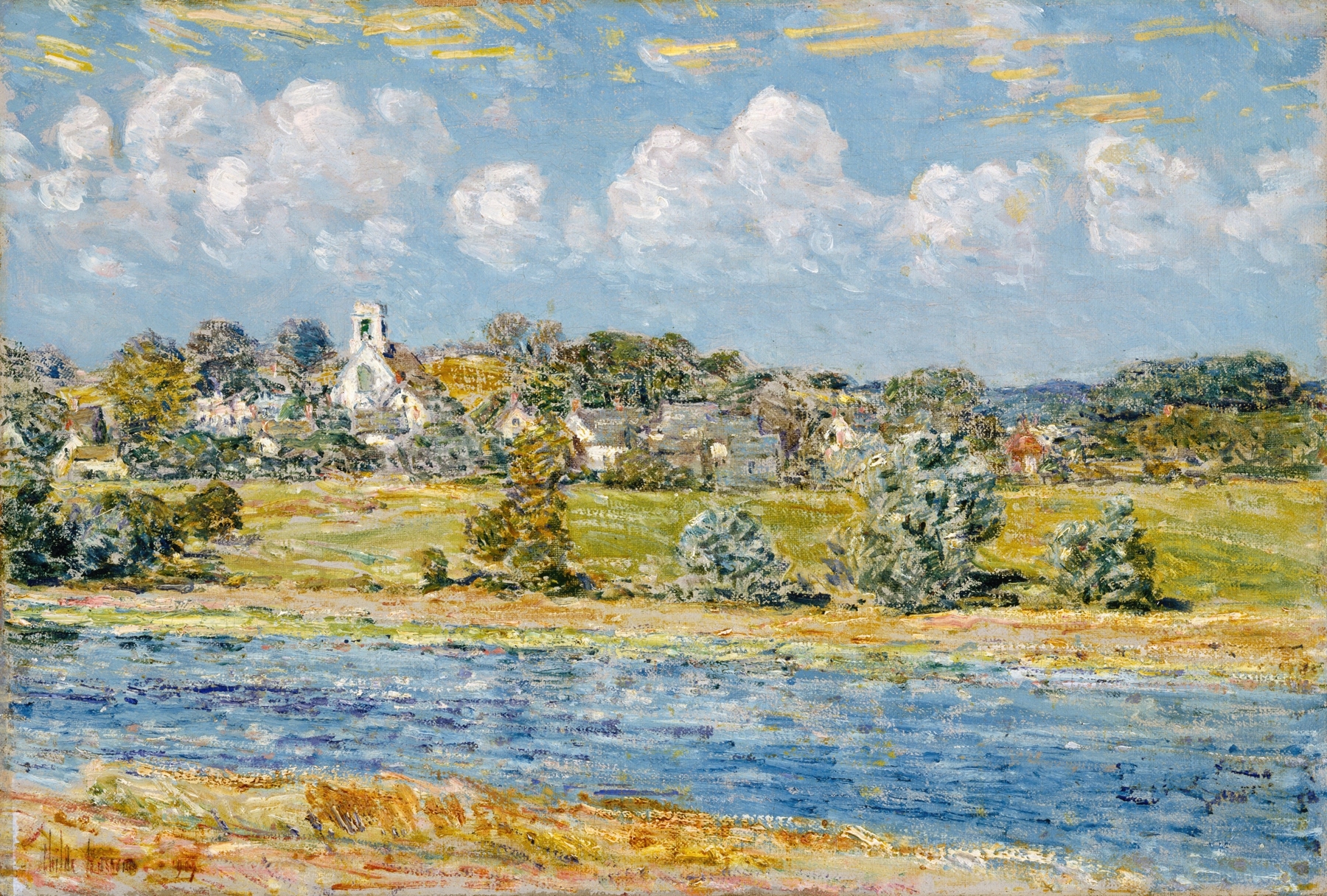
Bailey’s Beach, Newport, R.I. — History & Analysis
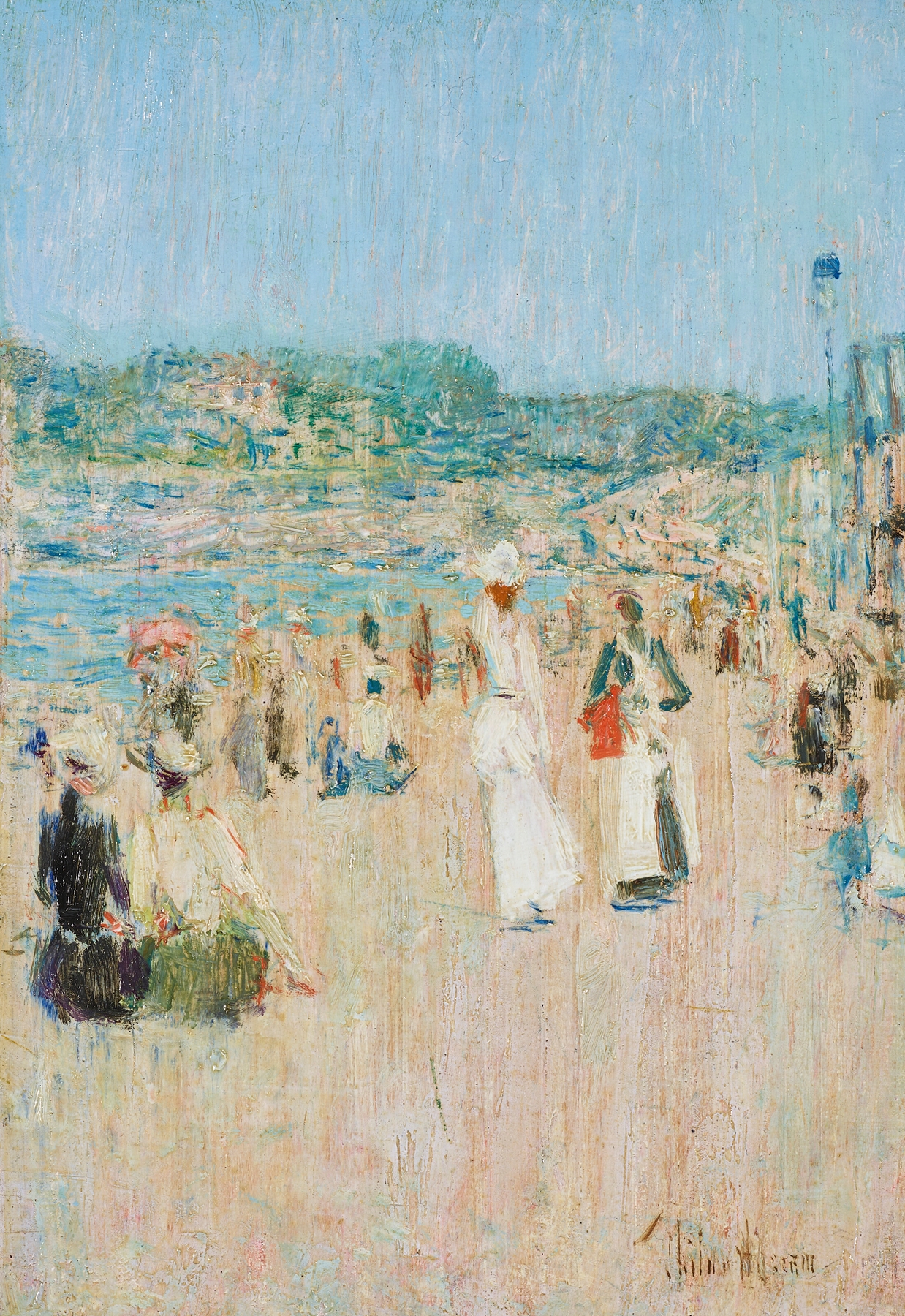
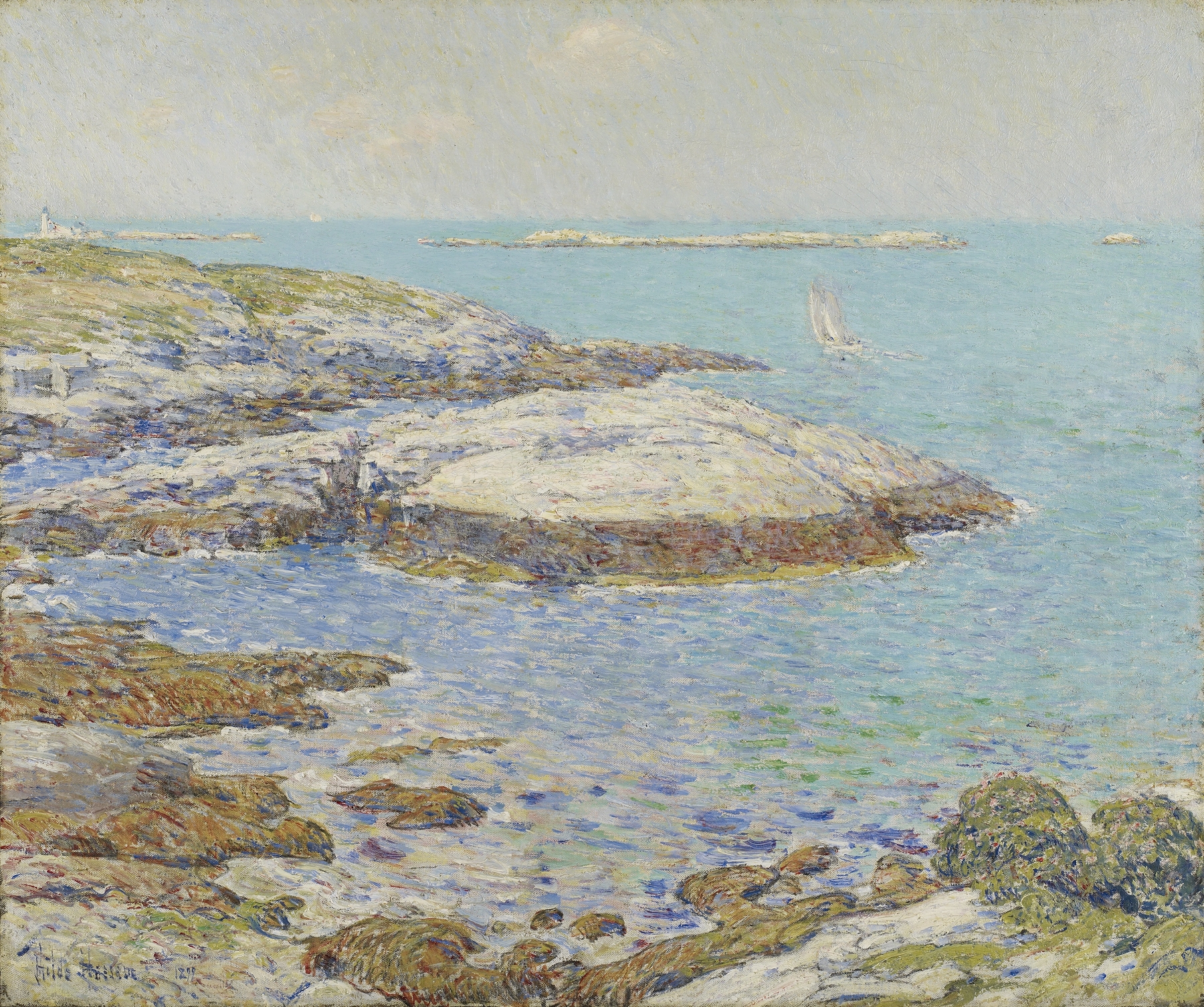
“To paint is to remember what time wants us to forget.” In the stillness of twilight, a quiet void hums with whispers of the past, beckoning us to reflect on forgotten moments, captured eternally on canvas. Look to the left of the painting, where a gentle tide kisses the shore, its foamy edges merging seamlessly with the warm hues of the setting sun. The brushstrokes dance lightly across the surface, imbuing the scene with a dreamlike quality that blurs the line between reality and memory. The play of light and shadow reveals a vibrant palette dominated by soft pinks and deep blues, evoking the fleeting transition from day to night.
Notice how the figures dotting the sandy beach seem both alive and distant, their forms almost dissolving into the atmosphere, echoing the transient nature of leisure and joy. As you linger on the details, consider the contrast between the vibrant activity of the beachgoers and the enveloping calm of the surrounding ocean. Each figure, engaged in their own moment of bliss, highlights the ephemeral nature of time itself; it is as if they exist in a world teetering on the edge of memory. The empty spaces between them speak volumes—voids that invite introspection, urging the viewer to contemplate their own experiences of solitude amidst the vibrant chaos of life.
In 1901, during a period marked by a flourishing American Impressionism, the artist found himself immersed in the beauty of Newport, R.I. As he painted Bailey’s Beach, he was not only capturing a beloved locale but also positioning himself within a larger dialogue of artistic innovation and cultural identity. This work reflects both his personal journey and the collective yearning for respite in an ever-evolving world.