Beech Grove I — History & Analysis
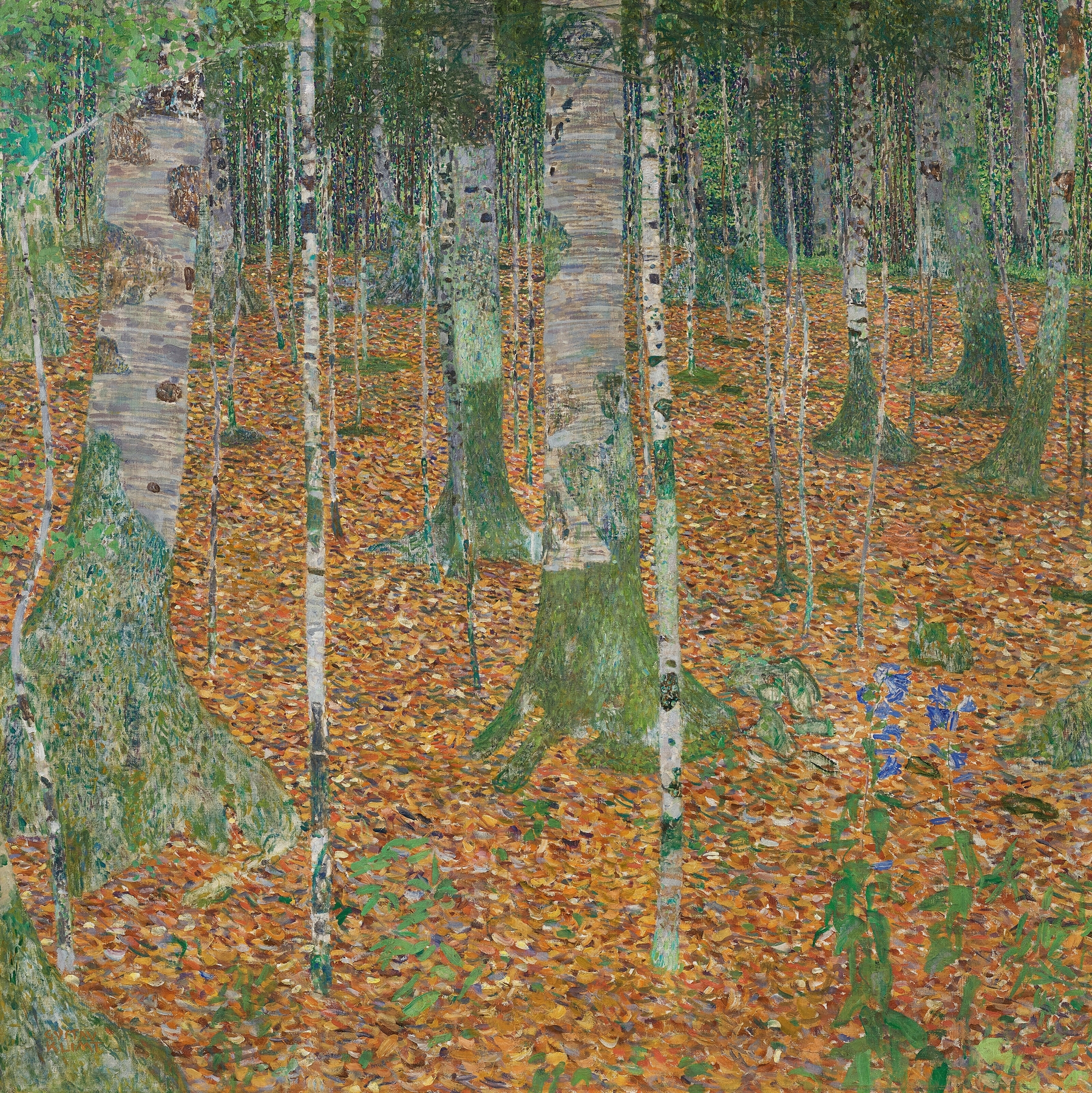
Is this a mirror — or a memory? In Beech Grove I, time seems to dance between the realms of reality and the ethereal, inviting us to ponder our own reflections intertwined with nature. Focus first on the vibrant patterns that emerge from the foliage, where golden hues intertwine with deep greens. Notice how Klimt’s use of gold leaf envelops the trees, creating a shimmering effect that captures the light and shifts with the viewer's gaze.
The trees themselves appear almost sentient, their trunks wrapped in a tapestry of intricate detail, whispering secrets of the past. The soft brushwork in the background gently frames this lush grove, enhancing the sense of depth and mystery. This piece evokes a sense of nostalgia, as the rhythmic patterns serve as a reminder of time’s fleeting nature. The juxtaposition of the organic forms against the golden background suggests a celebration of life, yet there’s an undercurrent of longing — a silent acknowledgment of what is lost.
The trees, both inviting and isolating, symbolize the duality of human experience: our connection to nature and our solitude within it. Klimt painted Beech Grove I during a period of introspection in the early 20th century, likely around the turn of the century. At this time, he was deeply influenced by the Symbolist movement, which sought to evoke emotions and ideas beyond the literal. The artist’s focus on ornamentation and personal themes reflects a broader shift in art, as it moved towards exploring abstraction and emotional depth, creating a bridge between the natural world and the human psyche.