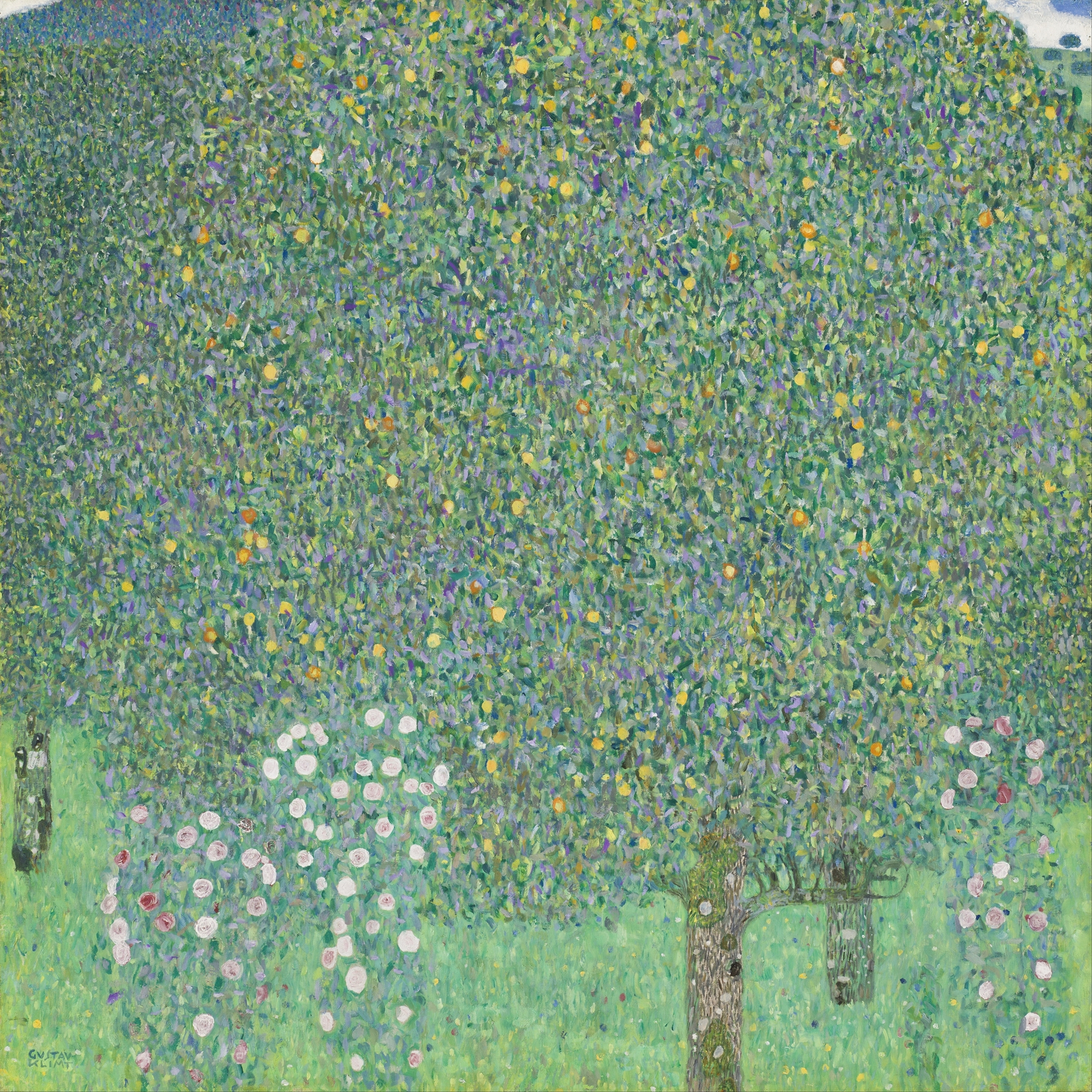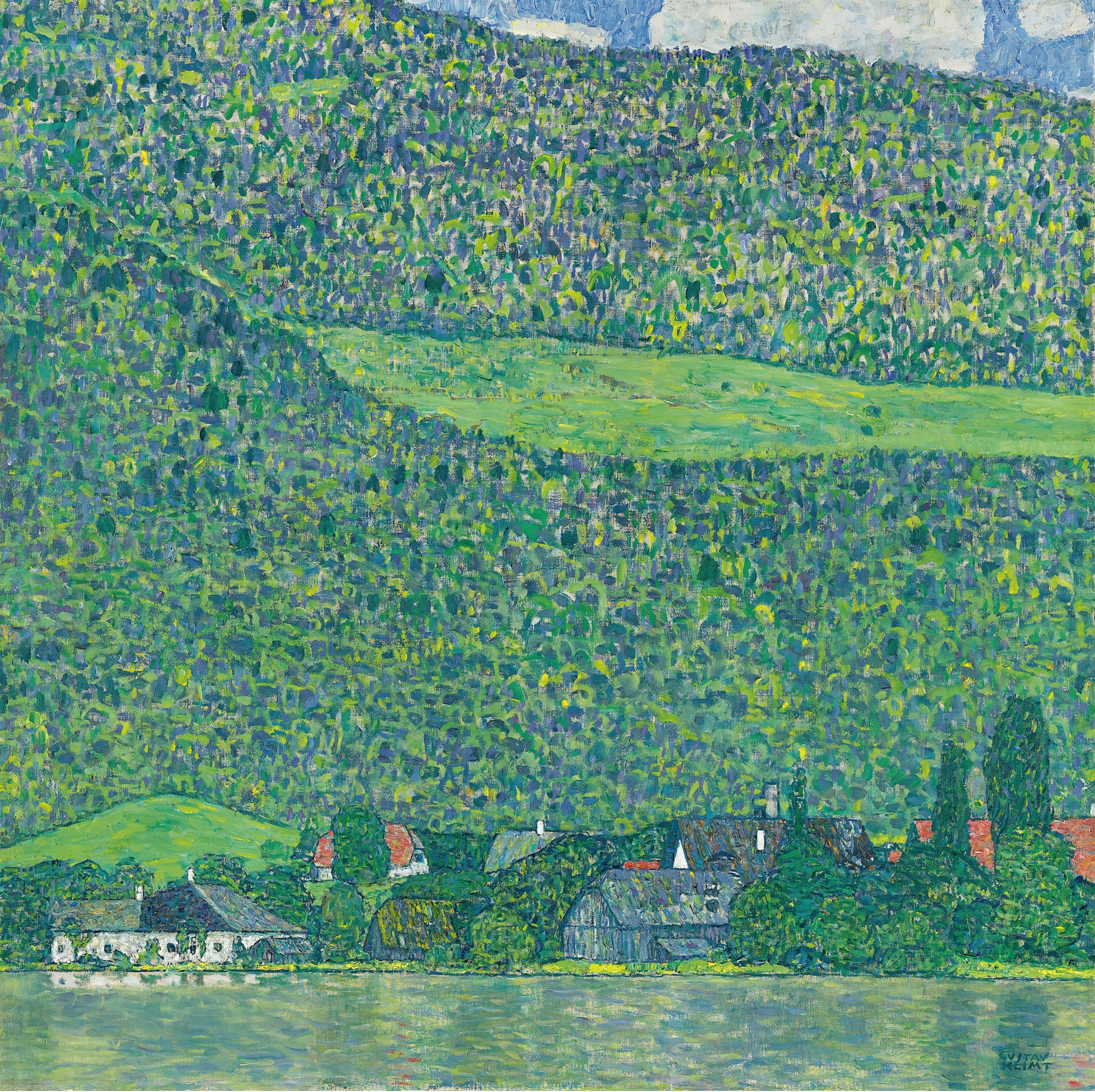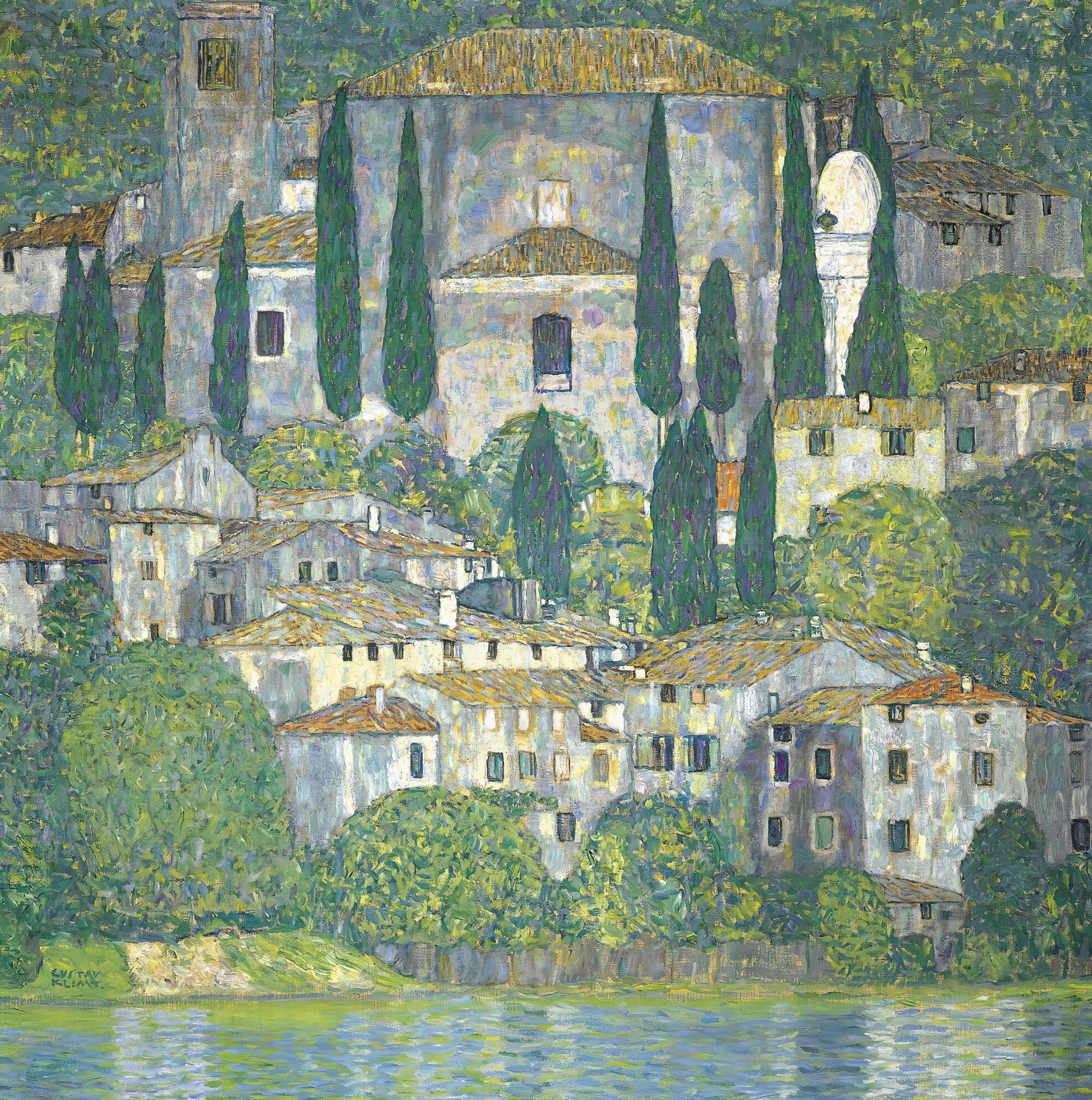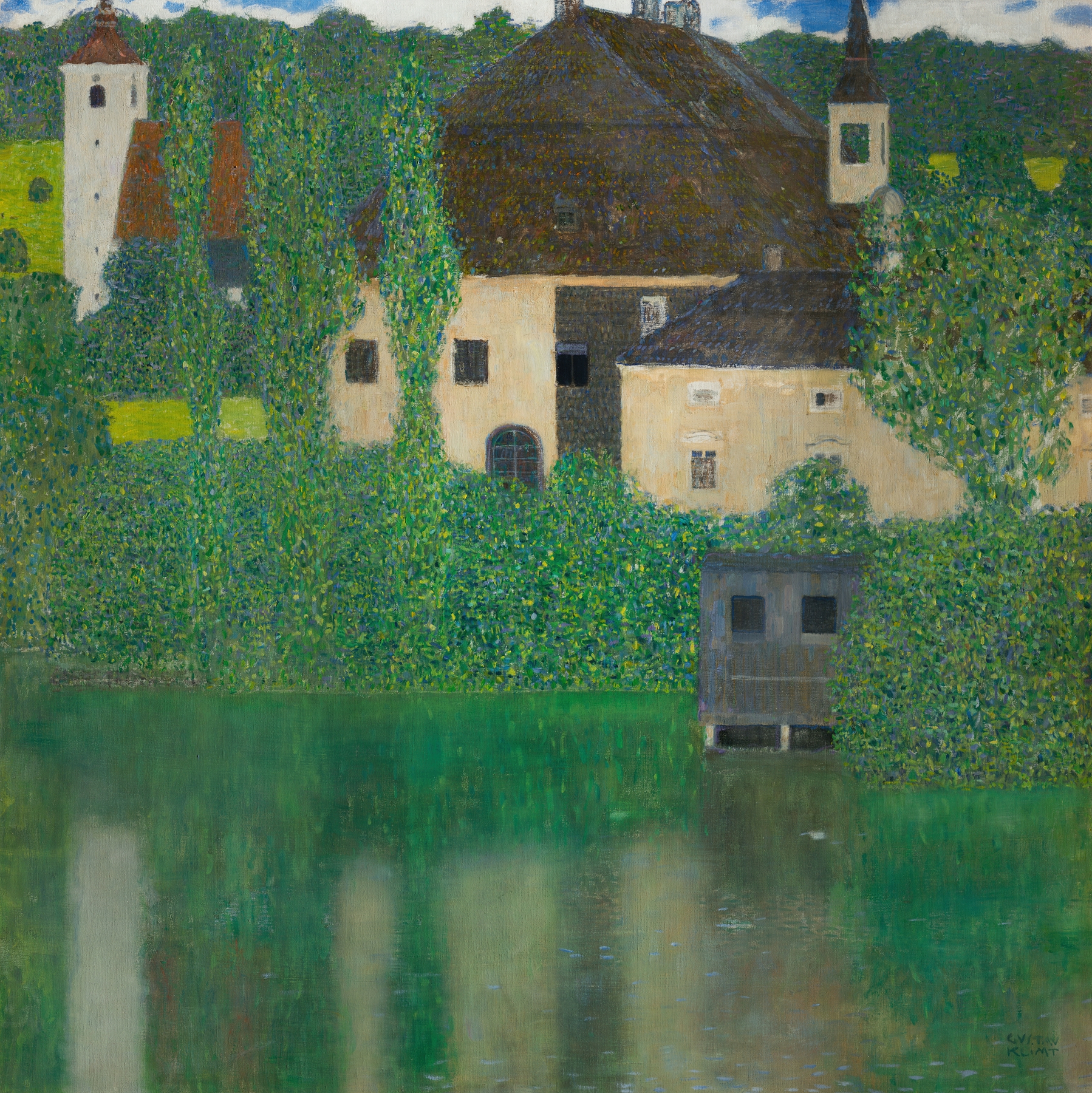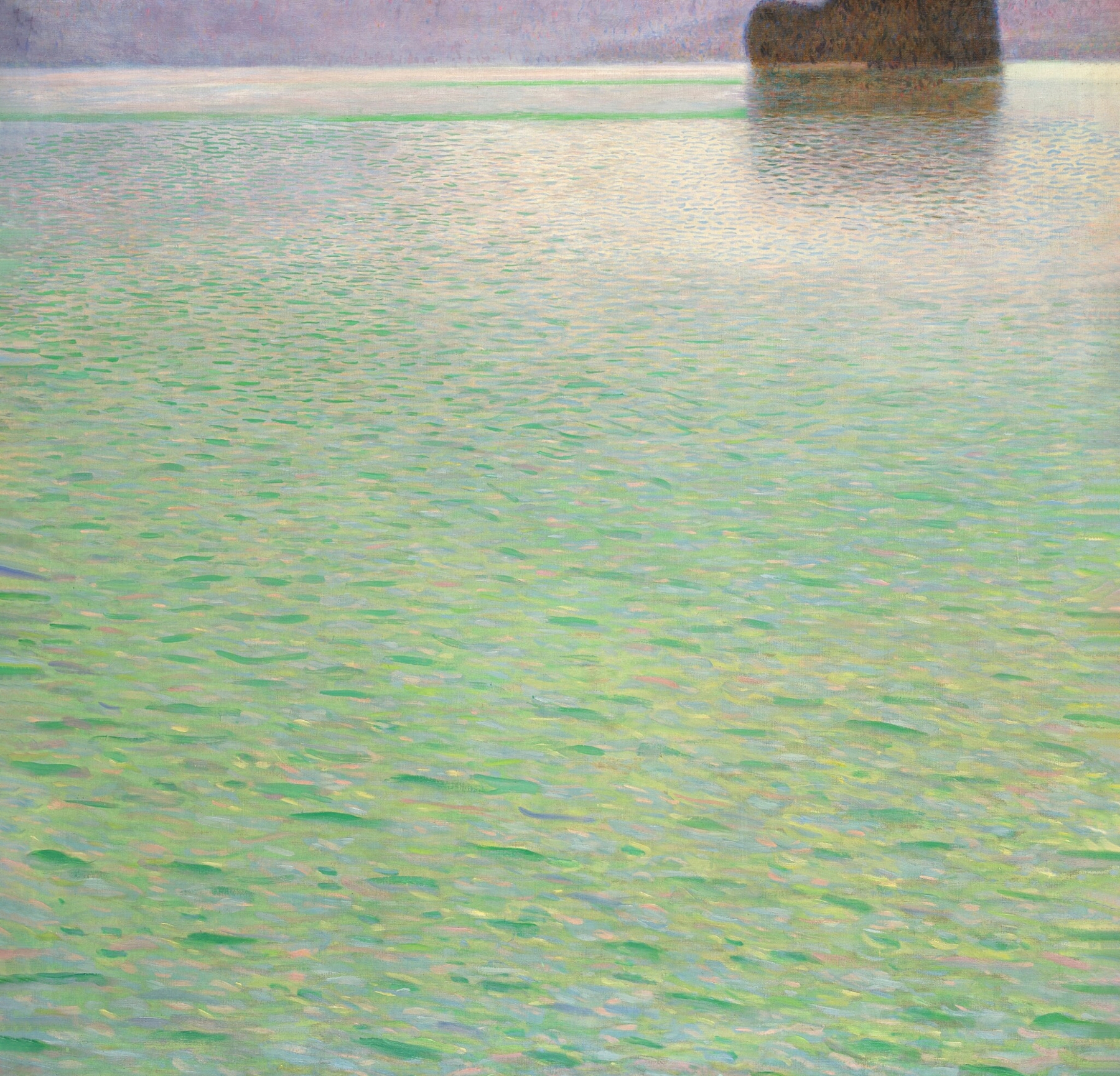

Could beauty survive in a century of chaos? Gustav Klimt's *Insel im Attersee* invites us to ponder this question as we confront the intricate textures of nature and memory woven within the canvas. Look to the left at the lush greens that cradle the island, a sanctuary amidst the undulating blues of the lake. Notice how the sunlight dances upon the water, creating a shimmering path that draws the eye toward a distant horizon. The meticulous brushstrokes encapsulate a sense of tranquility, contrasting with the chaotic world outside its frame. The palette, rich with deep emeralds and soft golds, evokes a longing for a serene escape, a reminiscence of lost moments cloaked in a veil of nostalgia. Yet, beauty here is not merely idyllic; it carries a weight of emotional tension. The island, bathed in ethereal light, stands alone, perhaps a metaphor for isolation in a rapidly changing world. The gentle ripples of the water reflect not just the physical landscape, but the passage of time and memory itself. Each stroke seems to whisper stories of longing, inviting viewers to contemplate their own connections to nature and the fleeting moments of peace within life's turmoil. Painted between 1901 and 1902, this work emerged during a pivotal moment in Klimt's career, as he began to move away from the figurative style that had defined his early success. Set against the backdrop of a rapidly evolving Vienna—marked by social upheaval and artistic innovation—Klimt sought solace in the picturesque landscapes of Austria, reaffirming his bond with the natural world while navigating the complexities of contemporary art.