
Bern with Belltower — History & Facts
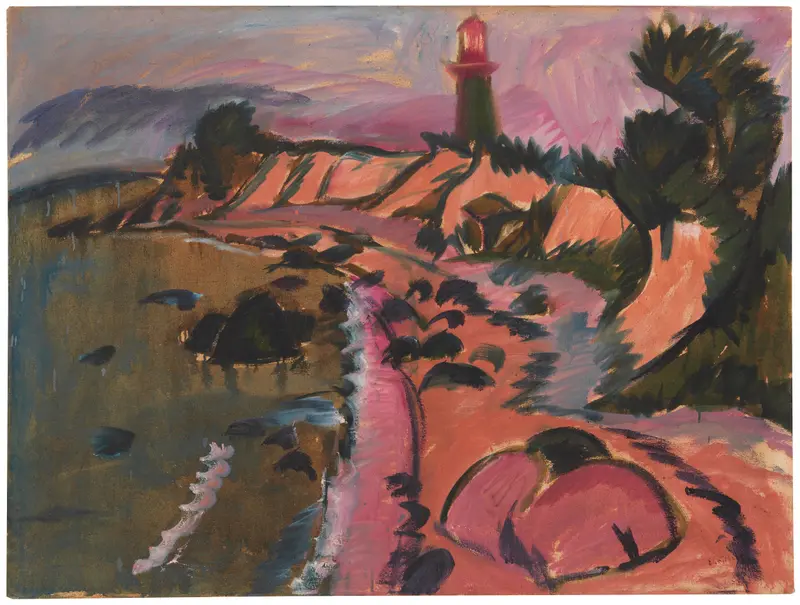
Begin your exploration by looking at the stark belltower rising from the soft earth tones of the cityscape. Notice how the tower’s angular lines contrast with the rounded shapes of the surrounding buildings, creating a tension that pulls the eye upwards. The palette is subdued yet vibrant, with hues of ochre and sienna blending to evoke the warmth of late afternoon light, inviting contemplation while simultaneously invoking a sense of isolation. Within this scene lies a deeper commentary on the human condition.
The looming belltower, a symbol of time's passage, seems to watch over an empty street, amplifying feelings of abandonment. The quietness of the composition speaks of a longing for connection, as the absence of people becomes more striking than their presence. It’s a visual dialogue between the familiar and the alienating, where the everyday life of Bern stands still, allowing a moment of introspection. In 1935, while living in Switzerland, Kirchner painted this work during a tumultuous period in his life marked by the aftermath of World War I and personal struggles with mental health.
The artist sought refuge in his surroundings, grappling with the disconnection he felt from society. This painting reflects not only a cityscape but also the emotional landscape of an artist searching for solace amidst an increasingly fragmented world.
More Artworks by Ernst Ludwig Kirchner
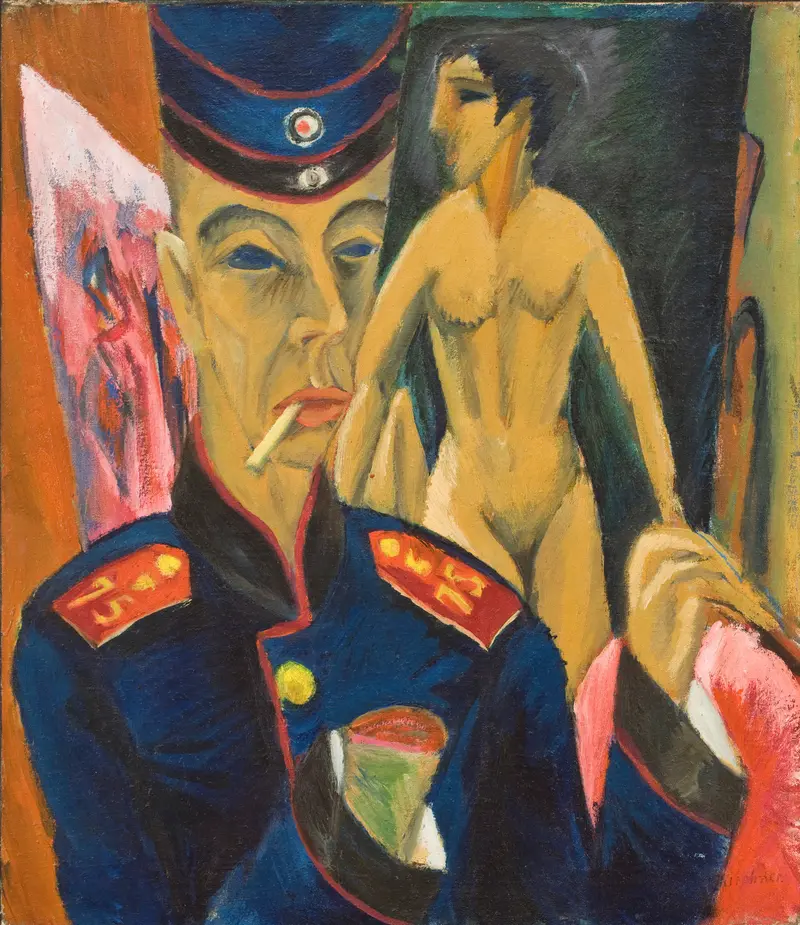
Self-Portrait as a Soldier
Ernst Ludwig Kirchner
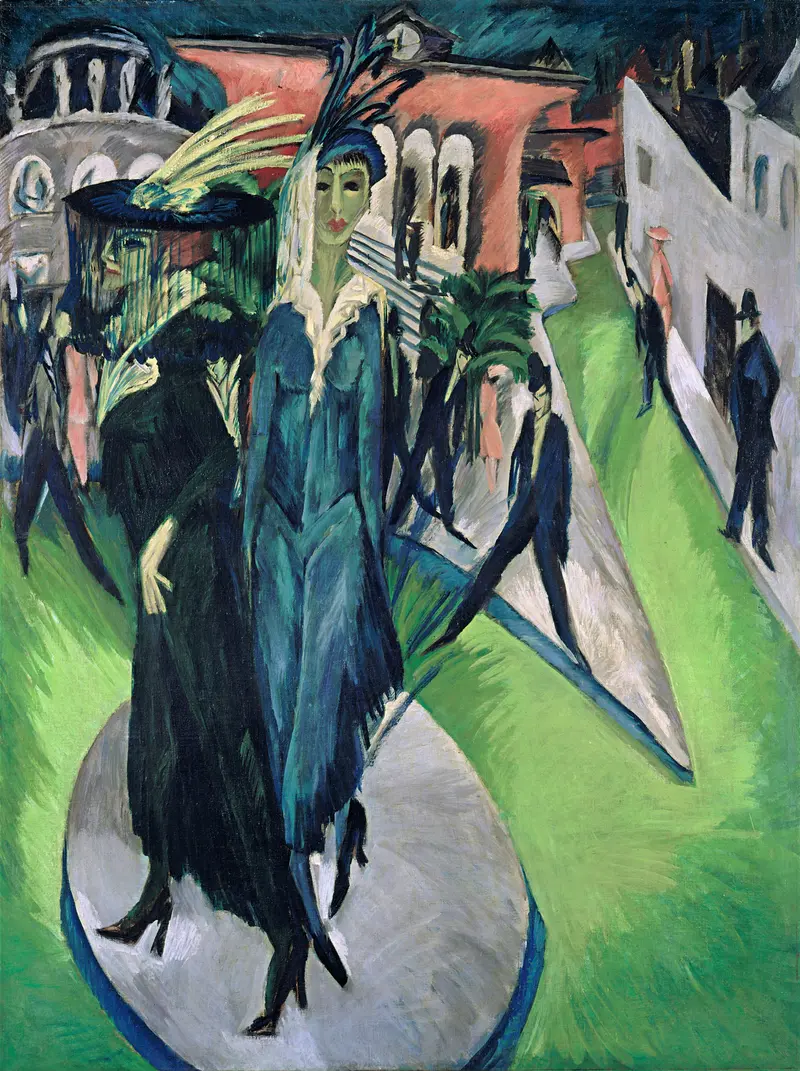
Potsdamer Platz
Ernst Ludwig Kirchner

Alphütten und Tinzenhorn
Ernst Ludwig Kirchner
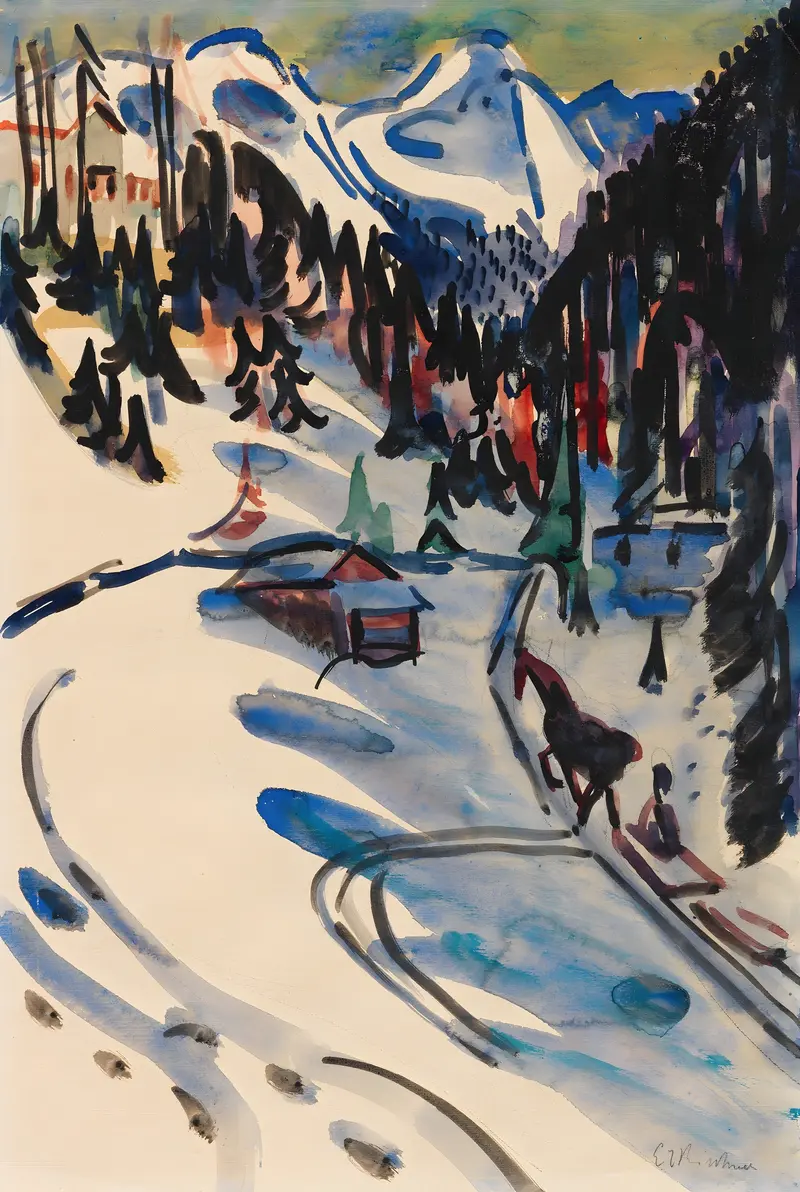
Sertigtal im Winter
Ernst Ludwig Kirchner
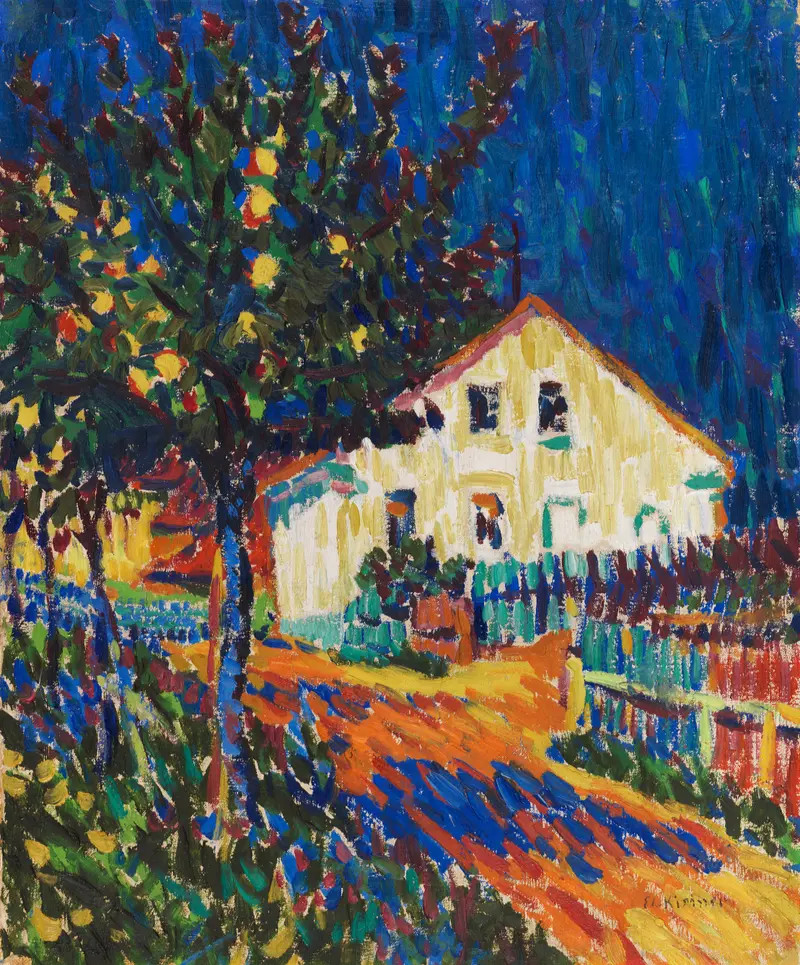
Dorfstraße mit Apfelbäumen
Ernst Ludwig Kirchner
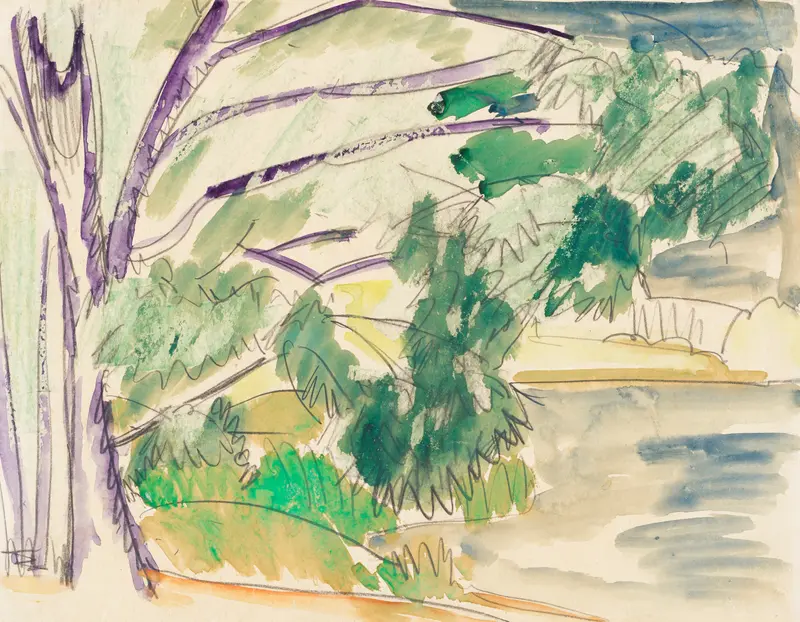
Unter Bäumen am See
Ernst Ludwig Kirchner
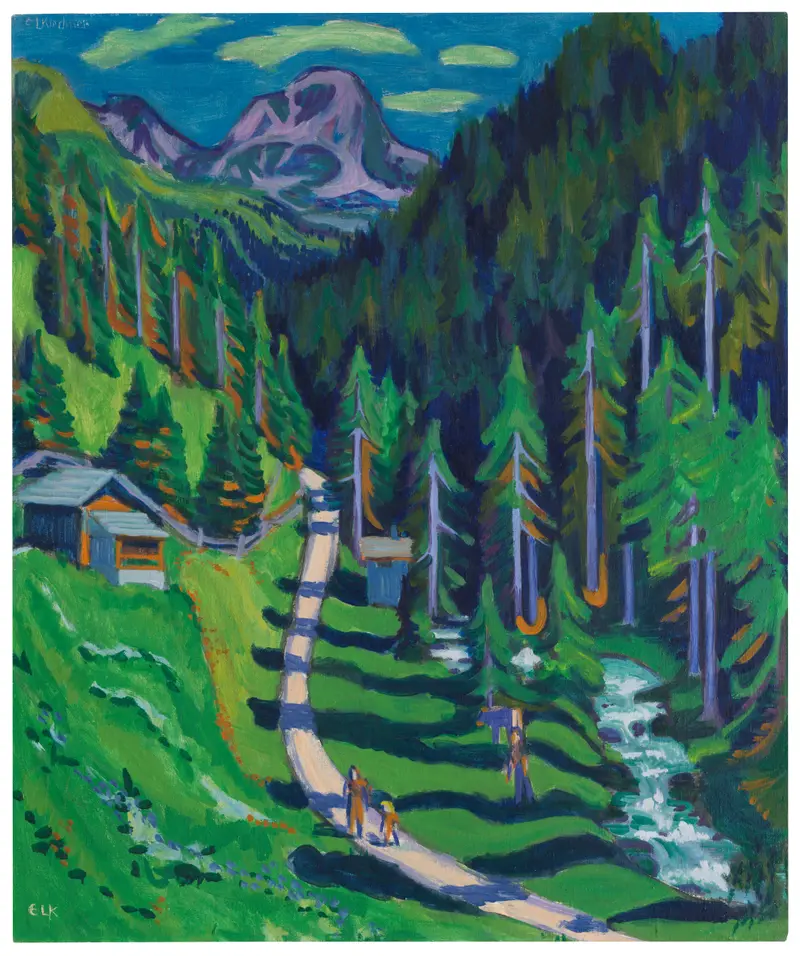
Sertigweg
Ernst Ludwig Kirchner
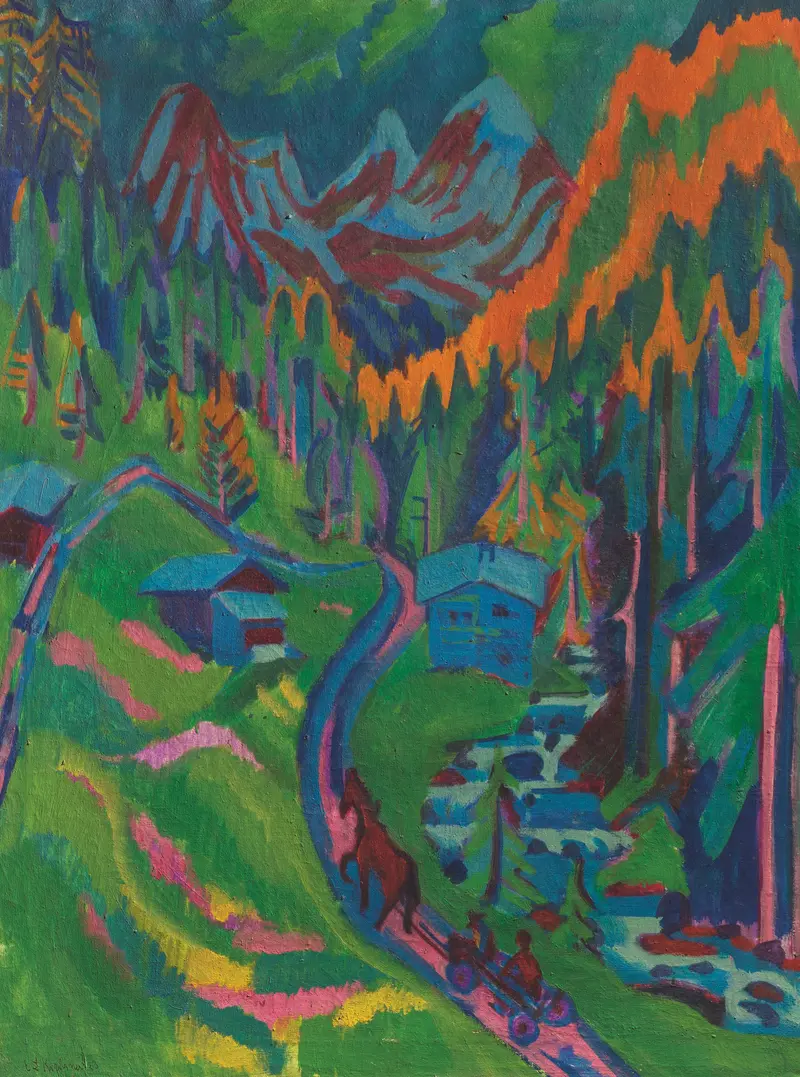
Sertigweg im Sommer
Ernst Ludwig Kirchner
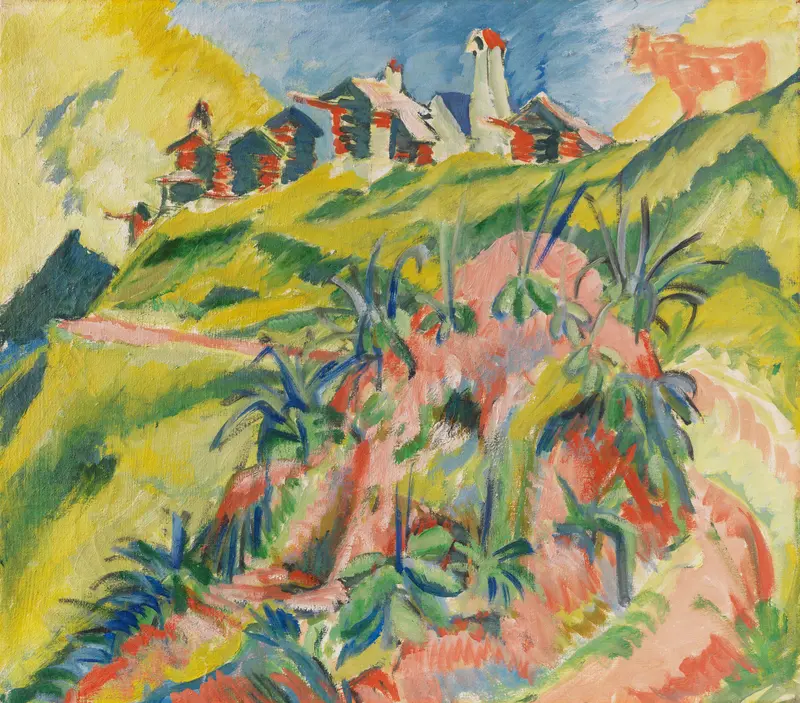
Bergdorf mit rosa Kuh
Ernst Ludwig Kirchner
Fehmarnküste mit Leuchtturm
Ernst Ludwig Kirchner





