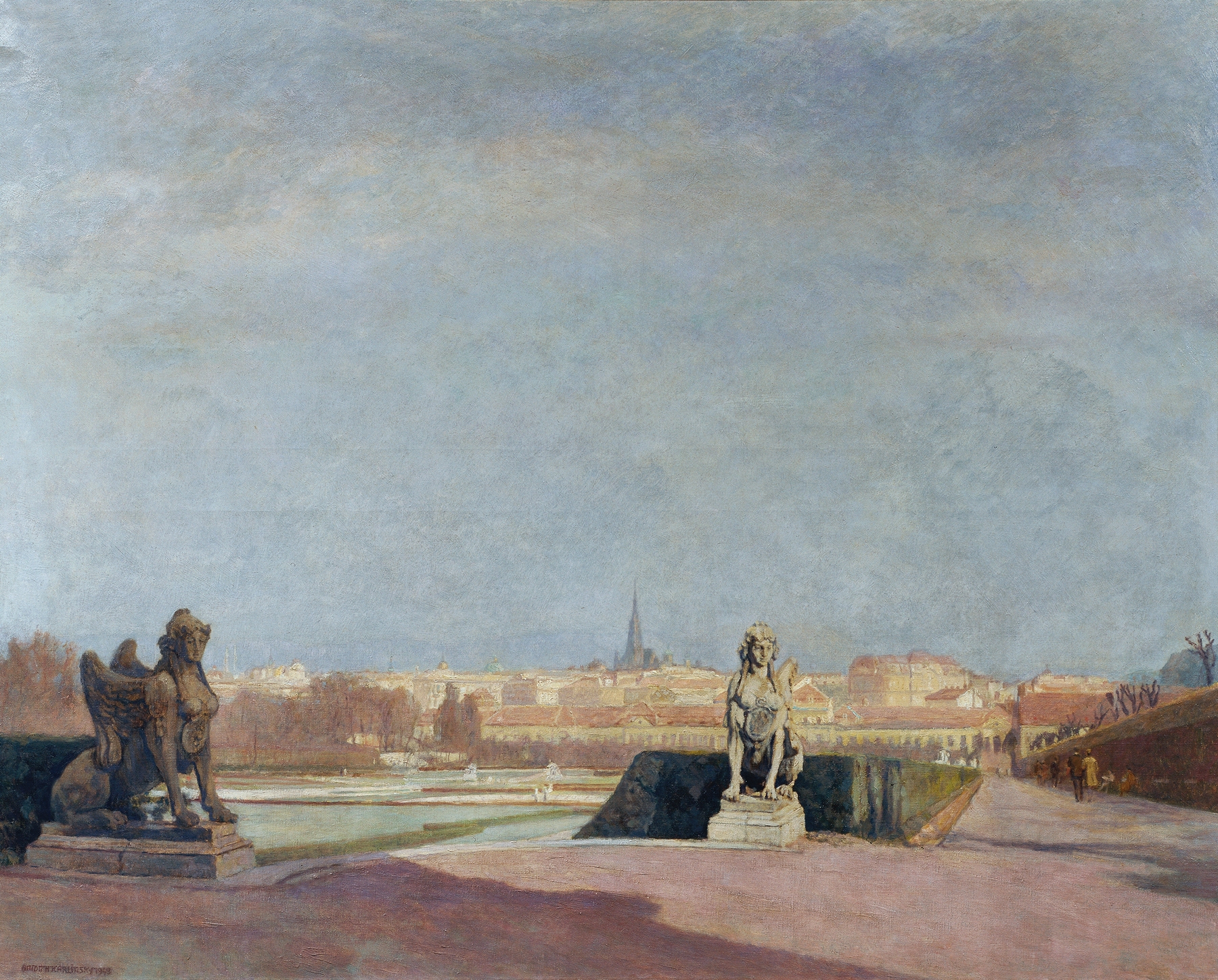
Blick auf das Burgtor (von der Rampe des Kunsthistorischen Hofmuseums) — History & Analysis
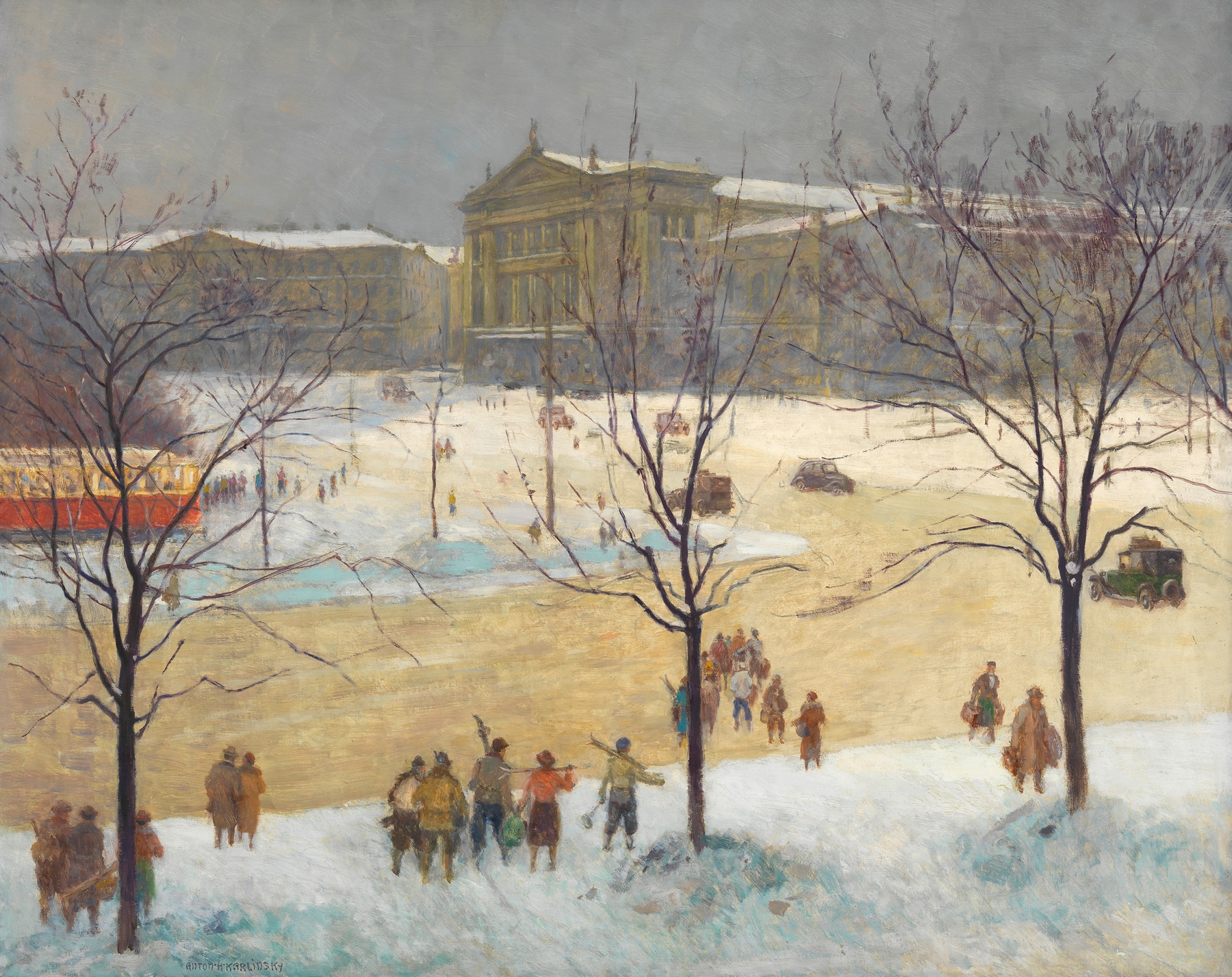
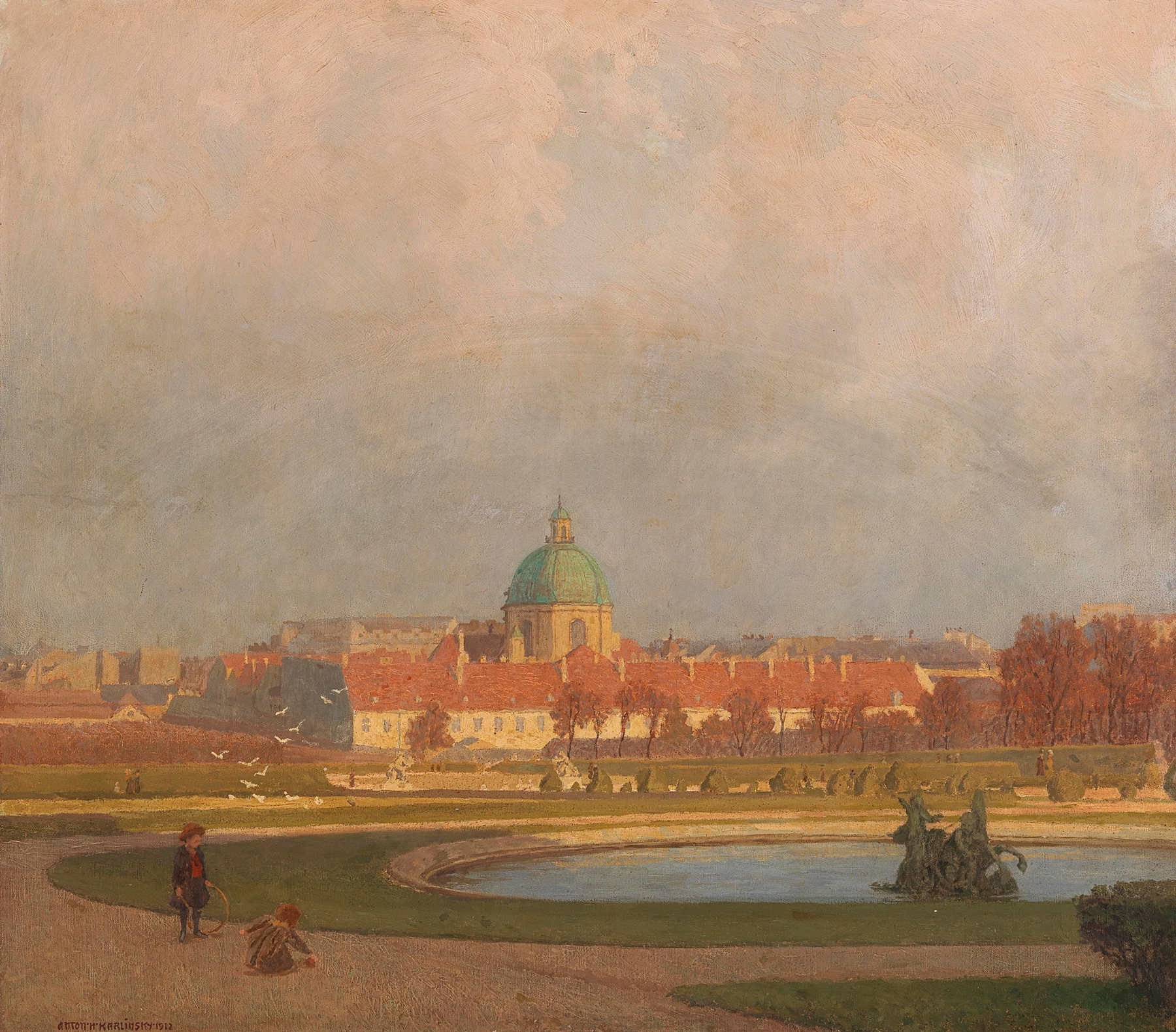
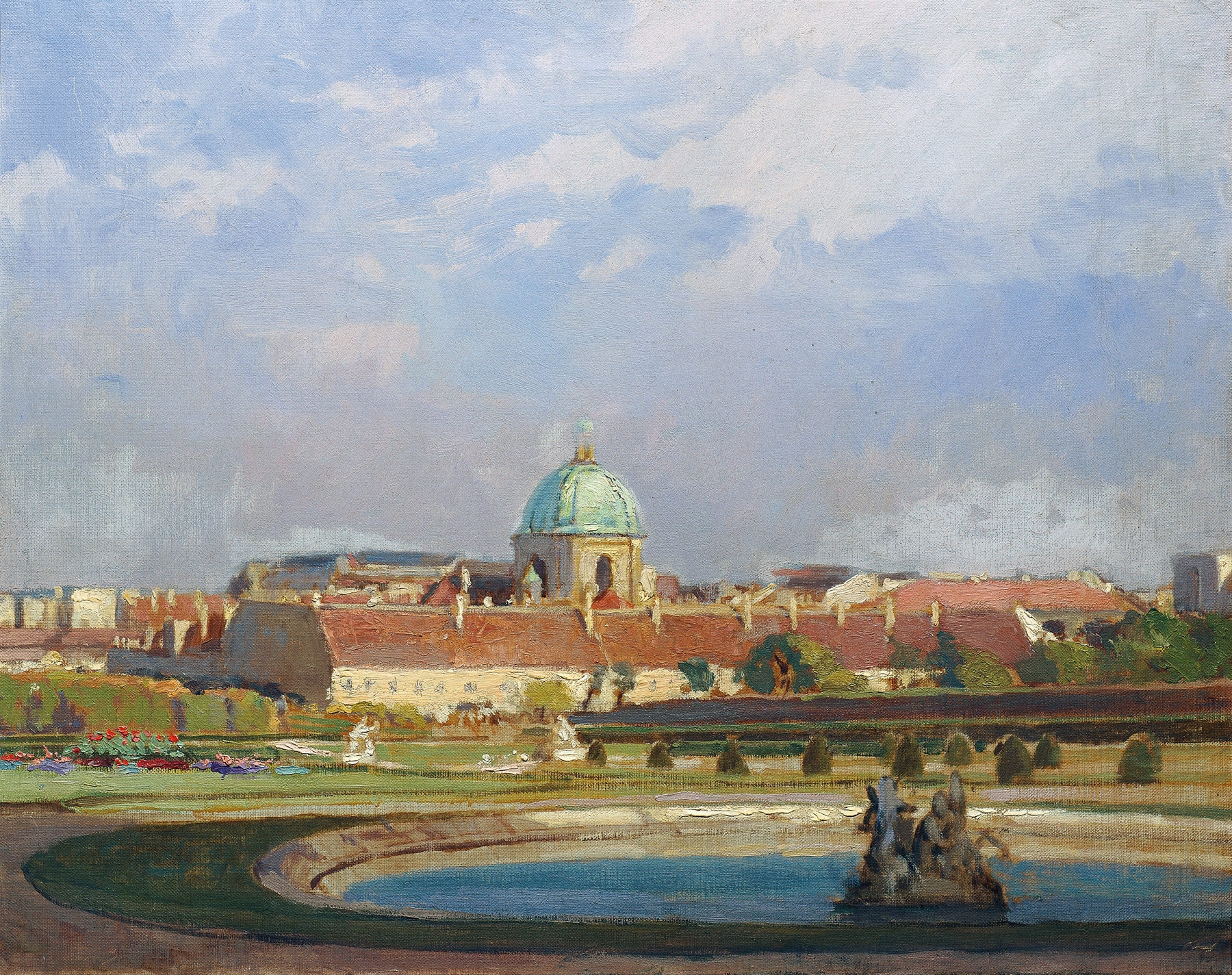
Where does light end, and longing begin? In a moment suspended between reality and dream, the viewer stands before a landscape imbued with both the warmth of sunlight and the chill of memory. Look to the center where the Burgtor stands proud and imposing, its stone facade bathed in the golden hues of late afternoon. The play of light dances across the surface, revealing the intricate texture of the stone and the delicate shadows that hint at the passage of time.
Notice how the artist's brush has rendered the sky — ethereal and expansive with wisps of clouds, contrasting the solidity of the gate below, creating a dialogue between the eternal and the ephemeral. As you explore the artwork further, observe the interplay of light and shadow that reveals emotional depth. The welcoming glow of sunlight at the Burgtor’s entrance suggests opportunities, yet the shadows creeping along the stones evoke a sense of solitude and introspection. The composition invites the viewer to ponder their own encounters with thresholds, each light-filled space representing both promise and uncertainty, where aspirations meet the weight of the past.
In 1911, Anton Hans Karlinsky captured this scene while living in Vienna, a city vibrant with artistic innovation yet tinged by the anxieties of a changing Europe. At this time, artists were increasingly interested in exploring the relationships between light, space, and emotion, a reflection of the socio-political tensions brewing across the continent. It is within this context that Blick auf das Burgtor emerges, a poignant expression of hope entwined with the complexities of human experience.