Lusthaus im Prater — History & Analysis
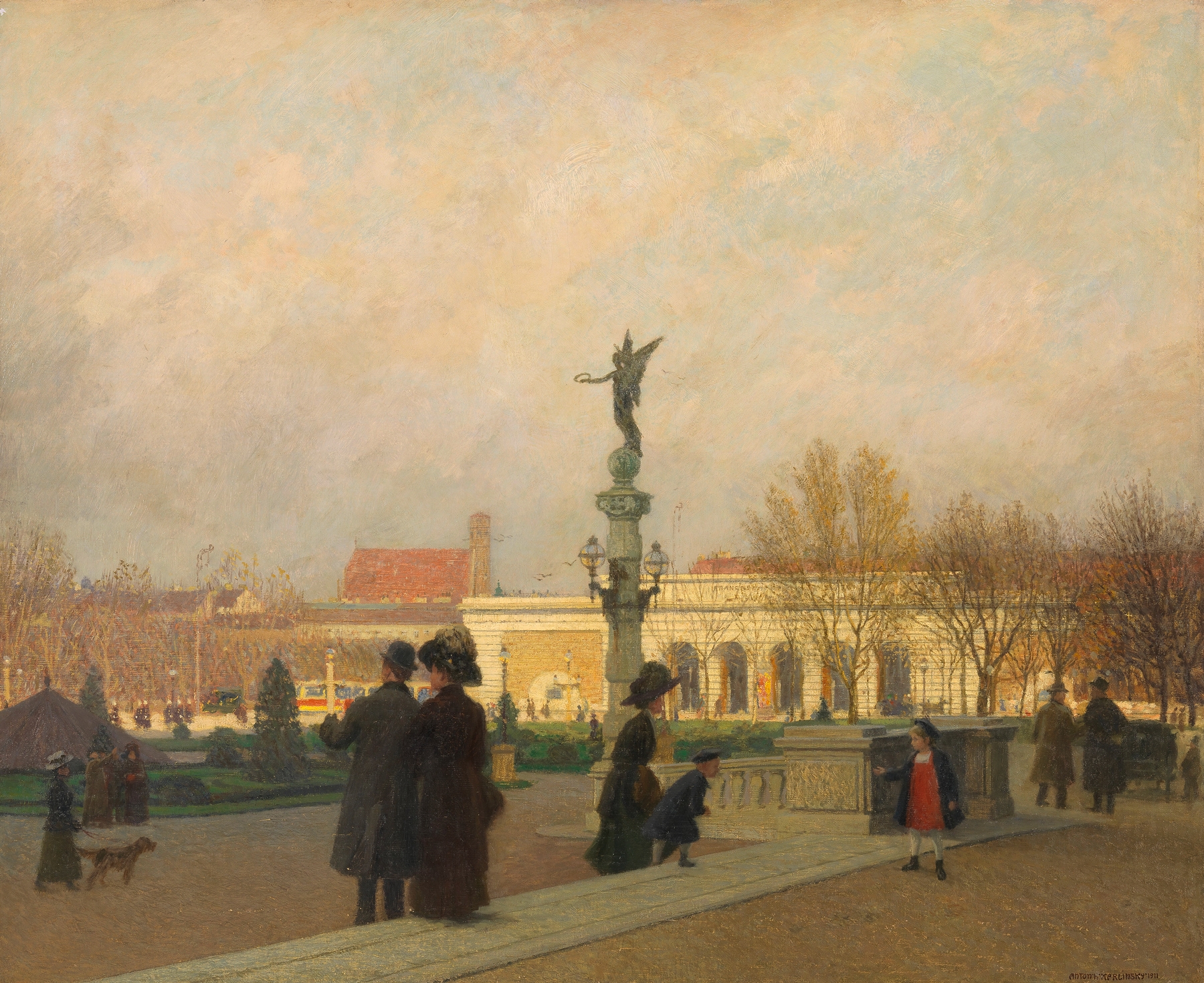
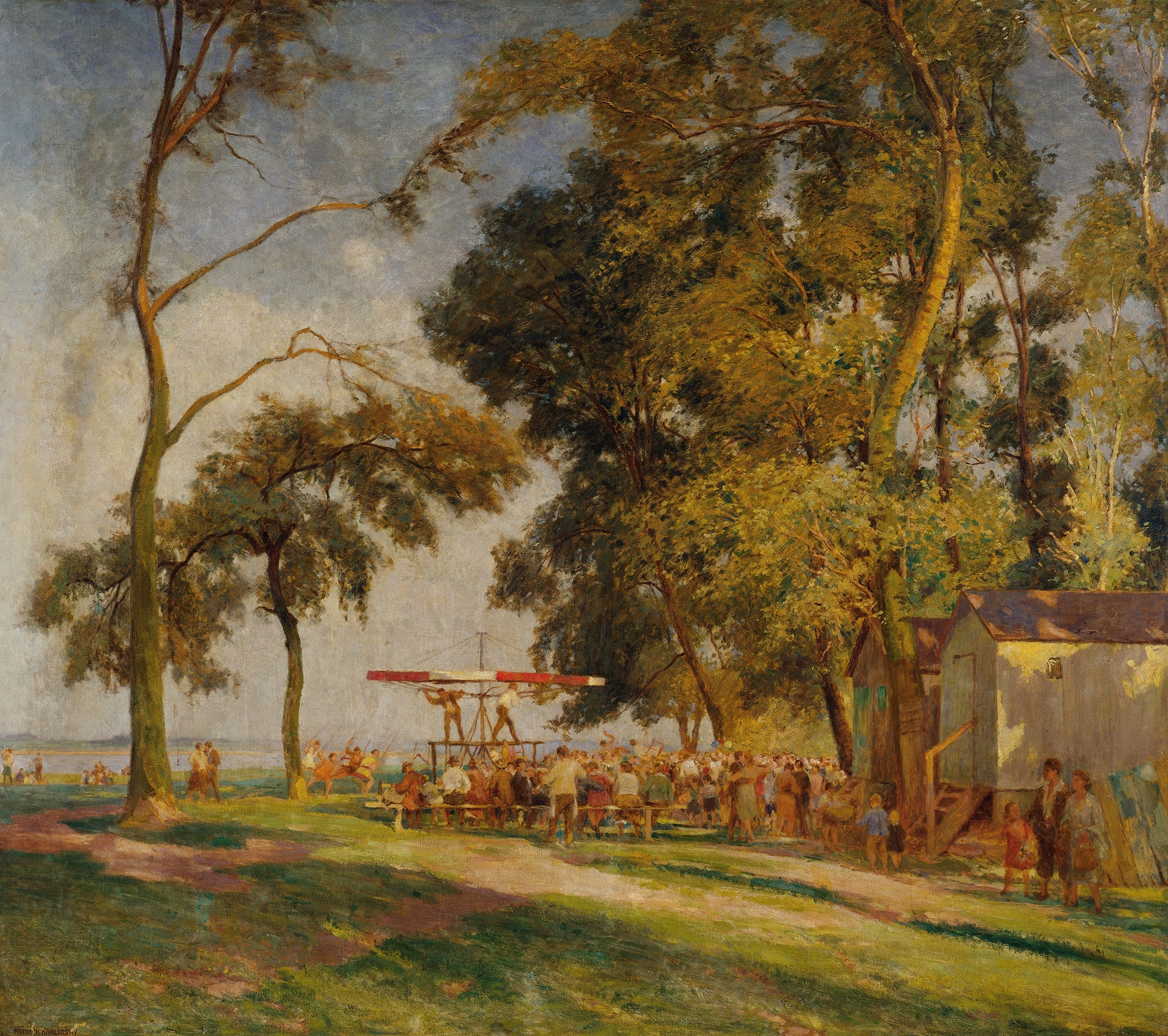
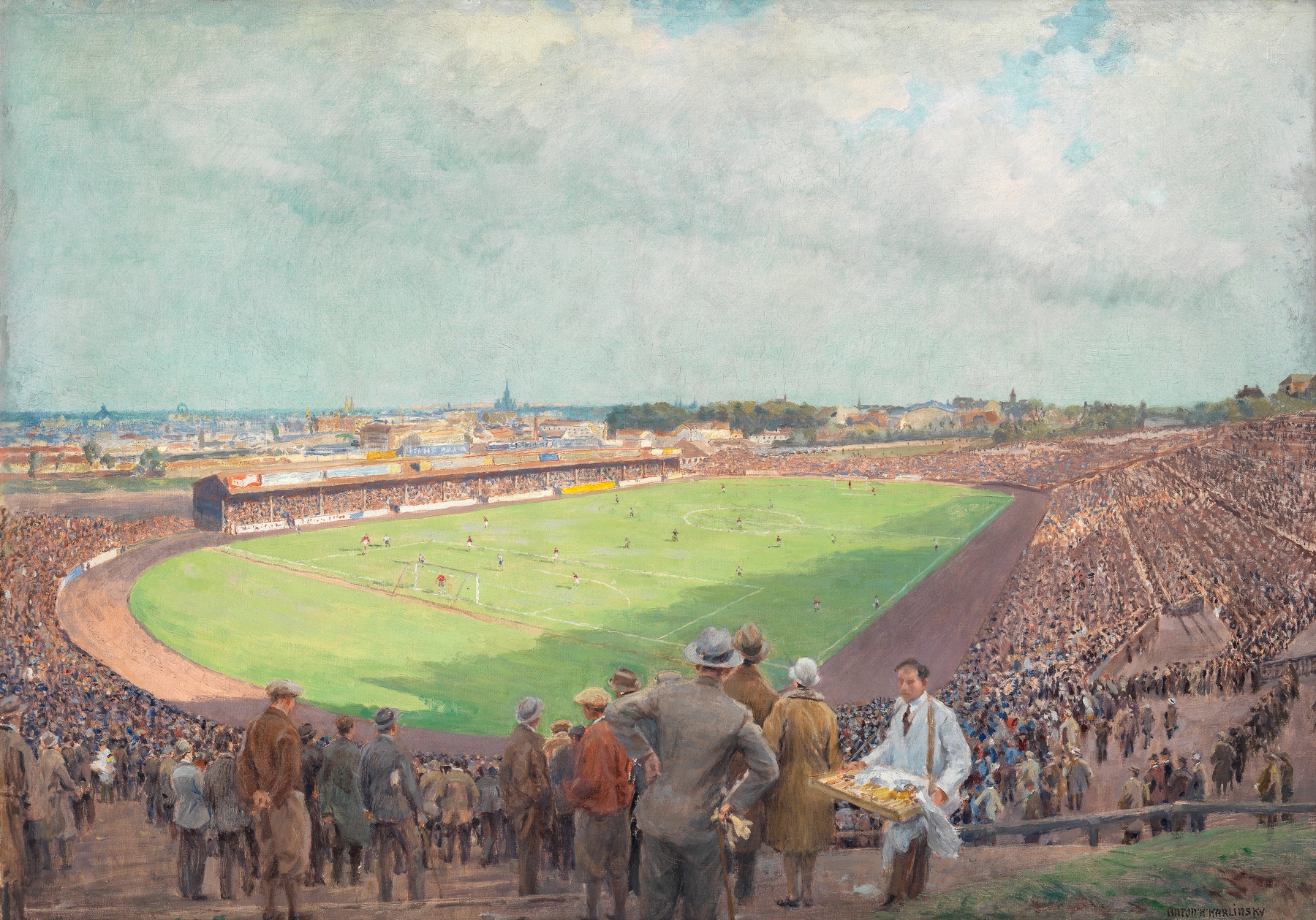
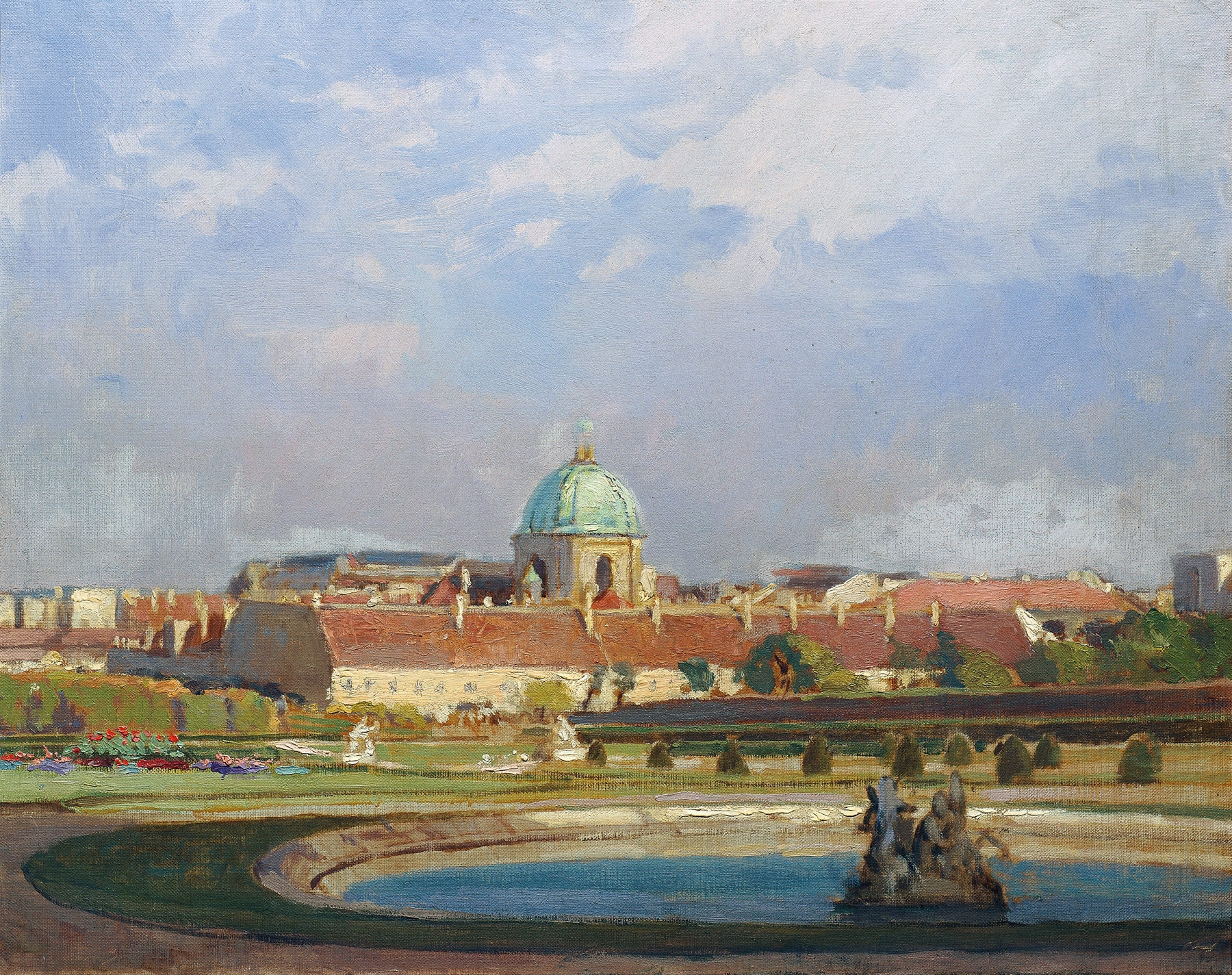
Could a single brushstroke hold eternity? In Lusthaus im Prater, the viewer finds themselves enveloped in a vivid embrace of color and form that transcends mere representation, inviting us into a world of exuberance and wonder. Look to the center of the canvas, where the Lusthaus itself rises majestically, bathed in warm sunlight that casts soft shadows across its ornate facade. Notice how the artist employs vibrant, almost luminescent hues—rich greens juxtaposed with deep golds—that seem to pulse with life.
The structure stands resolute against a backdrop of lush foliage, while delicate figures meander through the garden, each stroke capturing their fluid movements, grounding the scene in a palpable immediacy. Delving deeper, one can sense the interplay between nature and humanity. The Lusthaus, a symbol of pleasure and leisure, contrasts with the serene tranquility of the surrounding trees, suggesting a dance between indulgence and serenity. The figures, with their joyful postures, embody a moment of bliss yet remain half-shrouded in shadow, hinting at the fleeting nature of happiness.
Each brushstroke feels deliberate, evoking a sense of awe at the beauty of life's ephemeral moments, as if Karlinsky captures not just a scene but an entire experience. In 1929, Anton Hans Karlinsky painted this piece during a time of great upheaval in Europe, coming on the heels of World War I. As he stood amidst the vibrant life of Vienna, the city was a hub of artistic experimentation and cultural revival. The period was marked by a longing for joy and beauty, an escape from the recent past, and Lusthaus im Prater embodies this desire, immortalizing a slice of life that resonates with timelessness even today.