Blick von Torbole auf das Westufer des Gardasees — History & Analysis
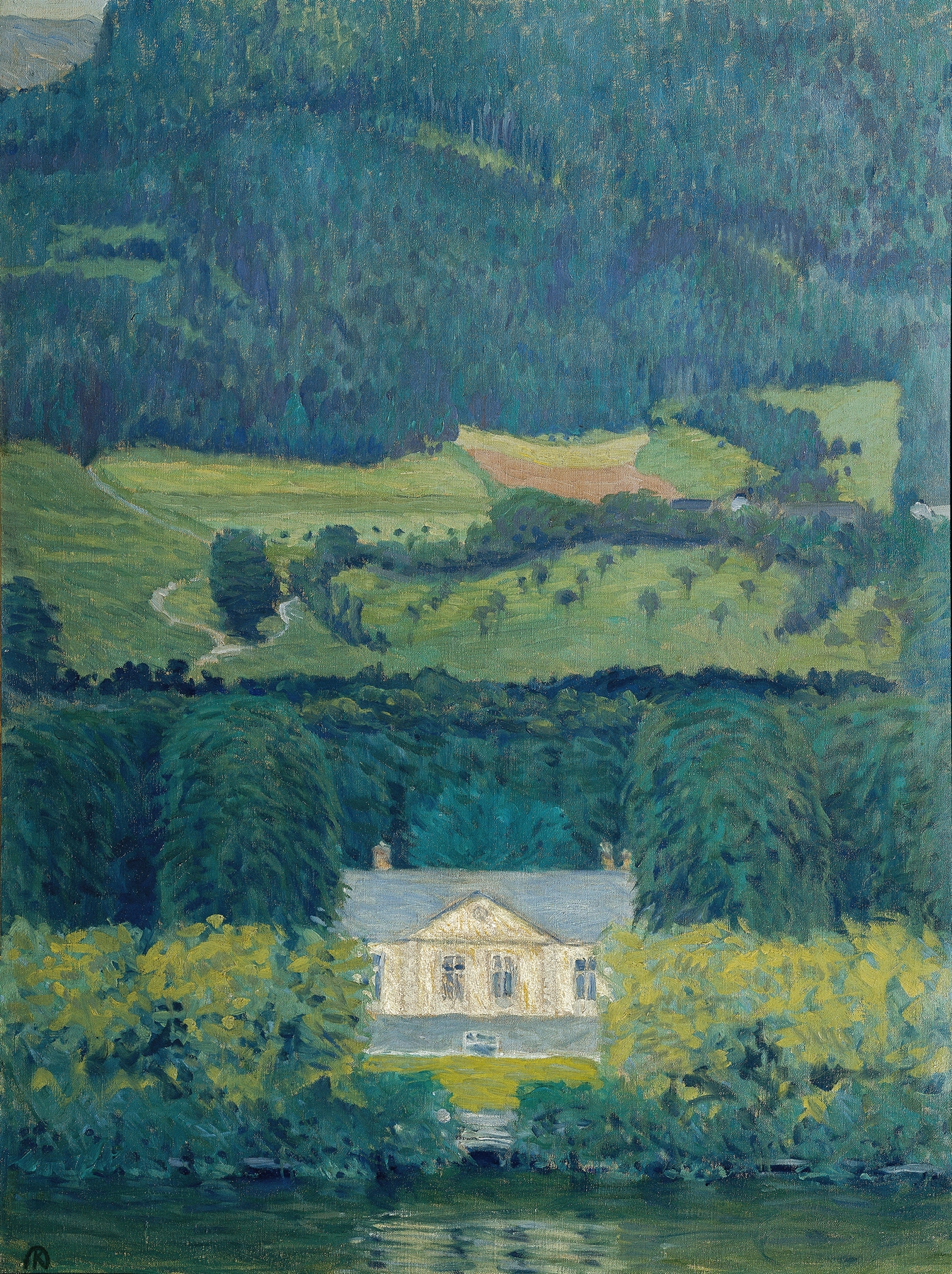
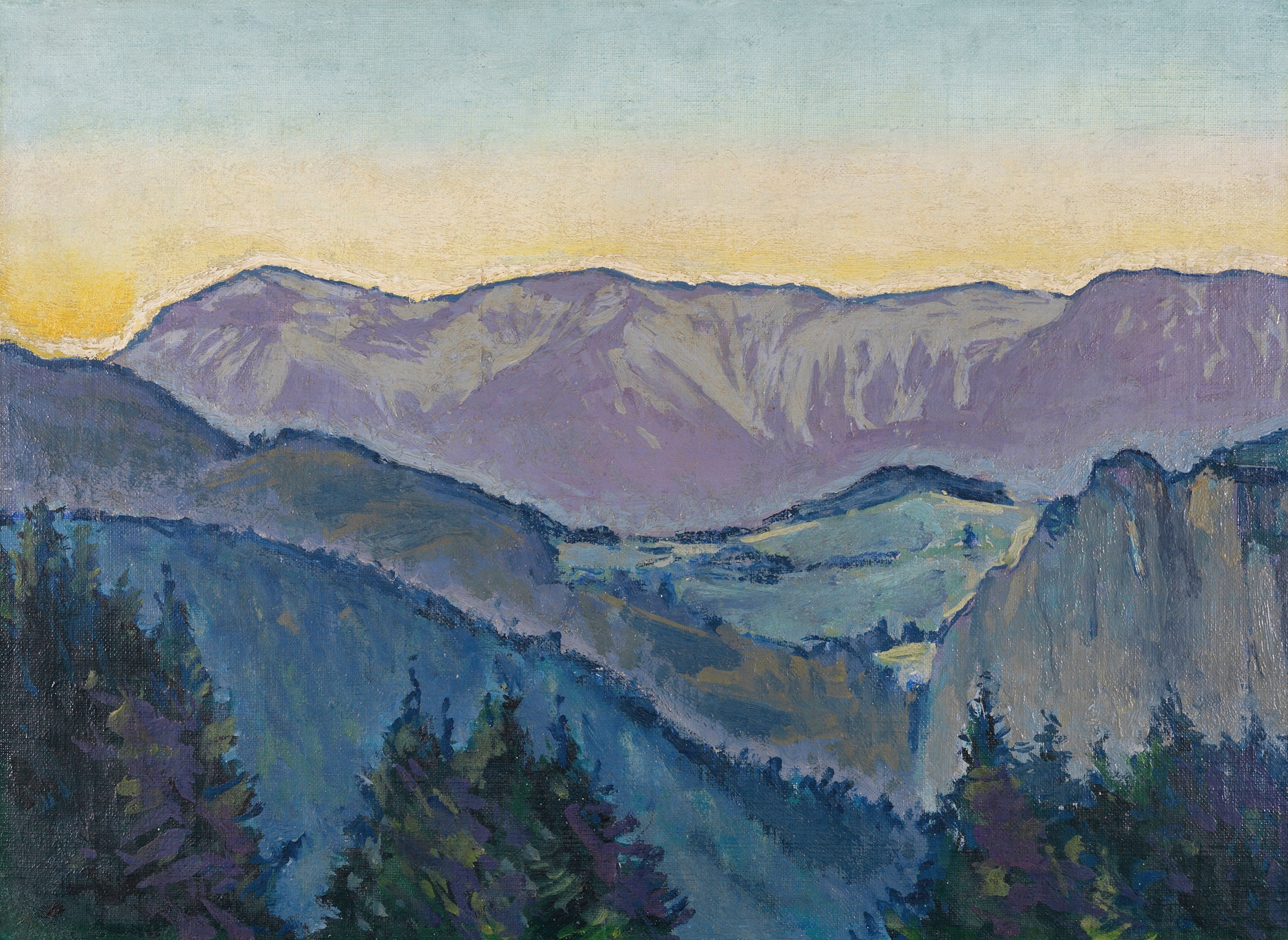
“To paint is to remember what time wants us to forget.” Each brushstroke captures a fleeting moment, evoking a sense of revelation that lingers beyond the canvas. In a world where memories dissolve, art becomes an antidote, anchoring our transient experiences in vibrant hues. Focus your gaze on the serene blue waters that sweep across the bottom of the canvas, reflecting the ethereal sky above. Notice how Moser meticulously balances the warm earth tones of the shore with the coolness of the lake, creating a harmonious dialogue between land and water.
Beyond the immediate landscape, the trees on the left stand tall, their shapes both organic and stylized, revealing the artist's affinity for abstraction while still celebrating nature's essence. Beneath this idyllic scene lies a contrast between tranquility and the passage of time. The undulating hillsides, bathed in soft sunlight, suggest a fleeting moment of calm, yet they are juxtaposed with the intricate detailing of the foreground, where life brims with potential. Each element holds significance— the distant mountains evoke both majesty and solitude, while the gentle waves ripple with the whisper of stories yet untold.
Koloman Moser created this work in 1912 while living in Vienna, during a period of intense artistic experimentation and transformation. The early 20th century witnessed the rise of modernism, and Moser was at the forefront, exploring new forms and ideas. His involvement with the Vienna Secession movement allowed him to merge fine art with decorative elements, cementing his role as a pivotal figure in the evolution of art during this dynamic era.