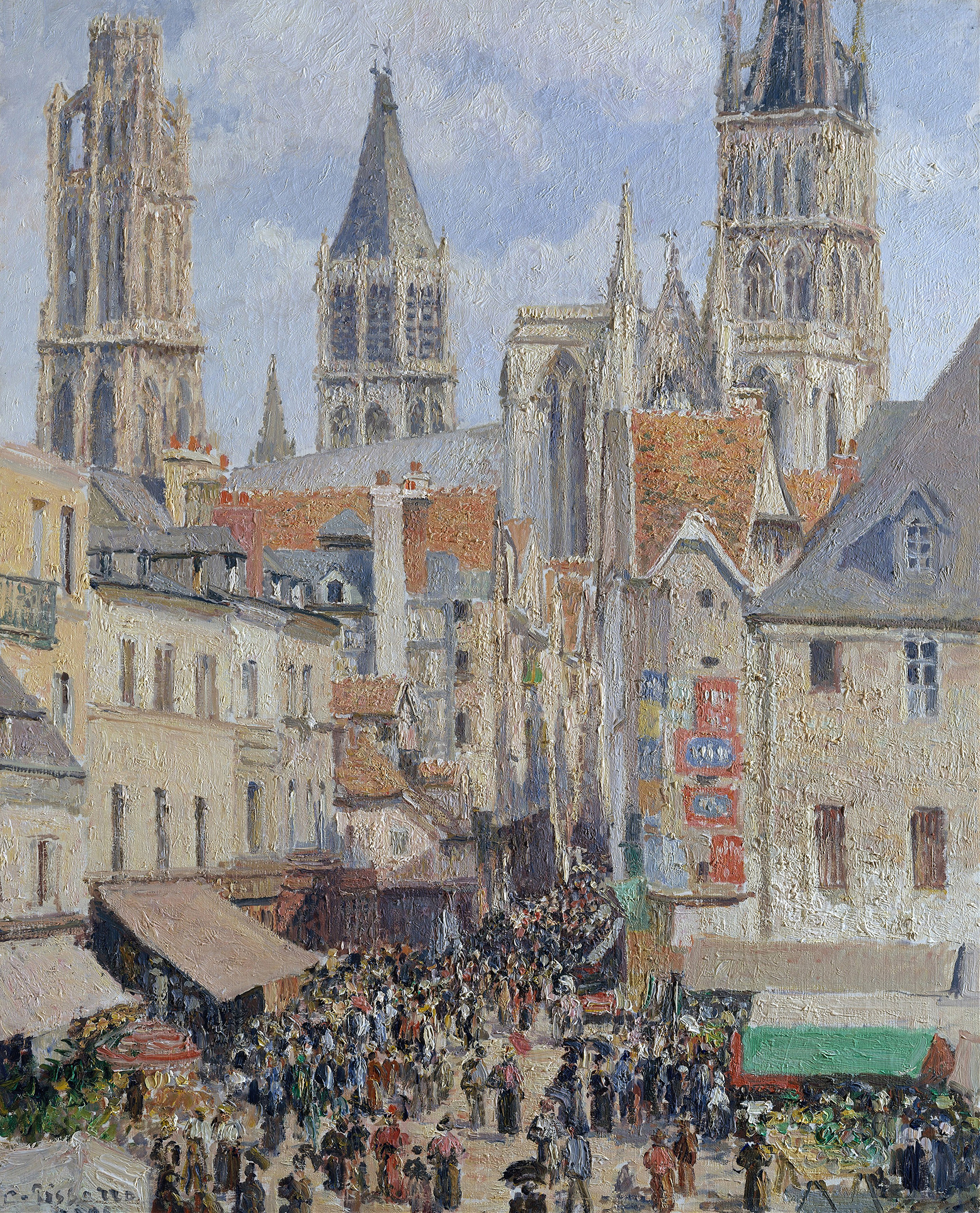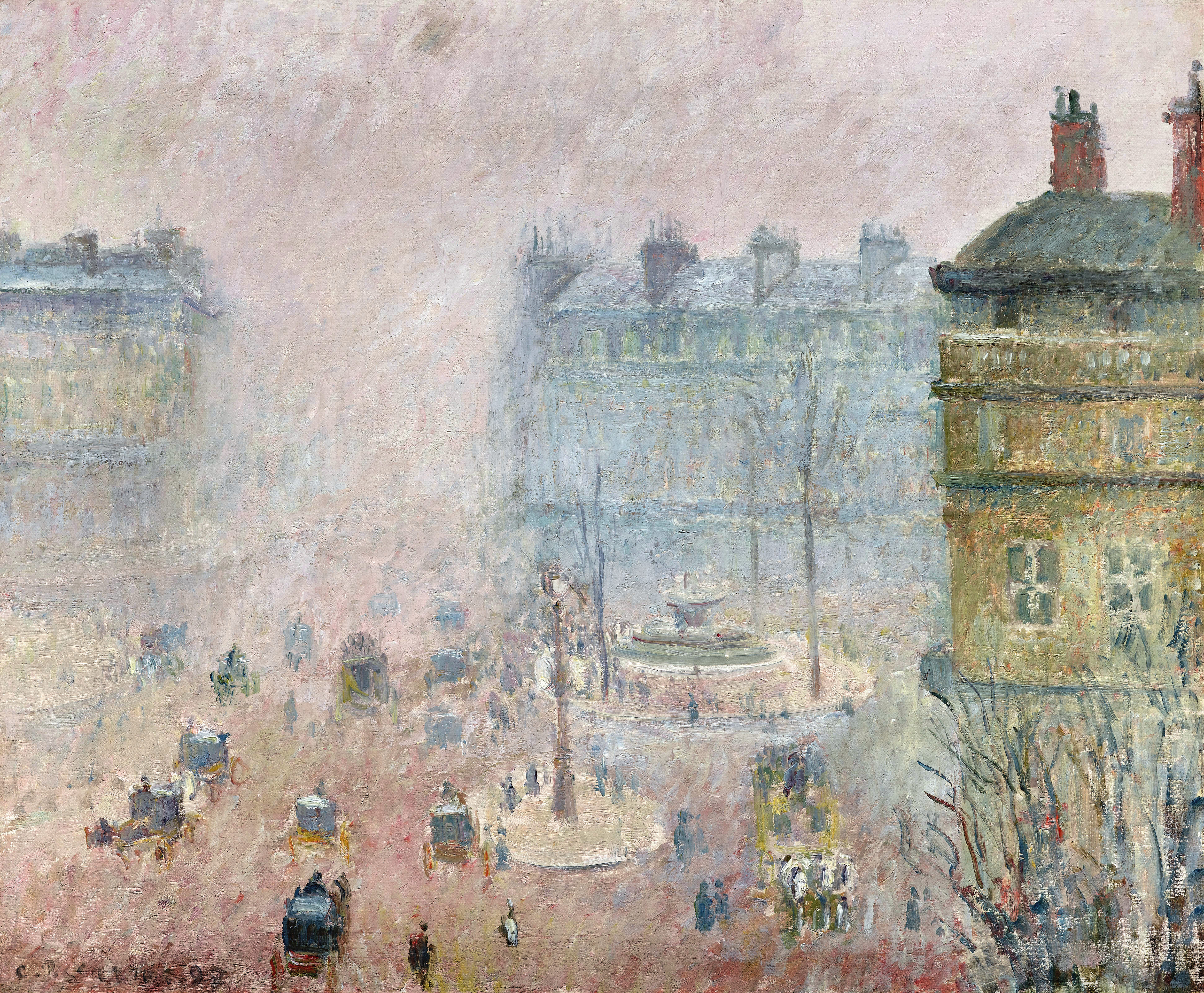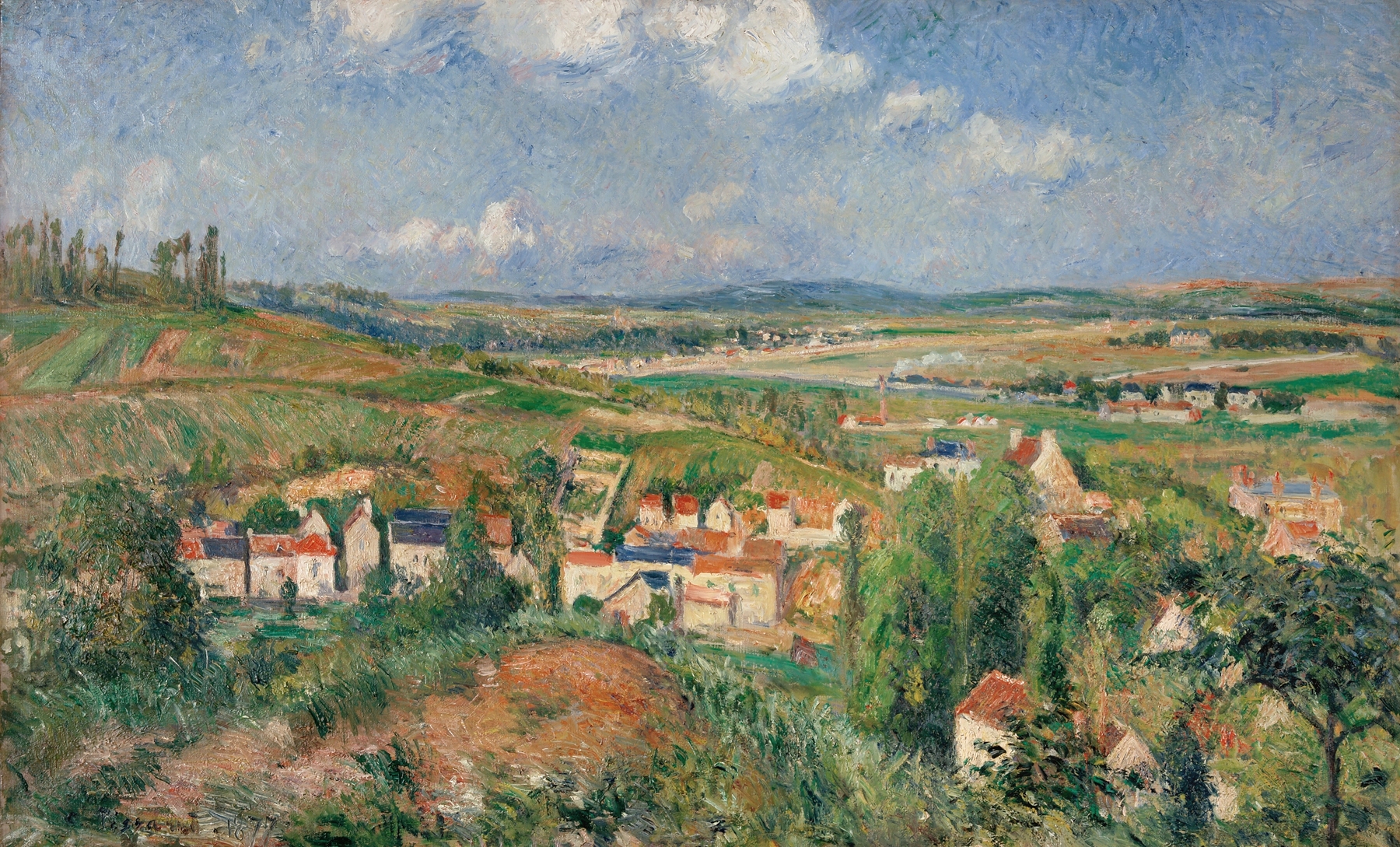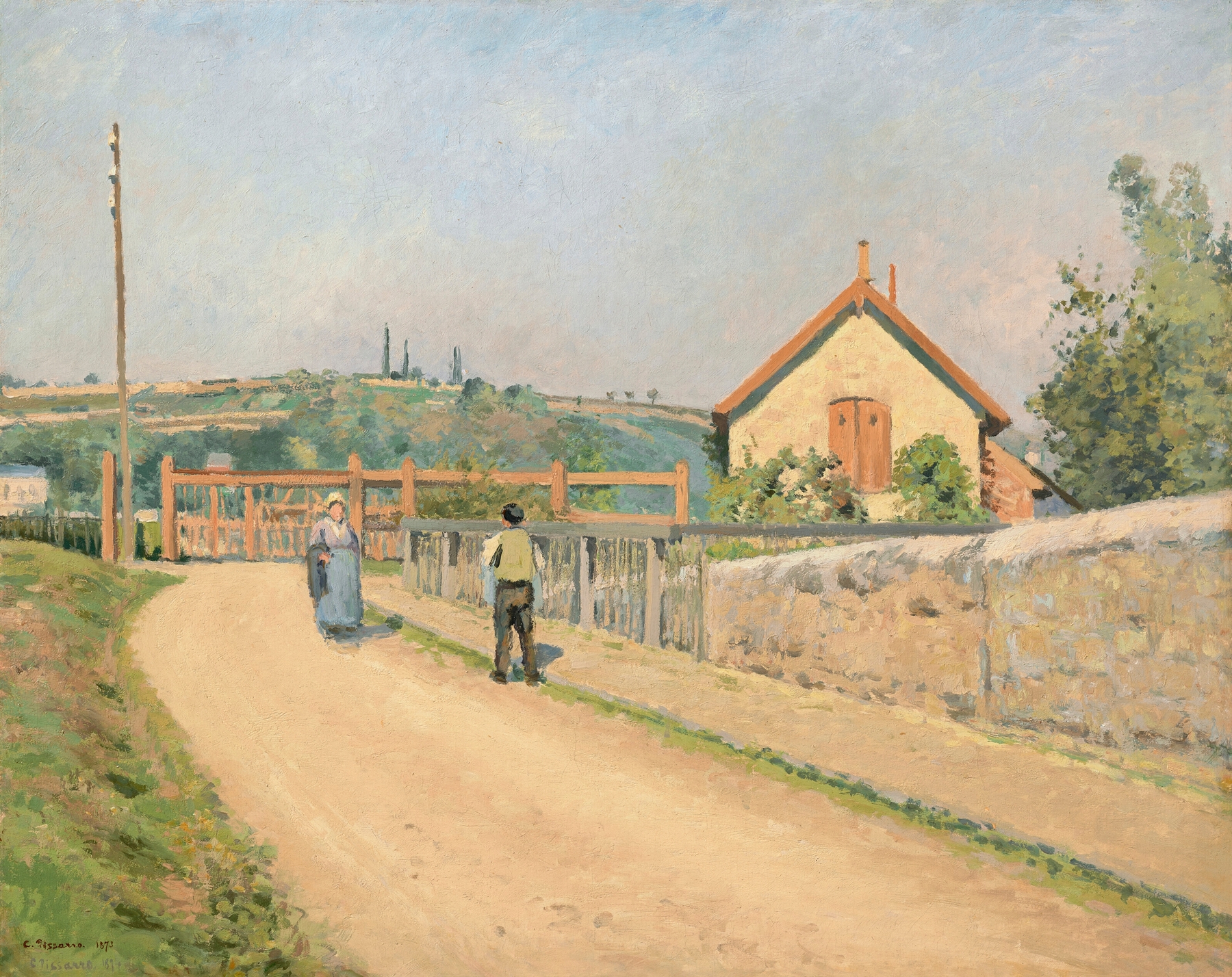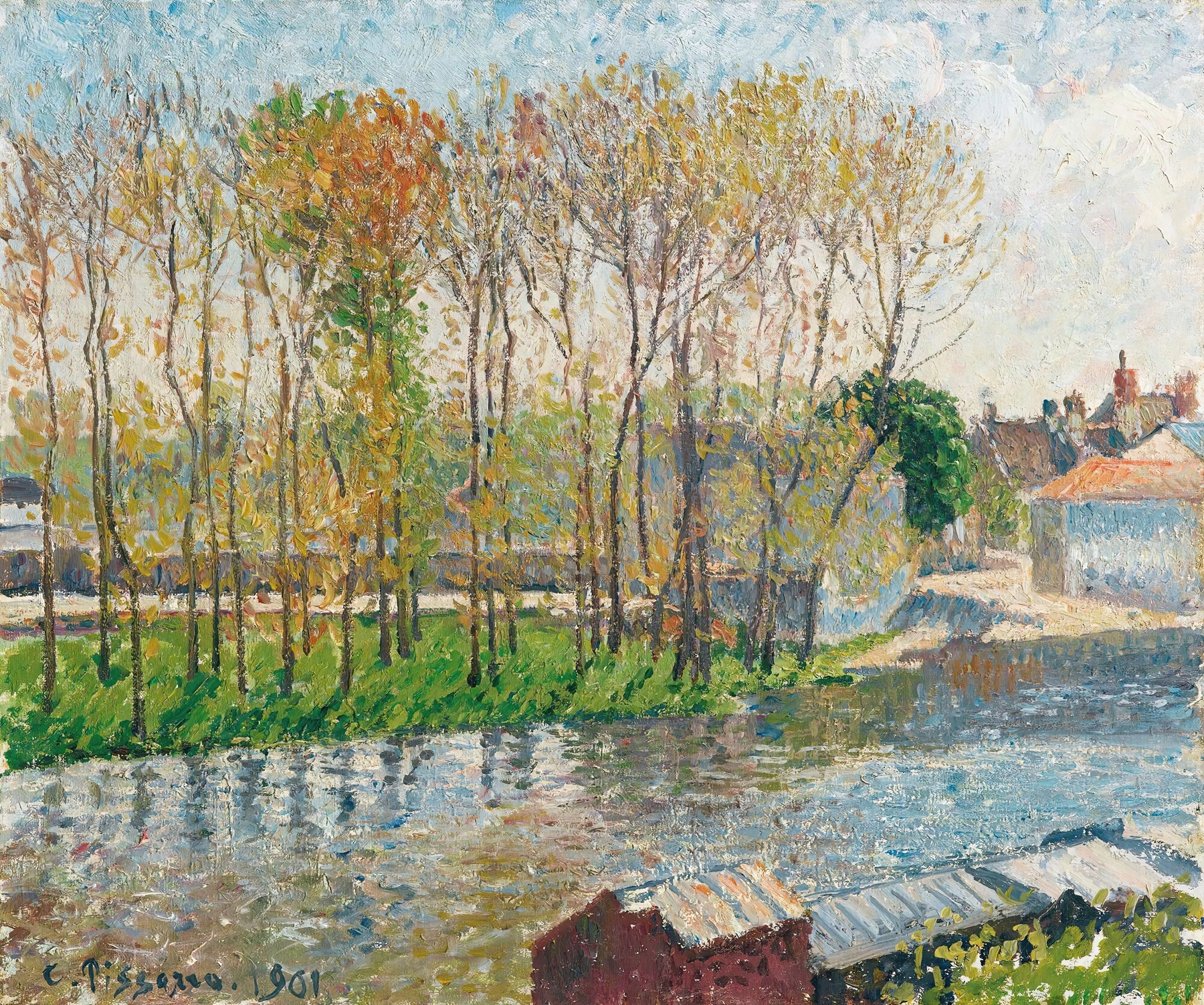
When did color learn to lie? In *Bords Du Loing À Moret*, the hues of nature twist in a dance between reality and perception, offering a glimpse into the artist’s obsessive mind. Look to the foreground where the riverbanks converge, painted with strokes of vibrant greens and soft blues. The brushwork is both frenetic and tender, guiding your eyes along the winding path of the water. Notice how the sunlight plays on the surface, shimmering with reflections that almost feel alive, beckoning you deeper into the scene. The contrasting shadows and highlights create a palpable tension, as if the landscape is caught in a moment of breathless anticipation. Beneath the idyllic surface lies a tension between tranquility and chaos, reflected in the juxtaposition of the calm river and the swirling foliage. The figures of distant townsfolk, small and almost ghostly, remind us of our insignificance against nature's vastness, yet they are painted with a warmth that invites connection. This interplay hints at the artist's own struggles with obsession, where the allure of beauty often blurs the line between joy and despair. In 1901, Camille Pissarro settled in Éragny, shifting his focus to the landscapes of Moret-sur-Loing. During this period, he was grappling with the challenges of aging and a changing art world, as the Impressionist movement evolved. This work, rich in color and complexity, reflects his desire to capture fleeting moments of beauty while confronting the relentless passage of time.