Christ and Apostles at the Sea of Galilee — History & Analysis
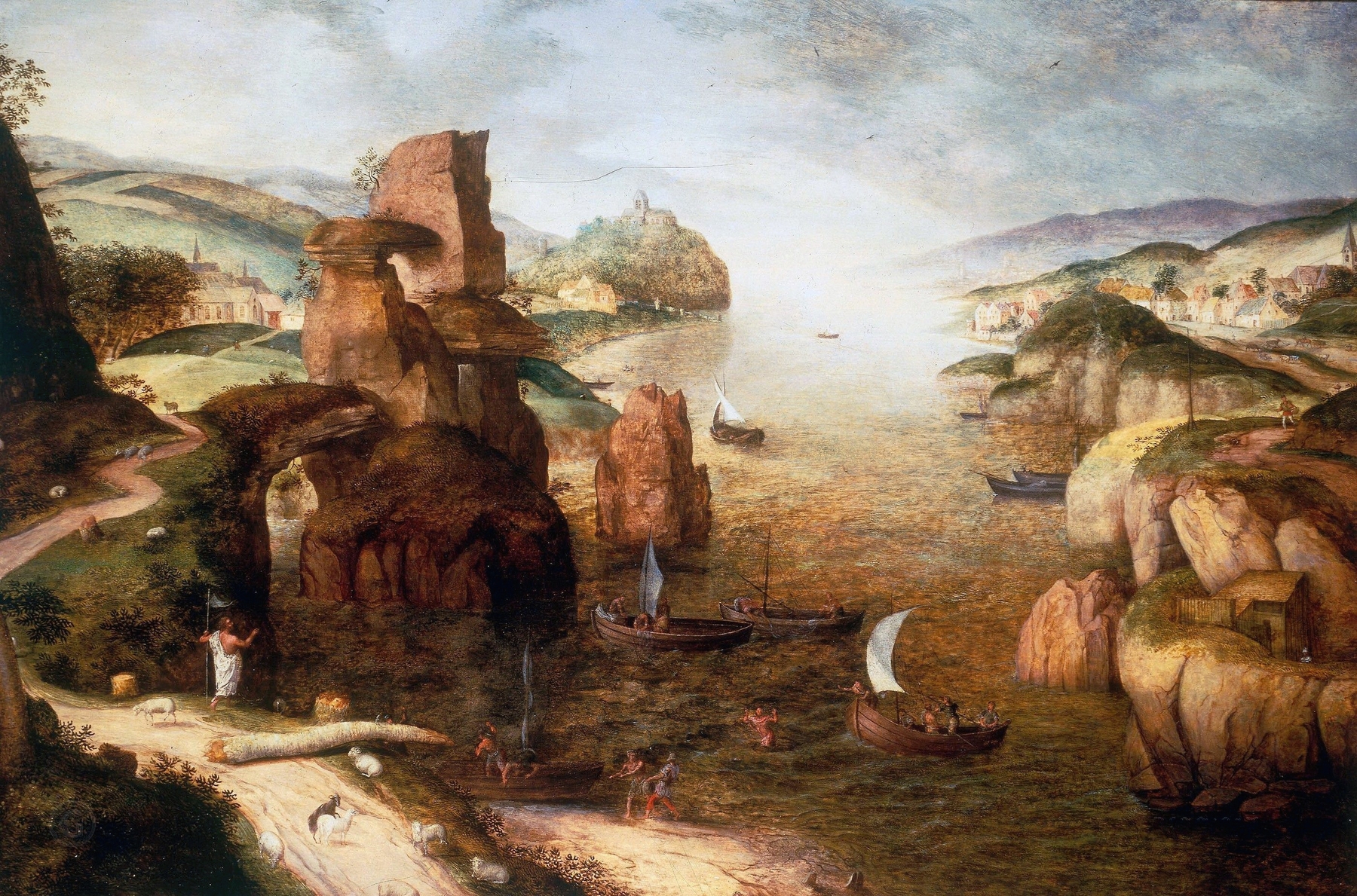
Could a single brushstroke hold eternity? In Christ and Apostles at the Sea of Galilee, the viewer is transported to a moment of profound awakening, where faith and humanity intertwine amidst nature's vast embrace. Look to the center at the figure of Christ, whose serene presence anchors the composition. The gentle waves ripple around the apostles, each face illuminated with a palette of muted earth tones, suggesting both their humility and the weight of their revelations.
Notice how the light glints off the water, creating a luminous path that draws the eye toward the horizon, symbolizing hope and divine guidance. Beneath the tranquil surface lies a rich tapestry of emotions and contrasts. The apostles, caught between doubt and belief, each display subtle gestures and expressions that speak of individual struggles. The rolling waves suggest a world in flux, reflecting the tumultuous journey of discipleship, while the calm sky looms above, promising serenity amidst chaos.
The juxtaposition of the natural landscape with these intimate figures evokes a sense of awakening in both the spiritual and physical realms. Pieter Bruegel the Elder painted this piece in 1553, during a period that witnessed the flourishing of Northern Renaissance art. This was a time when religious themes were paramount, and Bruegel, known for his keen observational skills and humanistic perspective, sought to illuminate the divine in everyday life. His exploration of nature and humanity resonated deeply during a time of societal transition, allowing viewers to reflect on their own spiritual journeys.