Hunters in the Snow — History & Analysis
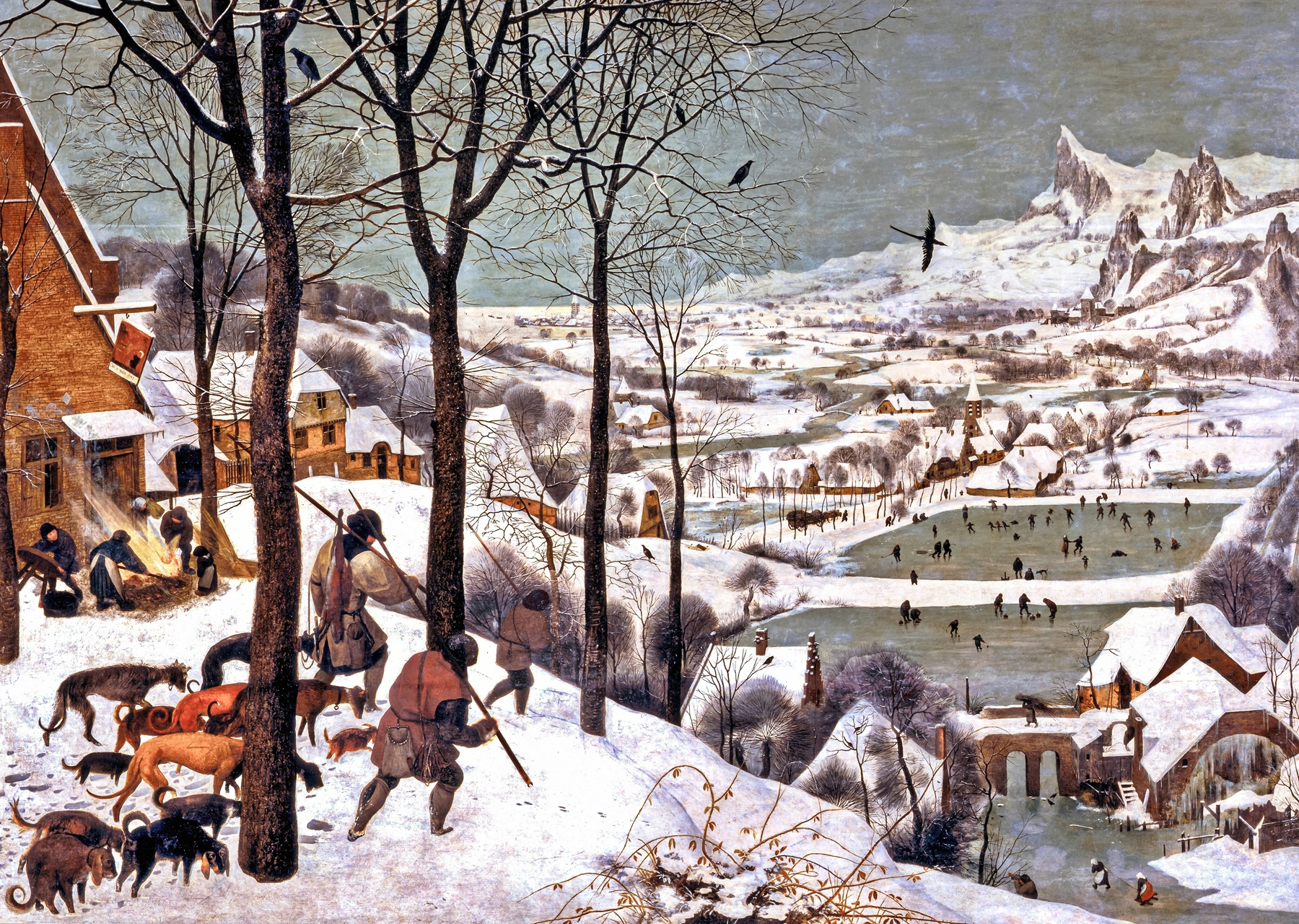
When did color learn to lie? In a world where the chill of winter seems to envelop every hue, Hunters in the Snow reveals the stark betrayal of our senses—what appears vibrant and alive may mask a deeper, somber truth. Look to the left, where the hunters return, their silhouettes stark against the expanse of snow. Notice the way the cool blues and whites dominate the canvas, contrasting sharply with the earthy tones of the figures, as if reminding us of their exhaustion and the weight of expectation.
The distant village nestled in the valley offers a false sense of warmth, its smoke rising into the crisp air, inviting yet distant, while shadows creep along the edges, hinting at the loss of life beneath the surface. The scene unfolds with an unsettling duality; the simple joy of winter activities tugs against the weariness etched on the hunters’ faces. The dogs, energetic yet anxious, add another layer of complexity, embodying both loyalty and the instinct to survive. Each figure is caught in a moment of tension—between the joy of the hunt and the stark reality of nature's harshness, whispering of the fragility of human ambition amidst an indifferent landscape.
Pieter Bruegel the Elder created Hunters in the Snow in 1565 during a time when Northern Europe was grappling with social and religious upheaval. Living in Antwerp, he was deeply influenced by the struggles of the common man, and his work reflects the complexities of human existence amidst the cycles of nature. In this painting, he captures not just a scene, but the very essence of life’s precarious balance, forever etched in the cold embrace of winter.