Massacre of the Innocents — History & Analysis
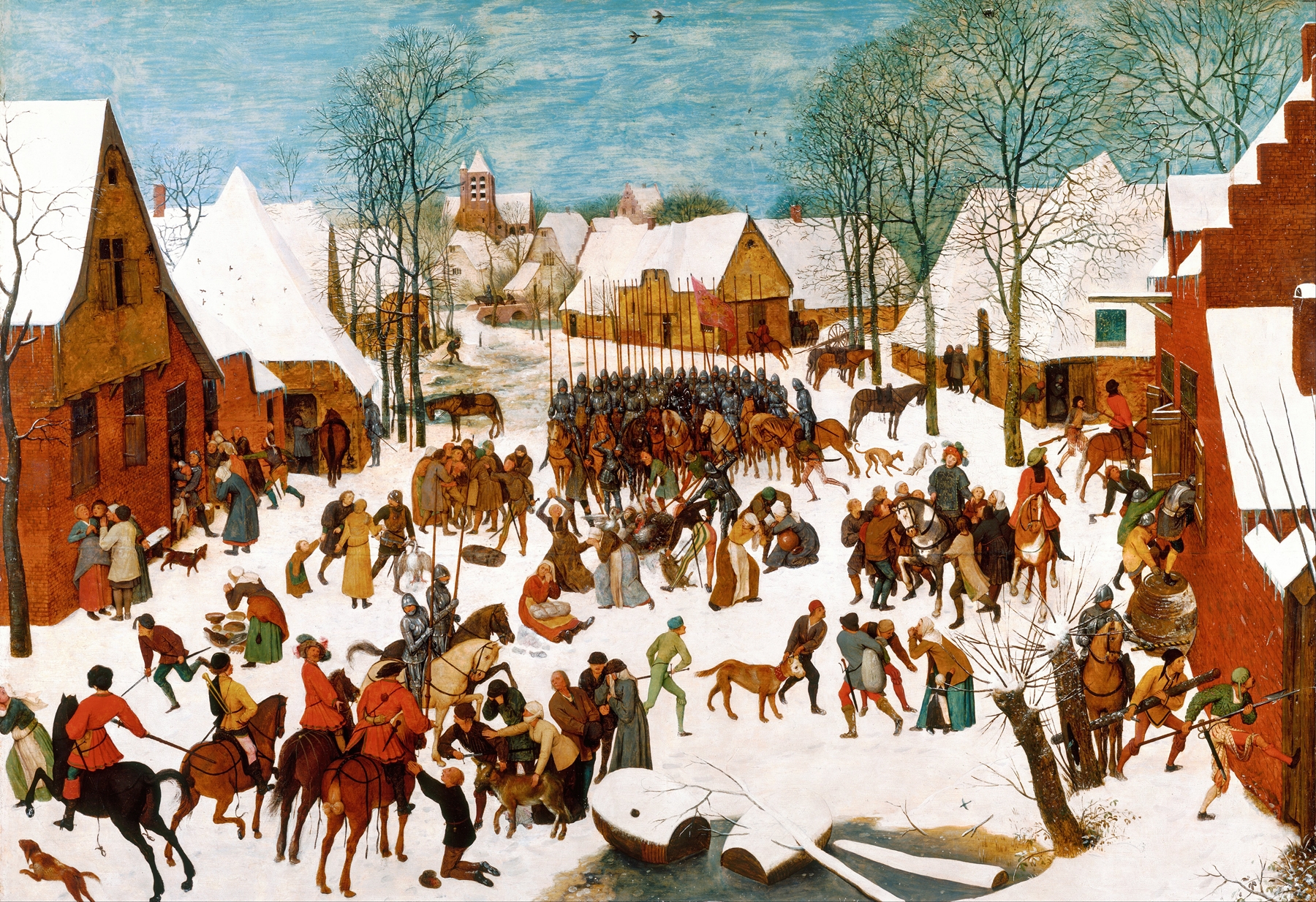
When did color learn to lie? In a world where faith often intertwines with the grotesque, the vibrant hues of this painting reveal a profound dissonance between superficial beauty and the brutal reality it depicts. Focus first on the central chaos, where an anguished mother clutches her child tightly against a backdrop of devastation. The vivid reds and deep blues clash in stark contrast, emphasizing the violence that fills the scene while also inviting an unsettling contemplation of the tragedy.
Notice how Bruegel employs sharp lines and dynamic movement, guiding your gaze through the chaos, almost like a frenzied dance of despair, drawing your eyes toward the figures frozen in their anguish. Hidden within this harrowing tableau lies a poignant commentary on innocence lost and the pervasive nature of evil. The contrast between the colorful landscape and the dark actions unfolding speaks to a world where faith can falter, and hope is eclipsed by despair. Tiny details, like the inhuman expressions of the soldiers and the despair etched into the mothers' faces, amplify the emotional weight of the work, suggesting that even the brightest colors cannot mask the horrors of humanity.
Pieter Bruegel the Elder created this piece during the 1560s, a time marked by religious and social upheaval in Europe. Living in the Netherlands, he witnessed the conflict between Protestant and Catholic factions that influenced much of his work. Amidst this turbulent backdrop, the painting reflects not only the artist's concerns about faith and morality but also resonates with a broader societal struggle, capturing a moment in history where innocence was tragically sacrificed on the altar of power.