Christ Driving the Money Changers from the Temple — History & Analysis

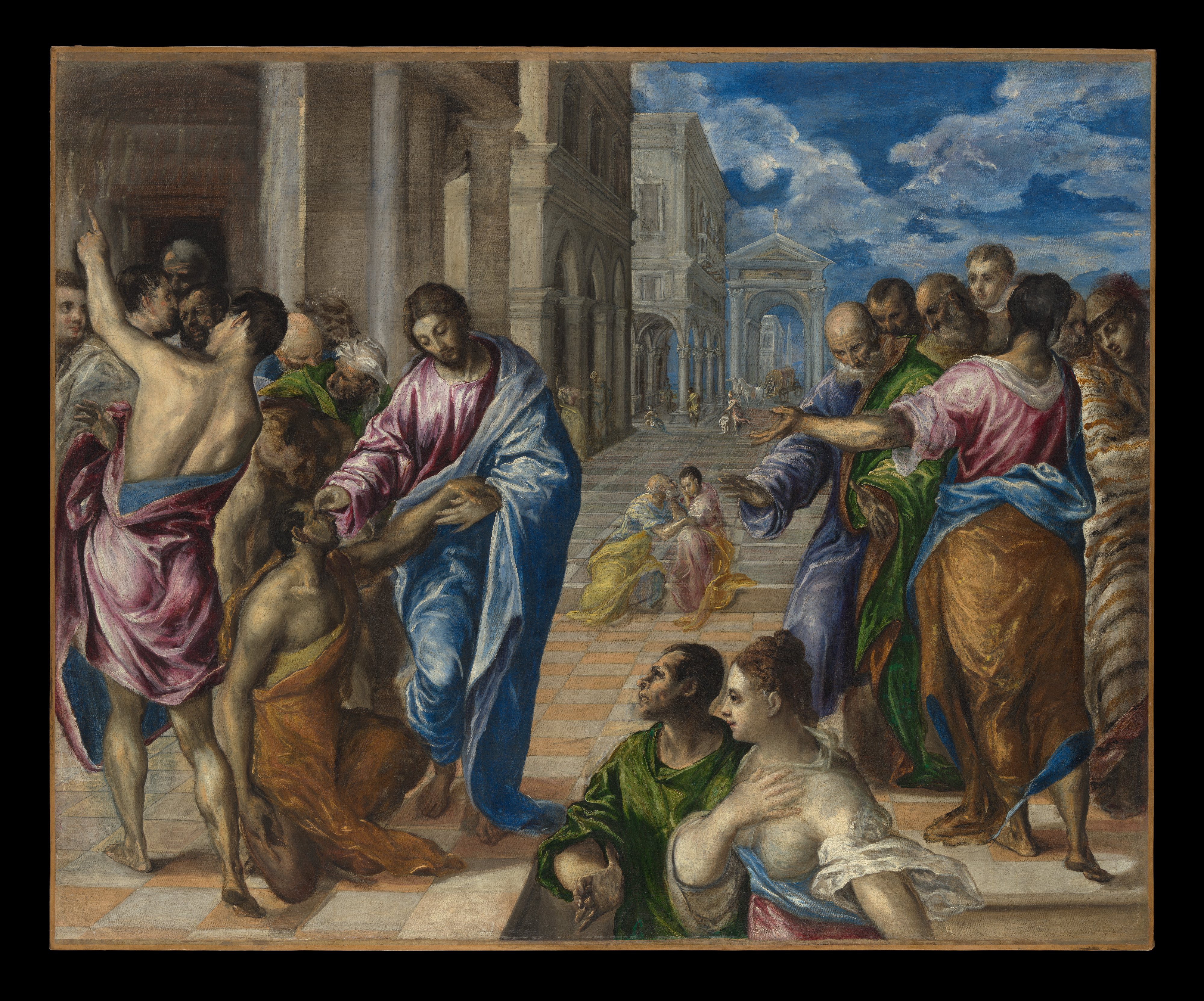
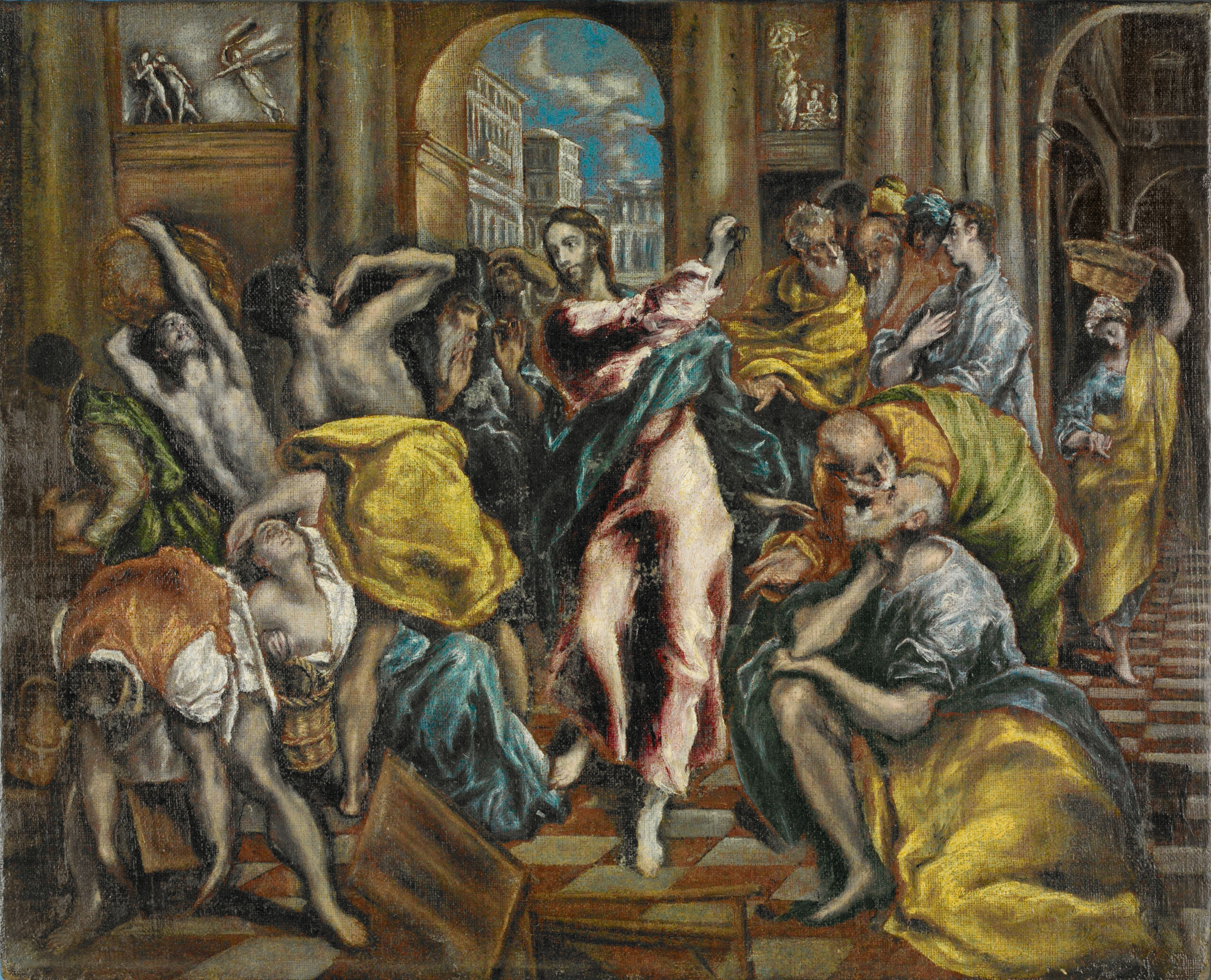
Can beauty exist without sorrow? This question reverberates through the layers of shadow and light in El Greco's Christ Driving the Money Changers from the Temple. Focus on the striking tension in the figures at the center, where Christ stands resolute, arms outstretched. Notice how the swirling drapery of his robe, painted in vivid whites and blues, contrasts starkly with the darker hues enveloping the money changers.
The sharp angles of their bodies express panic and disbelief, drawing the viewer's gaze to Christ's fierce determination. The chaotic arrangement of the scene creates a dramatic diagonal movement, guiding your eye from the foreground's turmoil to the serene power of the divine. Within this vivid tableau, El Greco captures the emotional struggle between sacred righteousness and material greed. The stark contrasts between light and shadow not only enhance the turmoil of the moment but also imply a deeper moral conflict.
The gold coins scattered on the ground shimmer mockingly, serving as a reminder of the corrupting influence of wealth, while the ascending figures of angels in the background offer a beacon of hope and divine justice. Created around 1600 in Toledo, Spain, during a period of profound spiritual and artistic transformation, El Greco's work reflects the tensions of Counter-Reformation fervor and the rise of individual expression in art. Here, the artist, grappling with his own complex identity as a Greek painter in a Spanish context, employs intense emotionality and dramatic form to challenge viewers' perceptions of faith, commerce, and the essence of beauty itself.