The Assumption of the Virgin — History & Analysis

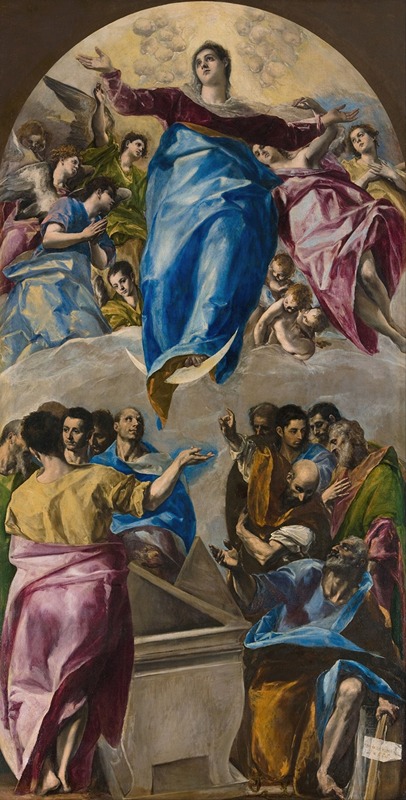
“The canvas doesn’t lie — it simply waits.” In the stillness of El Greco’s masterpiece, we are confronted with a moment suspended in time, where fear dances between the sacred and the unknown. Look to the upper half of the canvas, where the Virgin Mary ascends amidst a tumult of figures and vibrant hues. Notice how the swirling clouds cradle her, almost alive, rendered in ethereal blues and whites that transition into a fiery backdrop. The composition draws your eye upward, creating a sense of movement as if inviting you to share in the transcendent experience.
The figures below, painted in darker, more muted tones, serve as a stark contrast, amplifying the luminous ascent of the Virgin. This powerful juxtaposition evokes an unsettling tension; while the divine radiance embodies hope, the figures below reflect a mixture of awe and trepidation. The expressions of the spectators are filled with both reverence and fear, hinting at their struggle to comprehend the divine mystery unfolding before them. The folds in their garments ripple like waves of emotion, and the expression on Mary’s face, serene yet distant, suggests her own acceptance of fate, leaving the viewer to grapple with the duality of transcendence and loss.
Created between 1577 and 1579, this work emerged during a pivotal time for the artist, who was living in Toledo, Spain. El Greco faced challenges in adapting to the changing art scene dominated by the Italian Renaissance style while striving to establish his distinctive voice. This painting reflects not only his mastery of chiaroscuro and color but also his deep exploration of spiritual themes, marking a defining moment in his evolution as a painter.