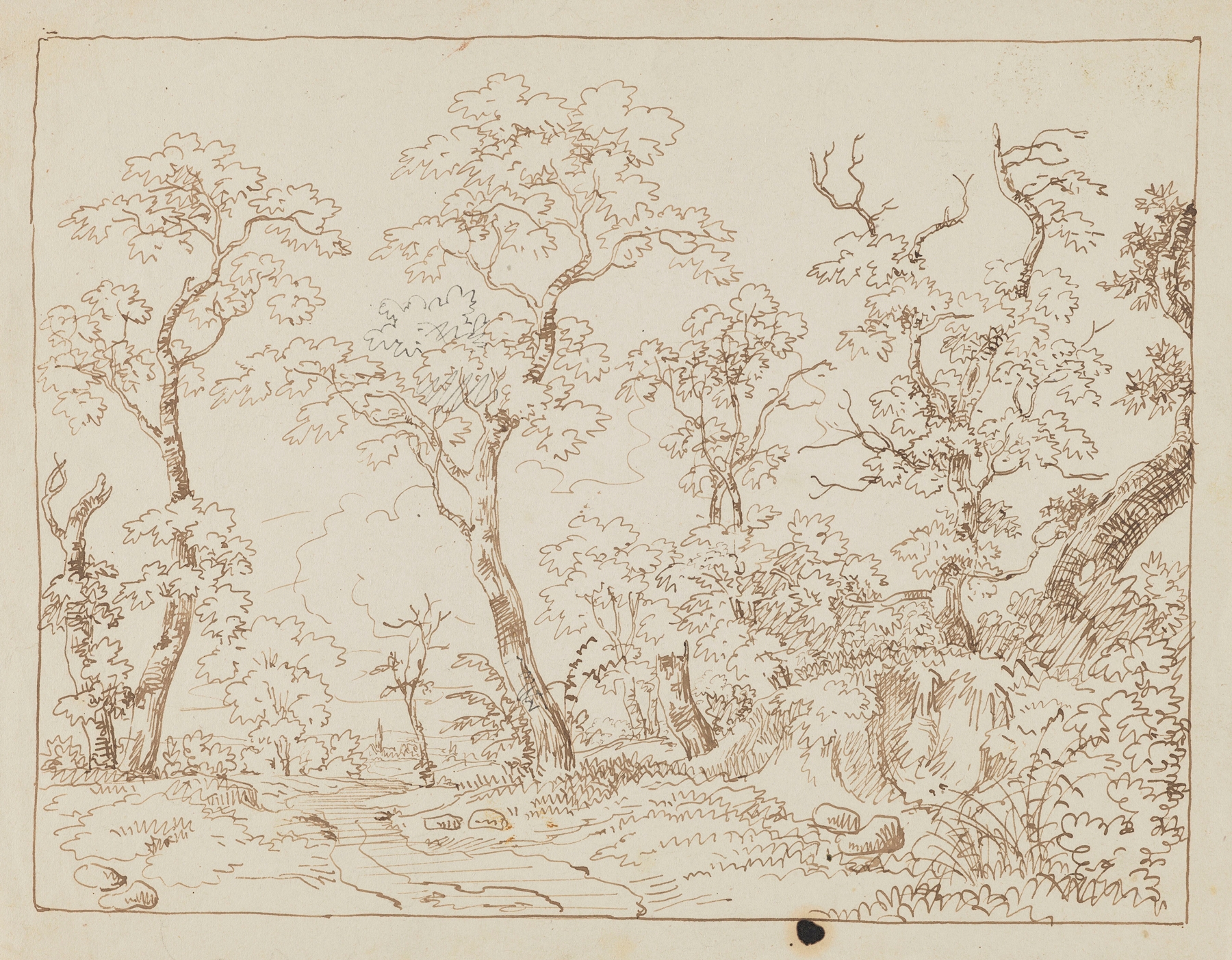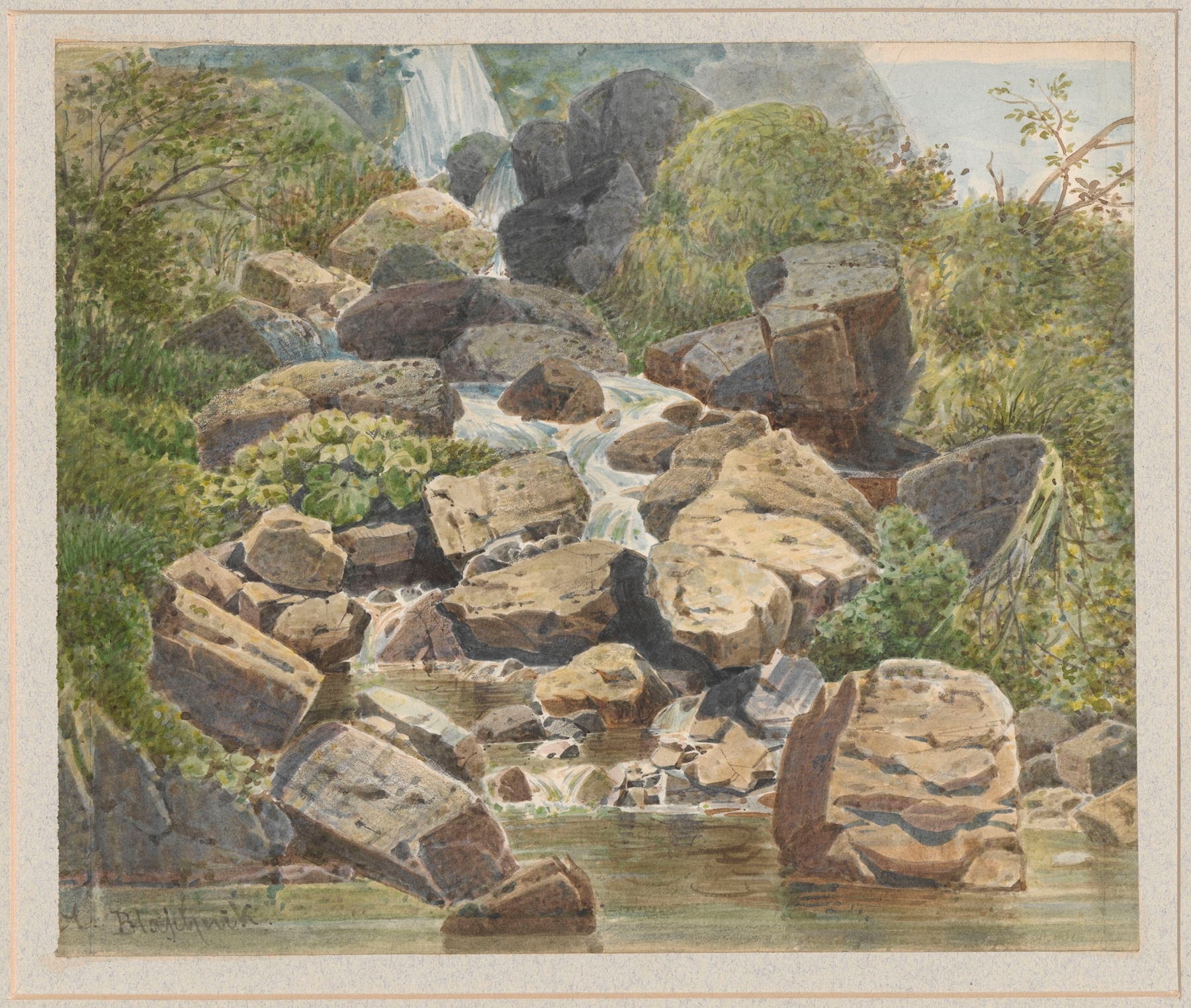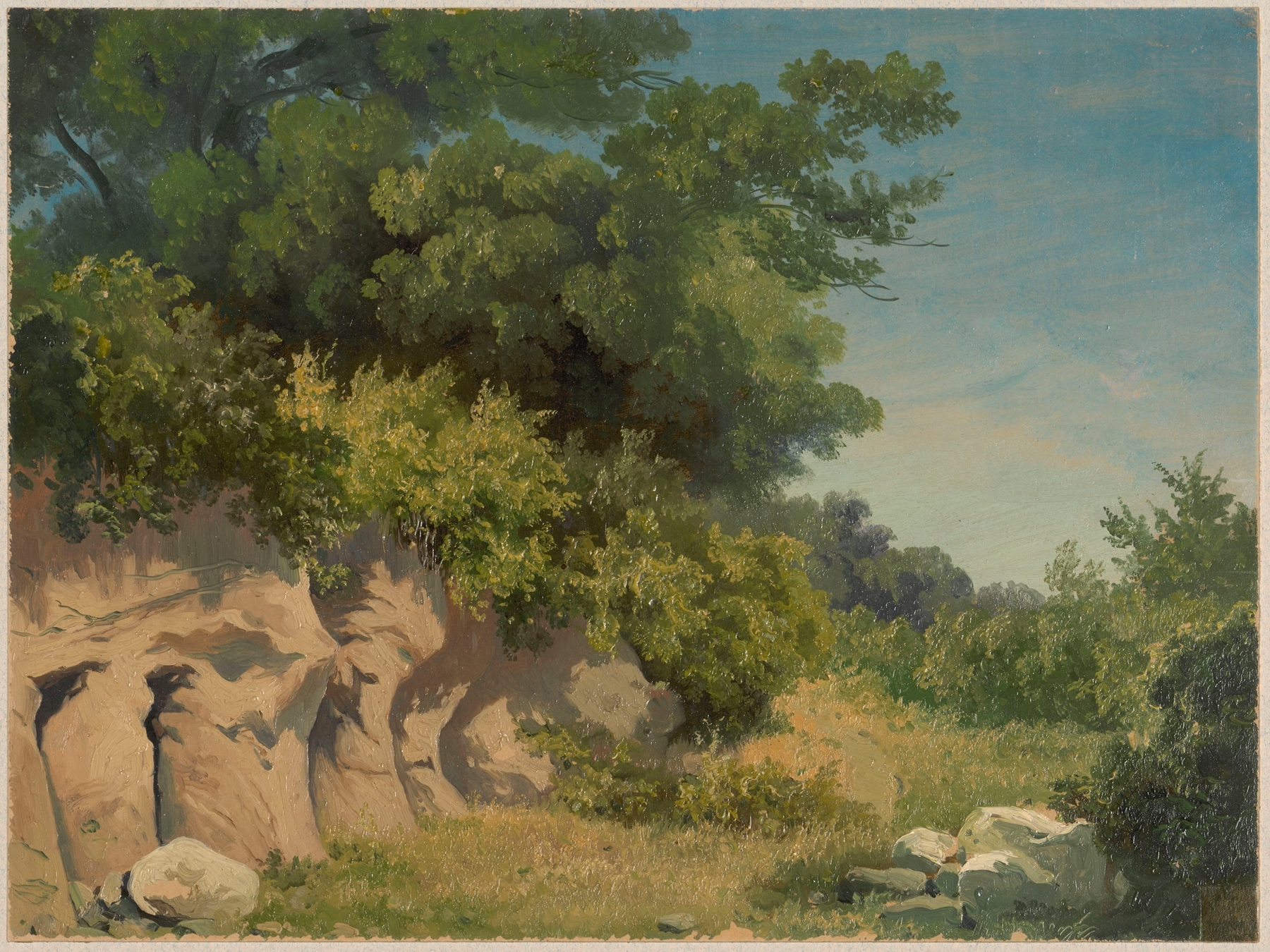
Can beauty exist without sorrow? In *Cliff overgrown with trees*, a haunting interplay of light and shadow reveals the intricate dance between nature’s splendor and its solitude. Look to the left at the sun-drenched foliage, where vibrant greens burst forth like life’s exuberance. The trees, with their gnarled branches, reach toward the sky, drawing your gaze upward to the rugged cliffside. Notice how the light filters through, casting dappled shadows that create a tapestry of depth and texture, evoking both warmth and melancholy. The artist’s careful brushwork captures the essence of an untouched landscape, inviting contemplation of the unseen stories hidden within. Delve deeper, and the emotional tensions become apparent. The lush growth, while beautiful, hints at nature’s relentless reclaiming of space—an assertion of life against the craggy permanence of stone. The juxtaposition of the cliff’s starkness with the verdant life surrounding it speaks of resilience, yet carries an undercurrent of inevitability. This duality evokes a certain sadness, a reminder of the fragility of beauty amidst the encroaching passage of time. During the years between 1859 and 1879, *Cliff overgrown with trees* emerged from the hands of Arthur Blaschnik, who was exploring the nuances of landscape painting during a vibrant period in European art. Working at a time when Romanticism and early Impressionism were both influential, he sought to convey not just the visuals of nature but also its emotional resonance, bridging the gap between observation and feeling.