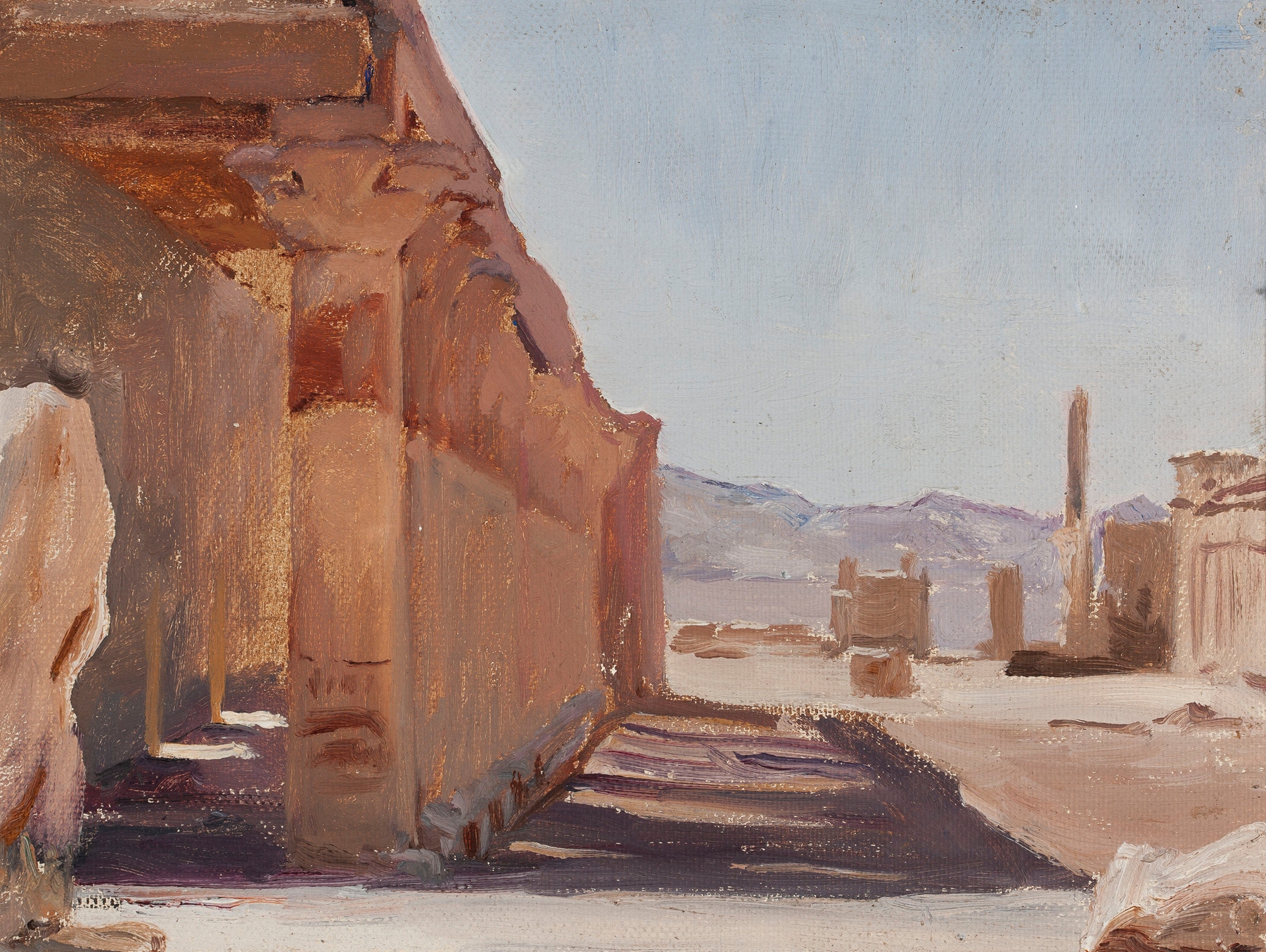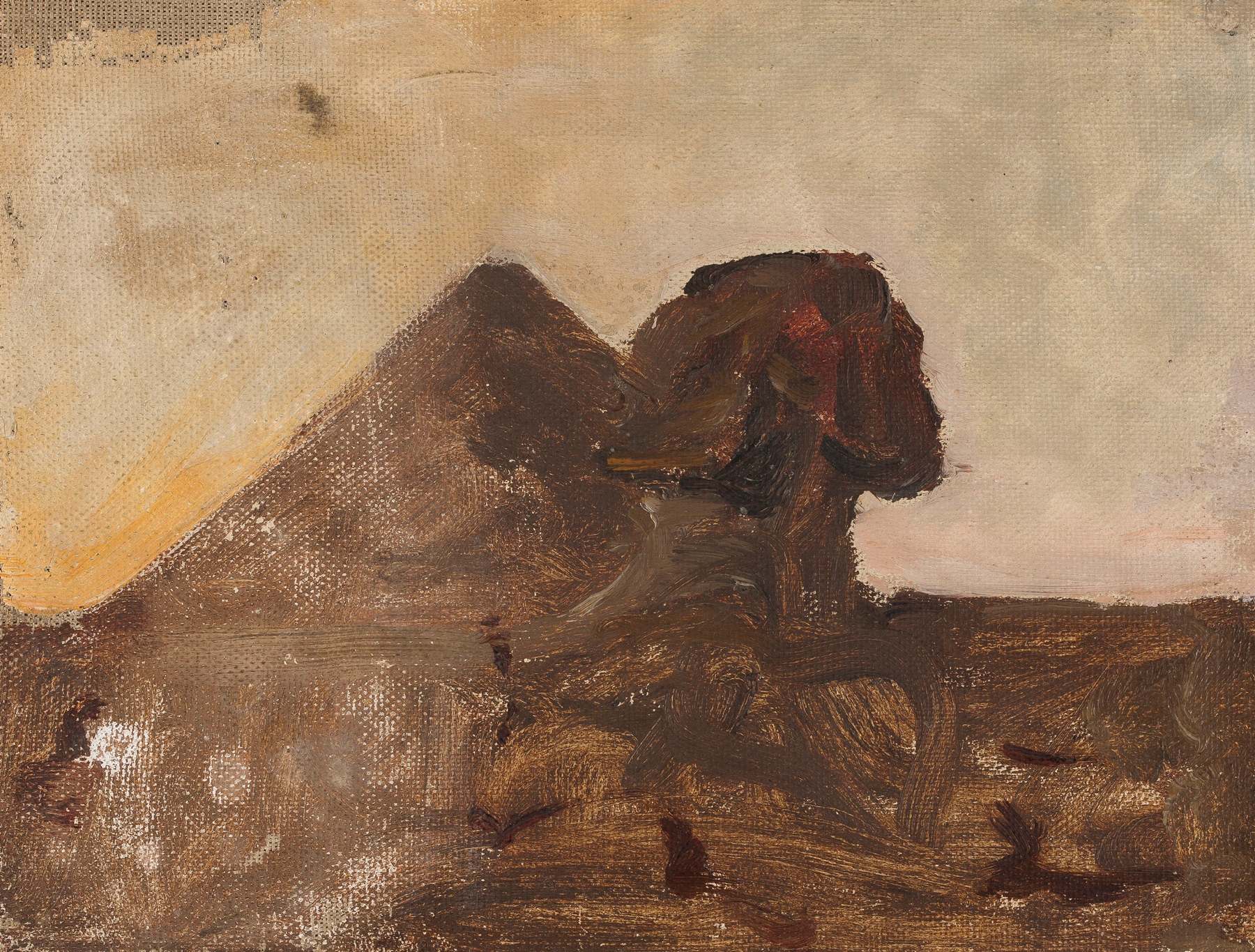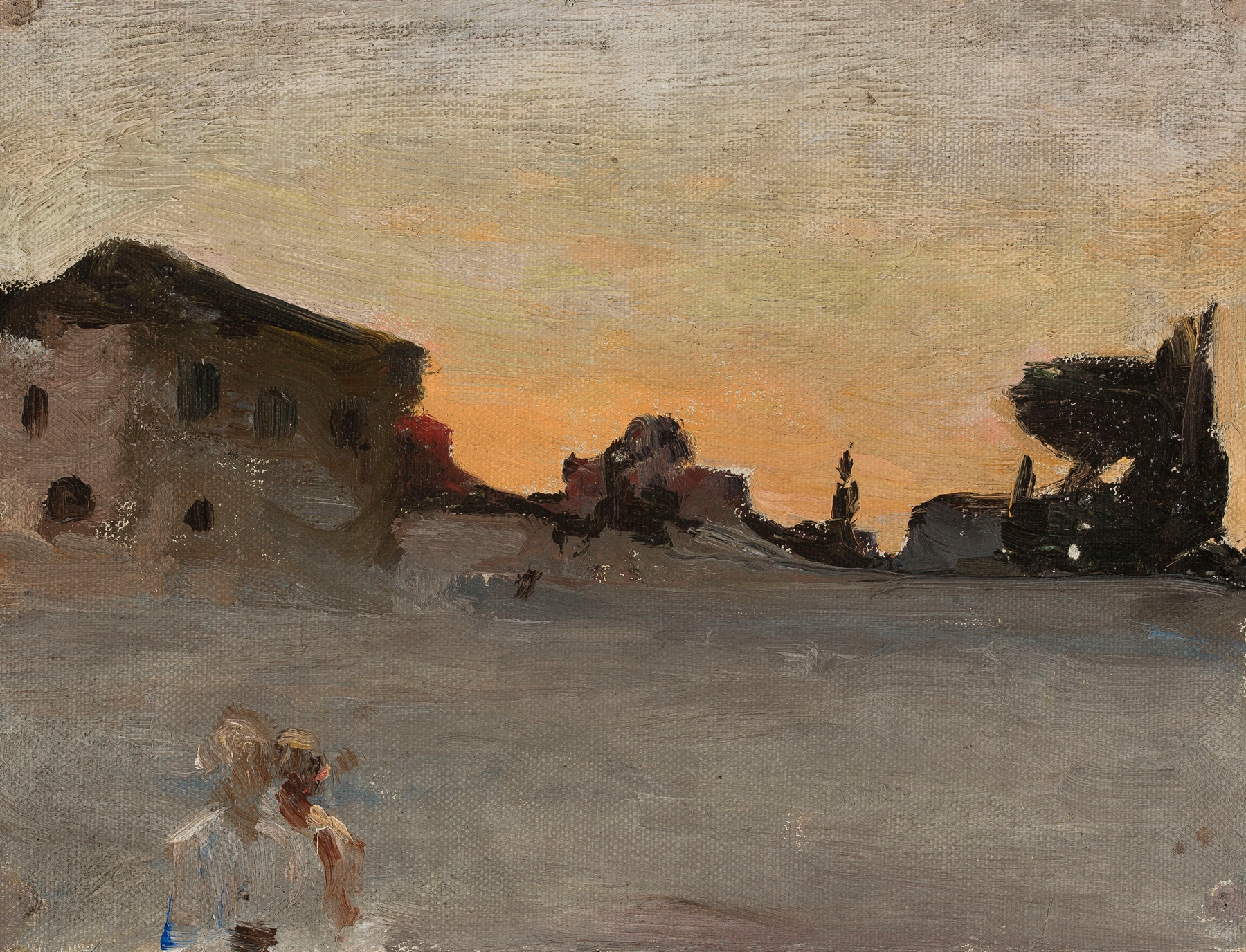
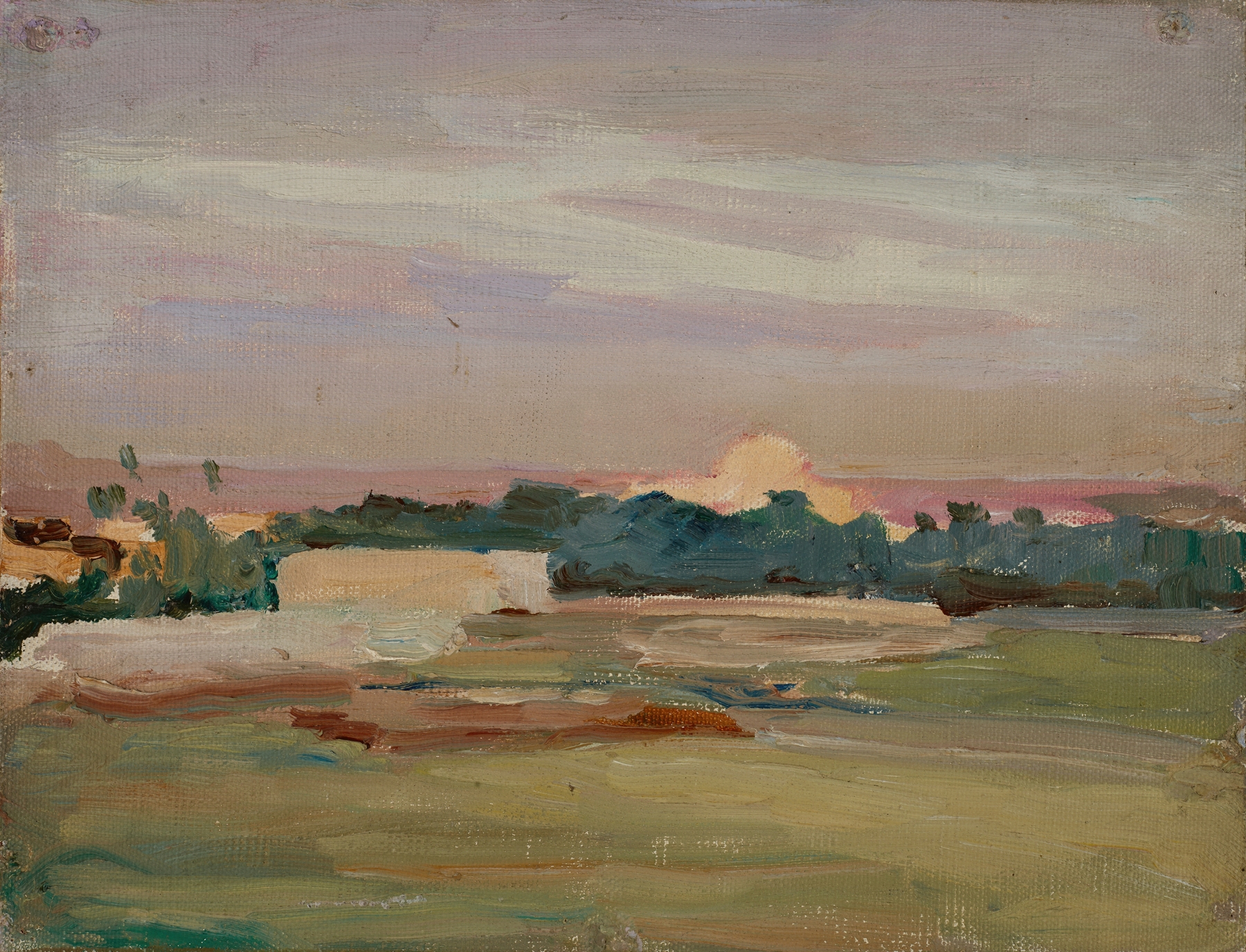
Can paint confess what words never could? In *Corinth. From the journey to Greece*, the brush captures a moment where fear entwines with beauty, whispering silently through the canvas. Look to the center, where the sun-drenched ruins of Corinth rise majestically, cloaked in an ethereal glow. The earth tones of the stone structures contrast vividly with the azure sky, creating a dialogue between permanence and transience. Notice how the shadows twist and deepen at the edges, hinting at a history of decline and loss. The gentle play of light against the ancient pillars serves as a reminder of time's relentless march, inviting the viewer to consider both the splendor of the past and the fragility of existence. Delve deeper into the painting's layers, where the artist's subtle brushstrokes breathe life into the echoes of fear that linger in the air. The abandoned atmosphere speaks to lost dreams and the weight of history, as if the ruins themselves hold their breath. The vibrant landscape juxtaposes against the silent remnants of civilization, creating a tension that elicits both awe and unease. Each detail, from the cracked facades to the distant hills, embodies the paradox of hope and despair, reminding us that beauty often coexists with vulnerability. In 1905, Jan Ciągliński was immersed in an exploration of Greece's ancient landscapes, capturing their essence as a means to connect with a world in flux. This period marked a shift in his artistic focus, as he sought to convey the interplay between light and shadow—both literally and metaphorically. While Europe stood on the brink of change, the artist found solace and inspiration in the timelessness of these ruins, using his brush to reflect the broader tumult of the era.