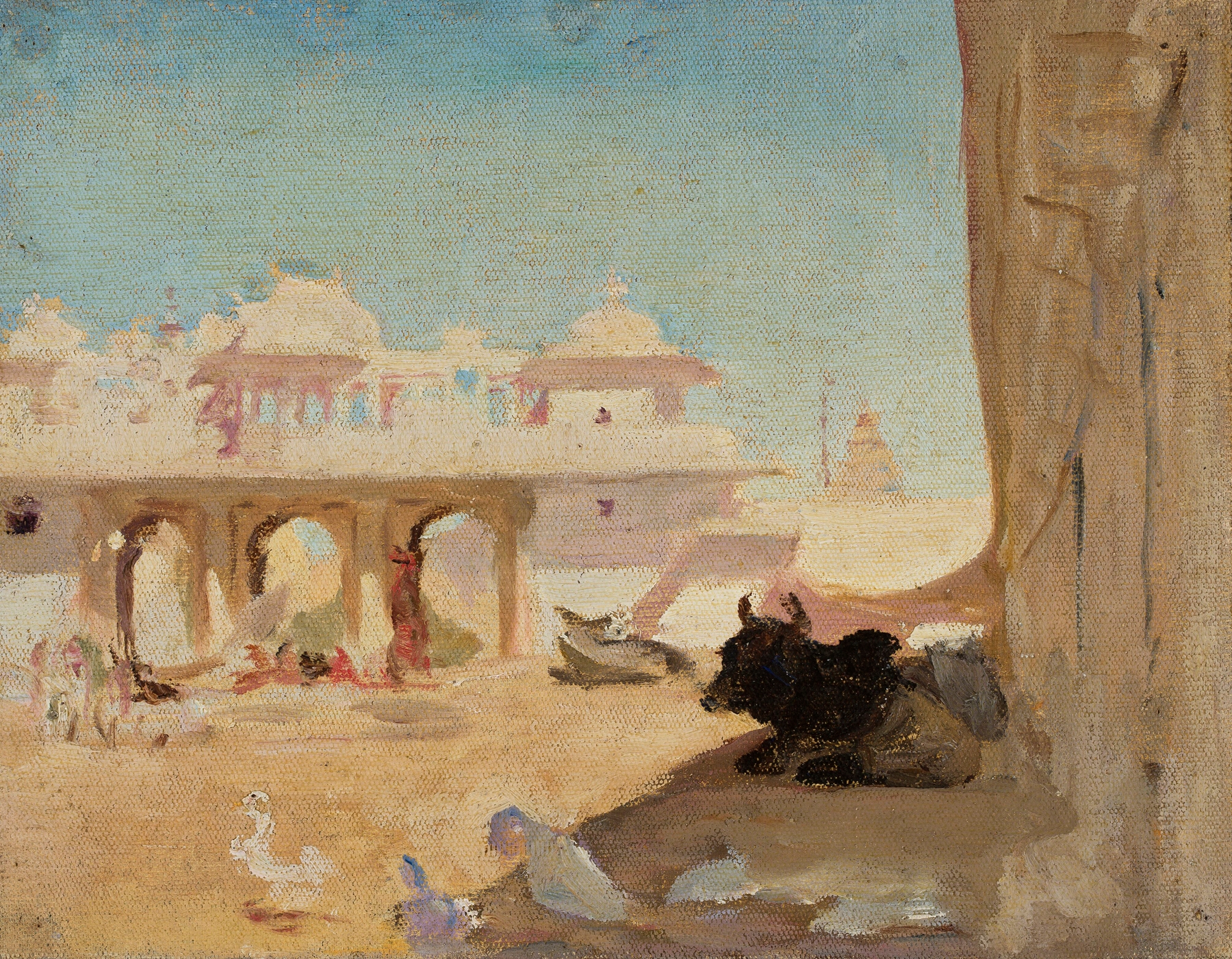
Courtyard of maharajah’s palace. From the journey to India — History & Analysis
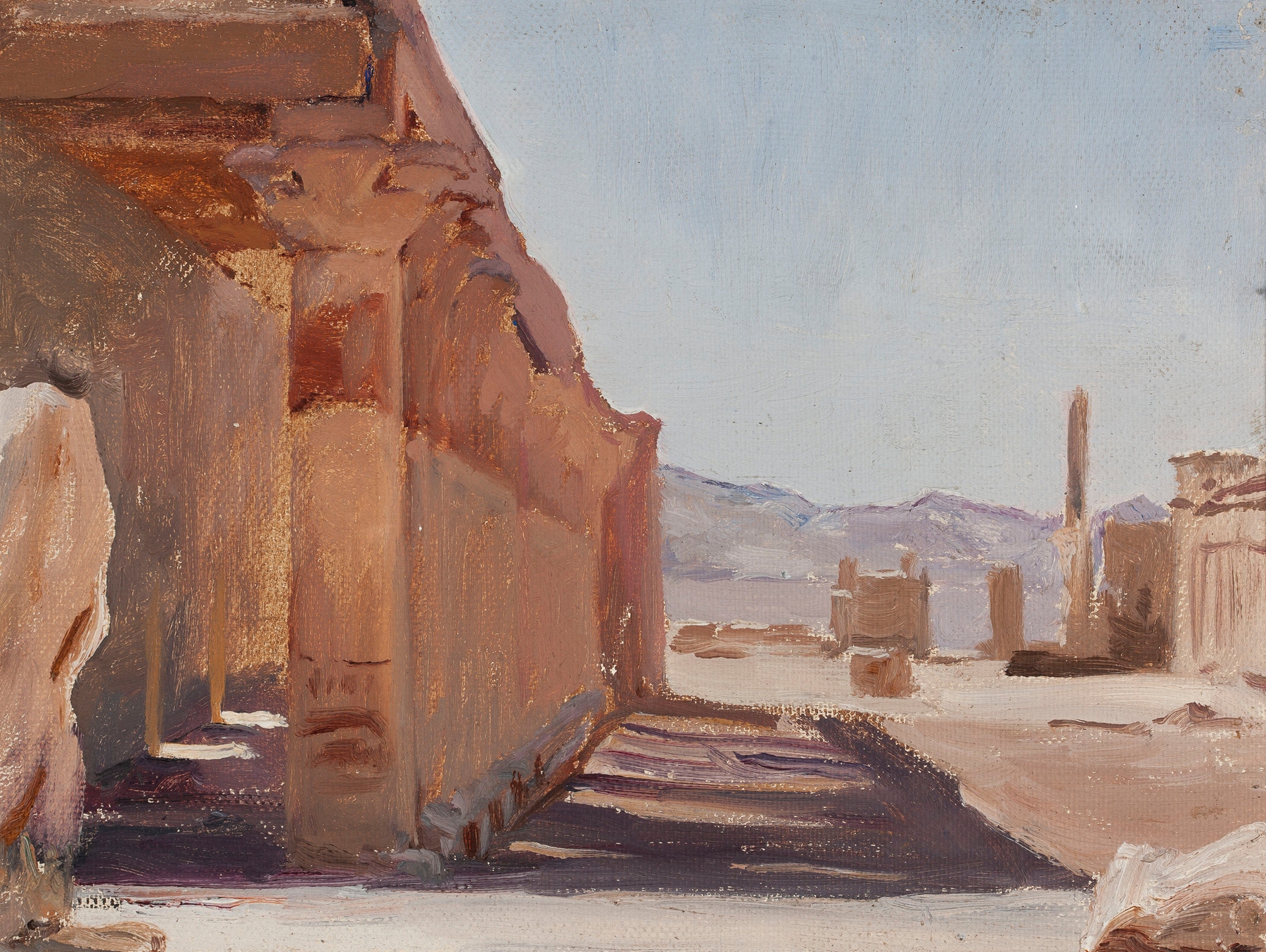
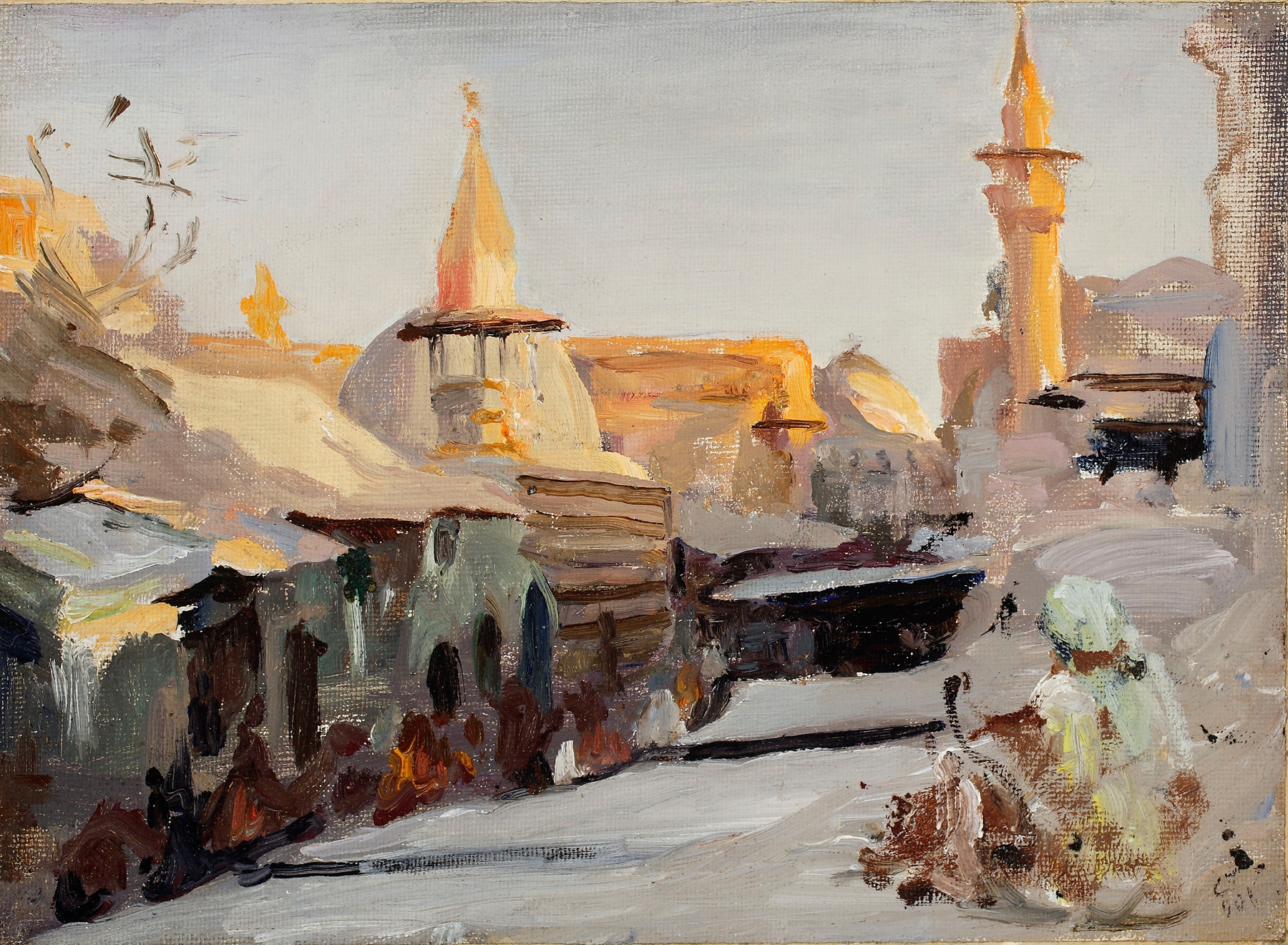
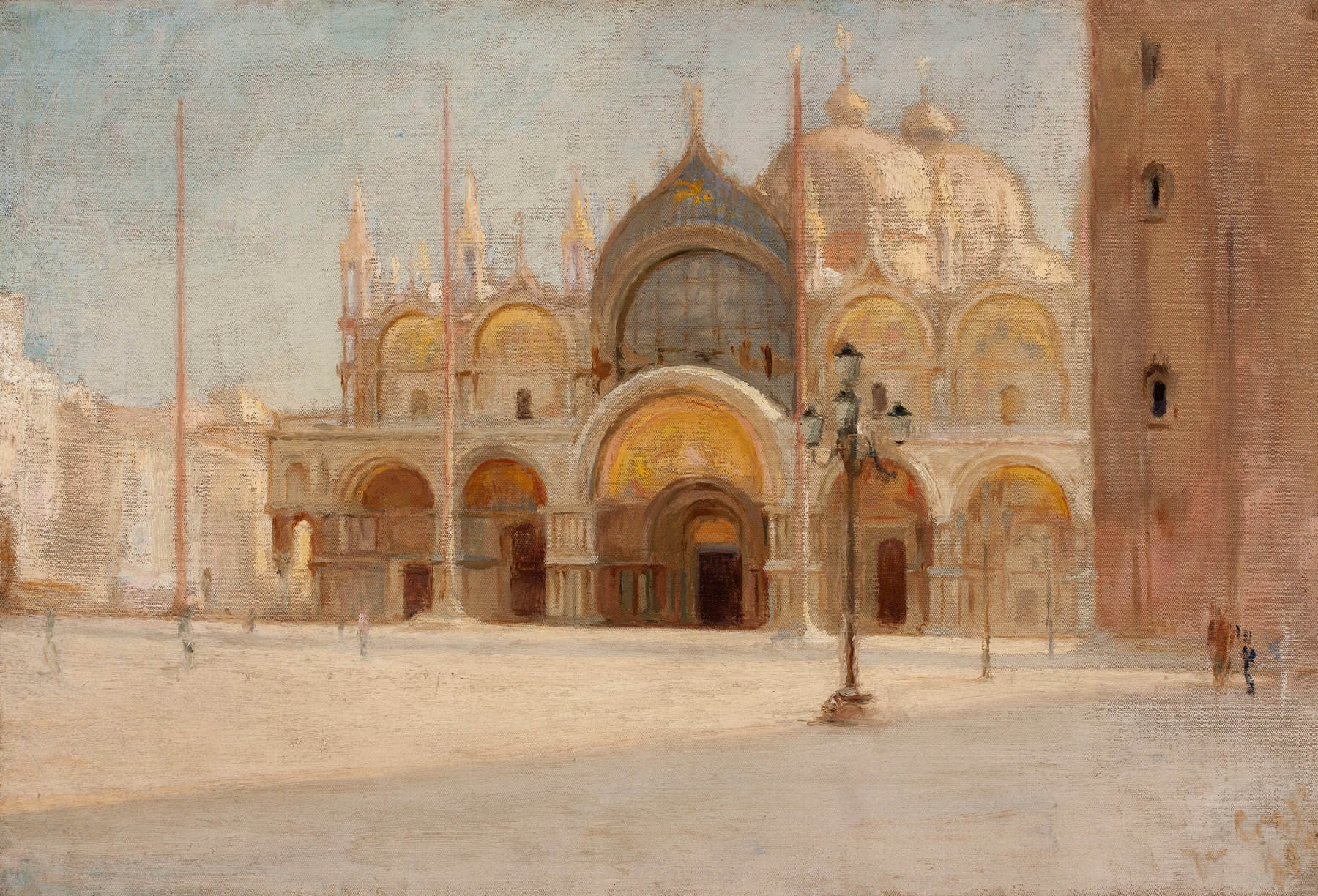
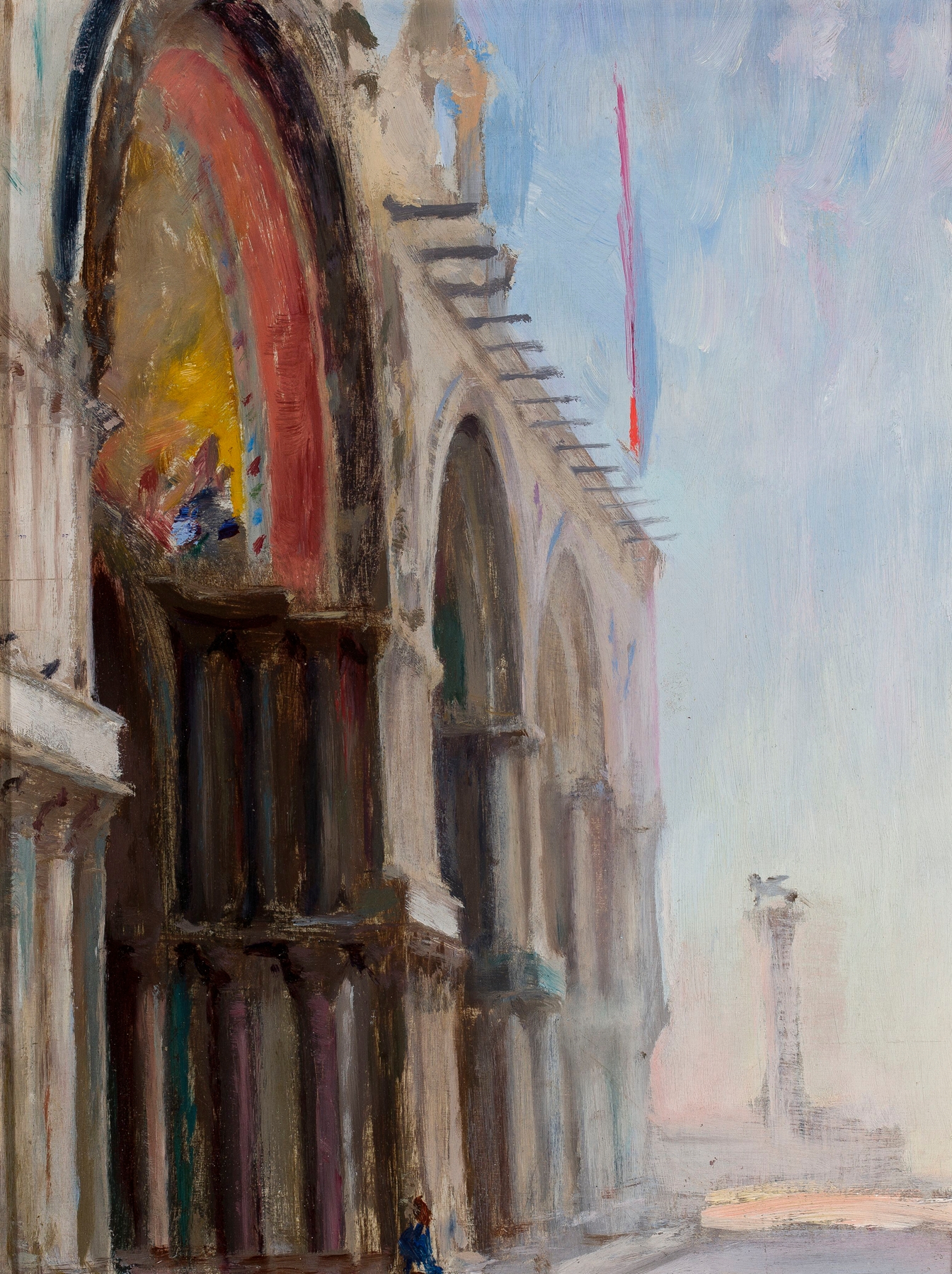
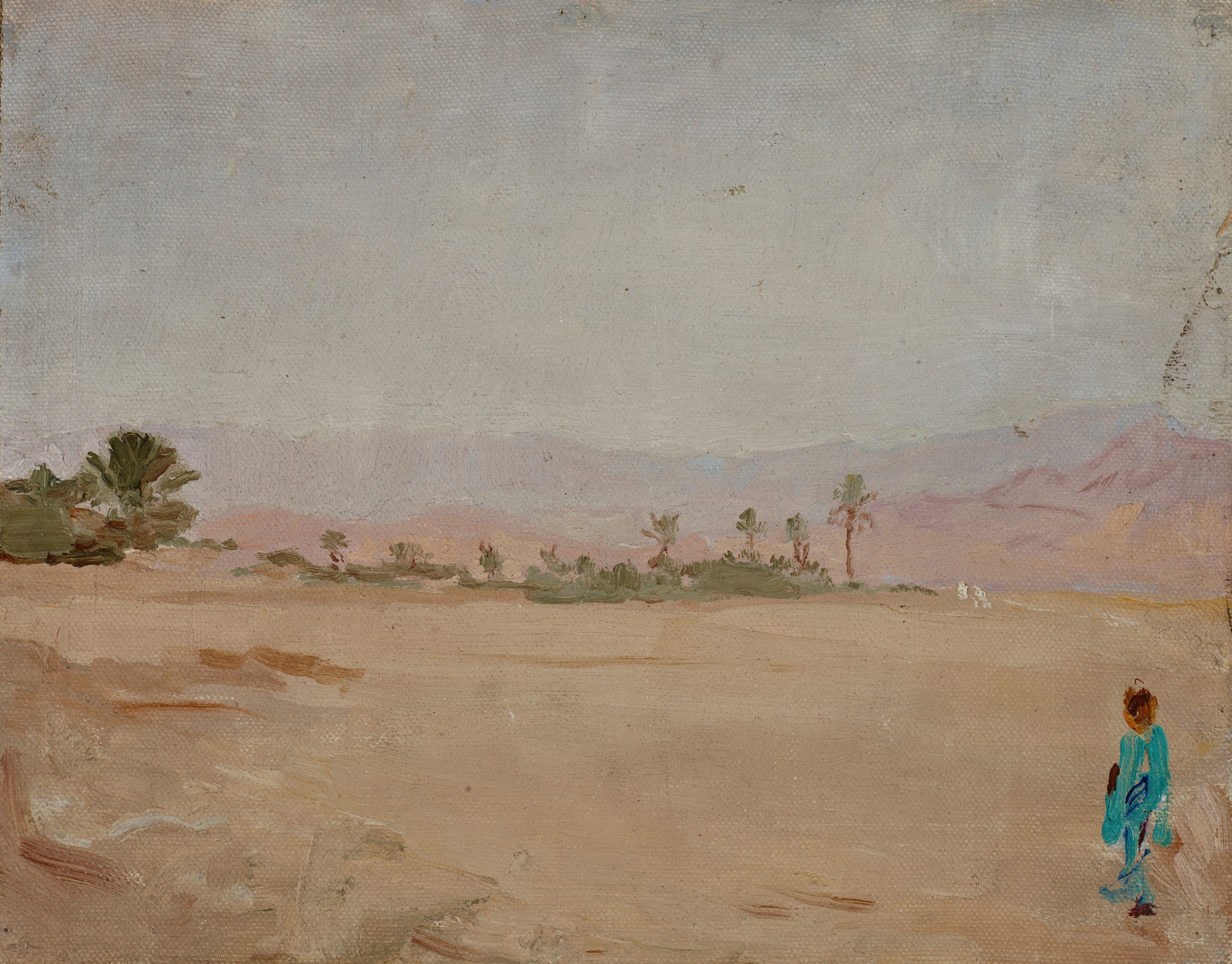
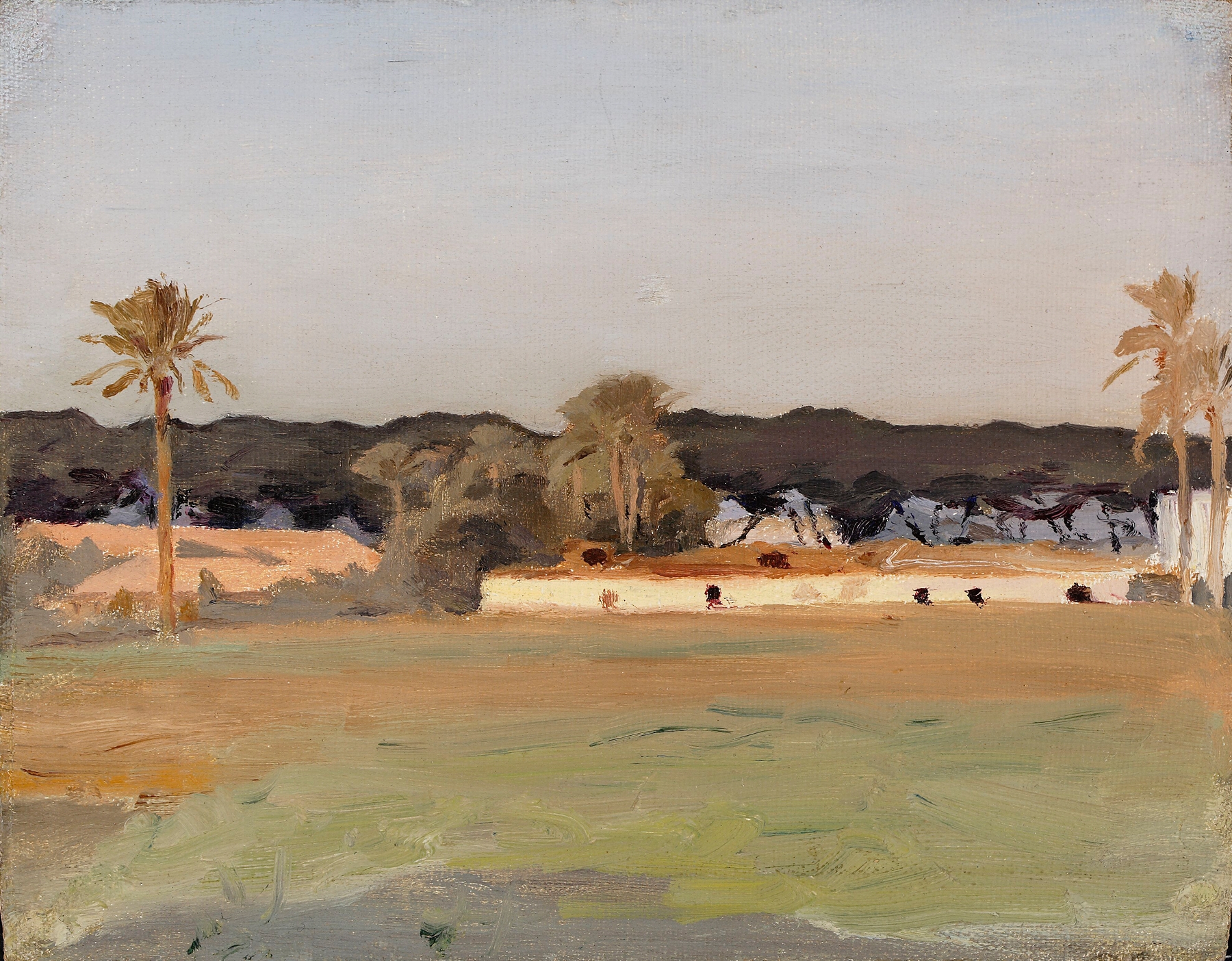
“Art reveals the soul when the world turns away.” In the silence of a palace courtyard, the viewer encounters not just a scene, but a deep reflection on existence, evoking a profound sense of void. It is a moment where the intricacies of life and art intertwine, revealing layers of meaning that often escape the rush of daily life. Look to the left at the finely detailed stone archway, where ornate patterns dance in the soft embrace of sunlight, casting delicate shadows that ripple across the ground. The warm hues of ochre and deep reds dominate the palette, creating an environment steeped in history and tradition. Each brushstroke is meticulous, from the textured surfaces of the walls to the gently swaying palms that frame the space, inviting the viewer to linger and absorb the atmosphere. Yet, beneath this serene surface lies a tension—an emptiness that hints at stories untold. The void in the courtyard suggests absence, perhaps a fleeting moment once filled with laughter and life now quieted. The juxtaposition of vibrant colors against the stillness evokes a sense of nostalgia, prompting contemplation on what has been lost and what remains. In this space, the artist captures both the beauty and the ephemerality of existence. In 1907, Jan Ciągliński was exploring the rich culture of India during his travels. He painted *Courtyard of maharajah’s palace* amidst a time of great interest in Orientalism, as Western artists sought inspiration from the East. Seeking to blend his European artistic training with the exotic charm of the Indian landscape, he created a work that reflects not only his personal Journey but also the broader artistic movements of his time.