Crimea (Magnolia) — History & Analysis
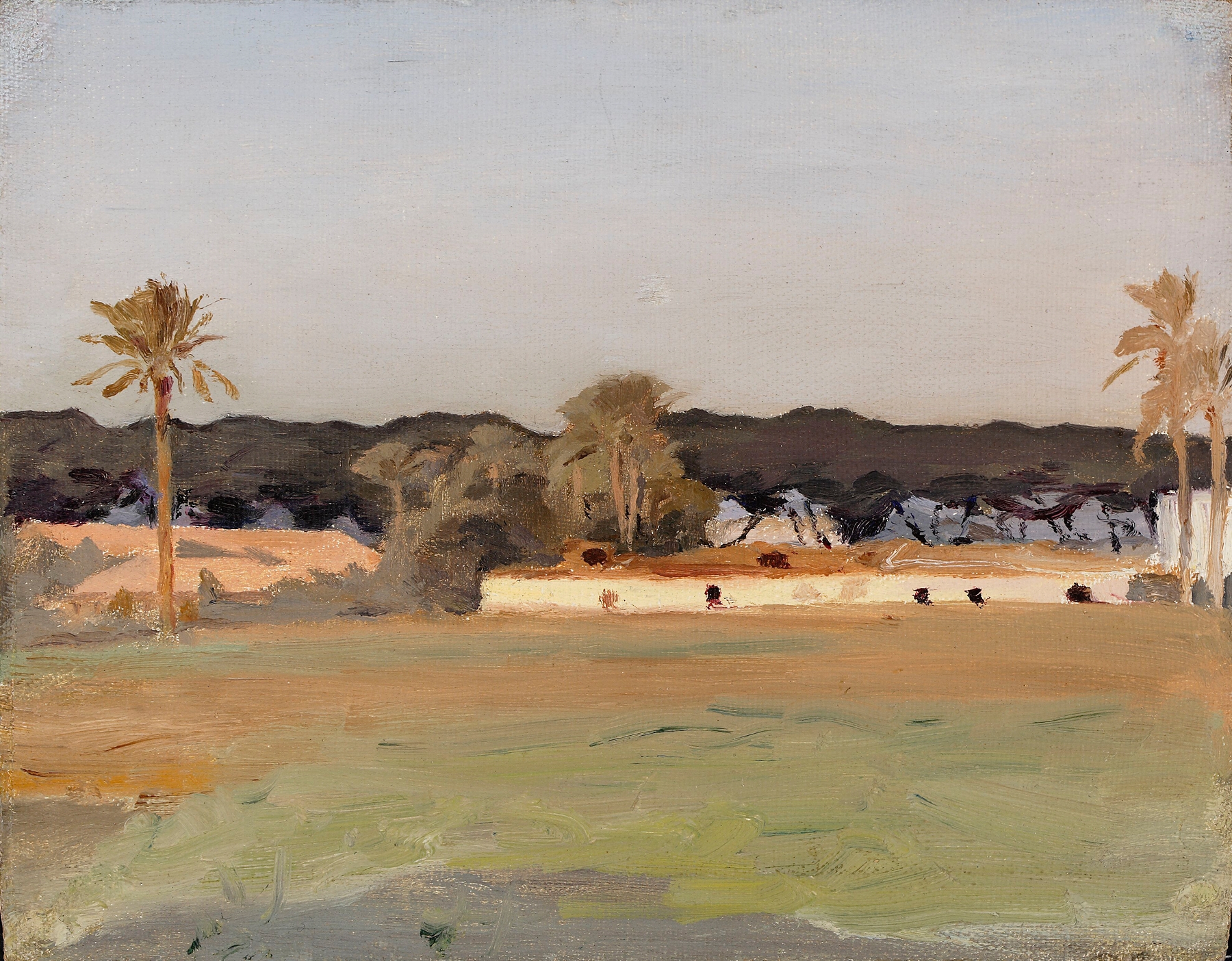
Can paint confess what words never could? The fluidity of motion captured on canvas speaks to the heart, revealing a world where silence dances and whispers through vivid colors. Focus on the interplay of hues as you gaze upon the flowing trees that dominate the left side of the piece. Their graceful arcs and blossoms seem to sway gently in an unseen breeze, creating a sense of dynamic motion. Notice the softer pastel tones that blend seamlessly into the azure sky, evoking a serene yet vibrant atmosphere.
The contrasts between the delicate petals and the robust branches pull the viewer's eye across the canvas, inviting exploration of every corner. Delve deeper, and you might sense an emotional current beneath the surface. The juxtaposition of the lively trees against the stillness of the background suggests a tension between nature’s vitality and the quietude of the landscape. The stylized representation evokes a yearning for movement, as if the blossoms themselves are reaching for something beyond their grasp, a longing for connection or perhaps for the past.
This echoes the transitional moment in the artist's life, hinting at his own internal struggles and desires. In 1904, Jan Ciągliński painted this piece during his time in Paris, a vibrant hub for artists and a crucible of new ideas. Emerging from a period of personal upheaval, he sought to capture the essence of the natural world with a fresh perspective, aligning himself with the broader movements of Impressionism. The world was experiencing rapid change, where art was breaking free from tradition, and this work reflects that spirit of innovation and emotional honesty.