Crucifix — History & Analysis
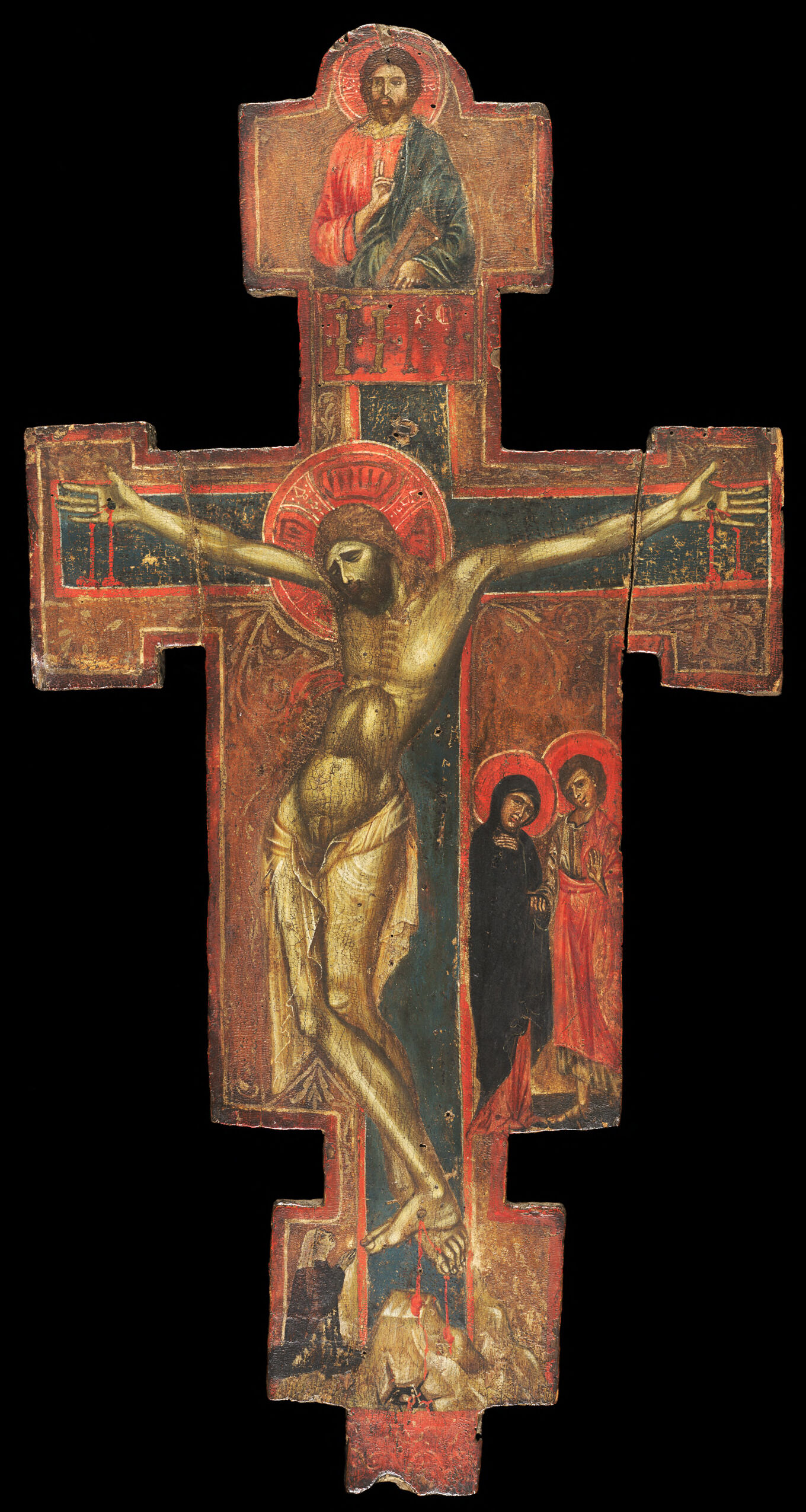
Could a single brushstroke hold eternity? In the delicate interplay of shadow and light, the Crucifix invokes a poignant yearning that transcends the confines of time and space. Focus on the central figure, the crucified Christ, whose serene face reflects a deep stillness amidst the turmoil of his sacrifice. Notice how the artist masterfully employs muted earth tones, allowing the soft glow of gold leaf to illuminate the contours of the body, drawing your gaze to his outstretched arms.
The background, a tapestry of indistinct forms, envelops him, amplifying his isolation and the weight of his suffering. Hidden within the folds of the drapery is a tension between despair and hope. The gentle curve of Christ's body suggests surrender, while the piercing gaze invites reflection on the human condition. Each detail, from the intricate thorns of the crown to the fragile positioning of the hands, speaks volumes about the artist's desire to convey both pain and divine love.
The juxtaposition of suffering and redemption resonates, turning a moment of anguish into an eternal symbol of faith. Created in the 13th century, this piece emerged during a time of profound spiritual exploration within the medieval world. The artist, whose identity remains cloaked in mystery, responded to the burgeoning Gothic movement, which prioritized emotional depth and realism. As churches flourished and devotion transformed into personal experiences, this work stands as a testament to a collective yearning for connection with the divine.