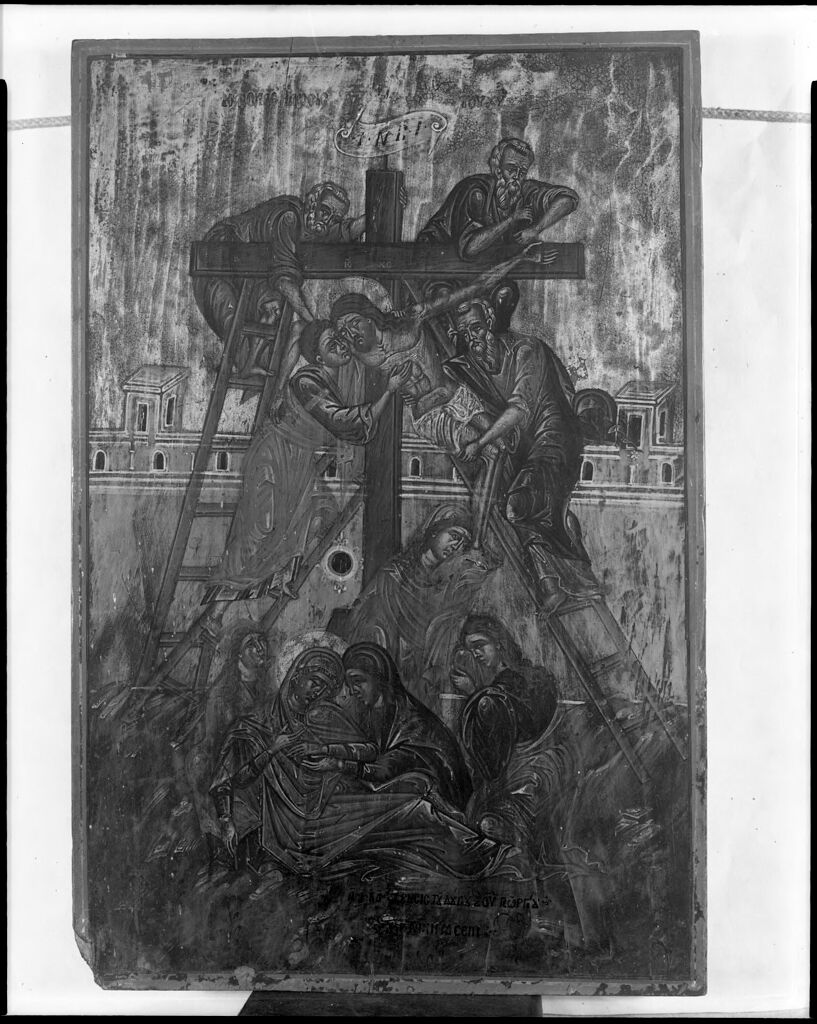
Dormition of the Virgin — History & Analysis
Can paint confess what words never could? In the Dormition of the Virgin, vivid hues spill from the canvas, whispering truths beyond mere speech, inviting us into a profound dialogue with faith and loss. Look to the radiant blues and golds that envelop the figures, drawing your eye first to the serene face of the Virgin, cradled by gentle hands. The artist employs a delicate interplay of light and shadow, highlighting the ethereal glow around her, as if she exists in a realm beyond our own. Notice how the rich reds and greens of the surrounding figures contrast with her calm demeanor, heightening the emotional gravity of this moment.
Each brushstroke appears to pulse with the weight of reverence, creating a tactile intimacy that resonates deeply. Beneath the surface, the composition reveals layers of tension—between life and death, the earthly and the divine. The mourners, draped in dark garments, reflect a sorrow that is palpable, their postures conveying both grief and acceptance. The vibrant hues surrounding the Virgin serve as a reminder of the transcendence she embodies, a beacon of hope amid the somber reality of her departure.
Each element, from the garlands of flowers to the tender gestures of those gathered, speaks to the universality of loss and the comfort found in shared faith. This painting, created in the 15th century by an unidentified artist, emerges from a period marked by profound spiritual introspection in Europe. During this time, the Renaissance was blossoming, characterized by a renewed interest in humanism alongside religious themes. The artist navigated these currents, capturing not only a moment of spiritual significance but also the collective heart of a society yearning for connection with the divine.