Portrait of Michelangelo after the "Strozzi" original in the Uffizi Gallery — History & Analysis
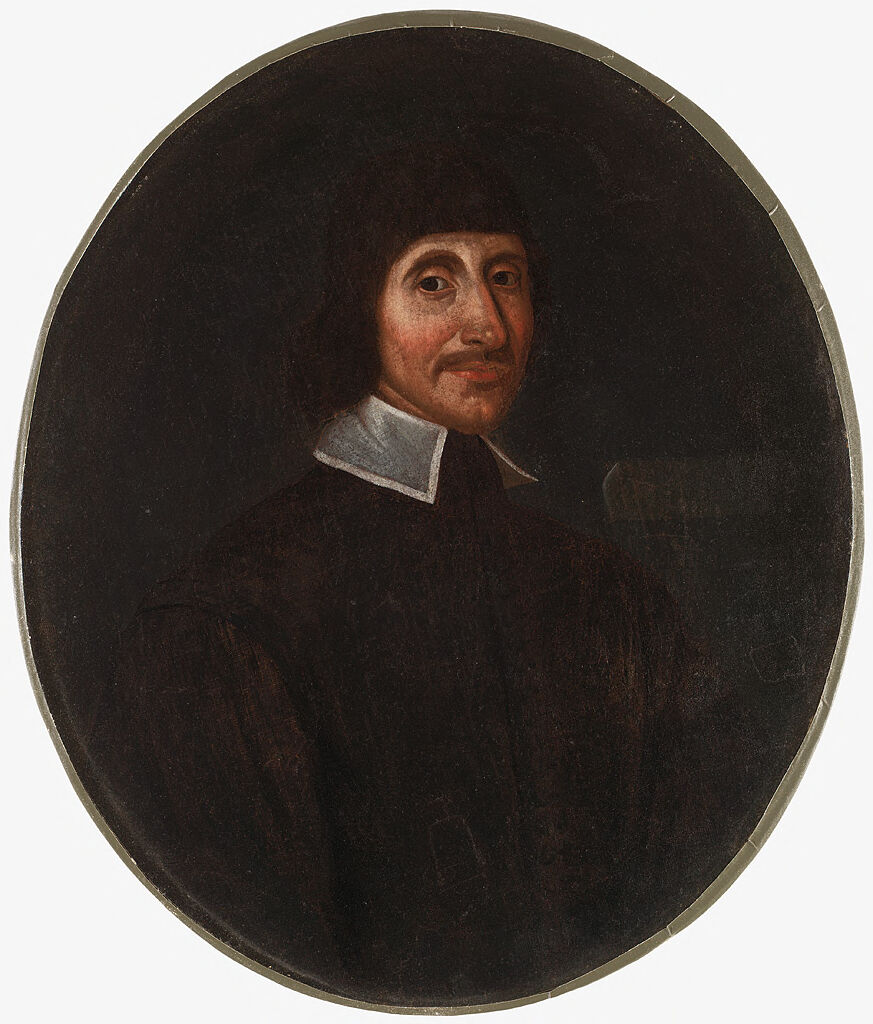
Can paint confess what words never could? In this profound portrait, the beauty of the human spirit becomes an eloquent language all its own, transcending time and dialogue. Focus your gaze on the serene expression of the figure, where the artist captures a contemplation so deep that it seems to resonate with the viewer. The soft, nuanced colors blend gently, embodying a delicate balance of light and shadow that enhances the contours of the face.
Notice how the rich, dark background serves to illuminate the subject, drawing your eye to the finely rendered features, each brushstroke a testament to the artist's reverence for Michelangelo. The subtle interplay of light reflects not only the physicality of the subject but hints at the duality of artistry and human experience. Here lies a tension between the strength of character and a vulnerable introspection, with Michelangelo gazing outward as if inviting us into his inner world.
The careful positioning of his hand, resting softly against his face, adds an air of thoughtful pause, suggesting the weight of both genius and solitude in the life of a master artist. Created in the 16th century, this portrait emerges amid a flourishing Renaissance, a period rich with exploration, innovation, and a revival of classical ideals. The identity of its creator is cloaked in mystery, yet they undoubtedly sought to pay homage to one of the era's great luminaries, capturing not just Michelangelo's likeness but the essence of a creative force that forever reshaped the canvas of art history.