Crucifix with the Virgin and Saint John the Evangelist, Christ the Redeemer, and a Praying Woman — History & Analysis
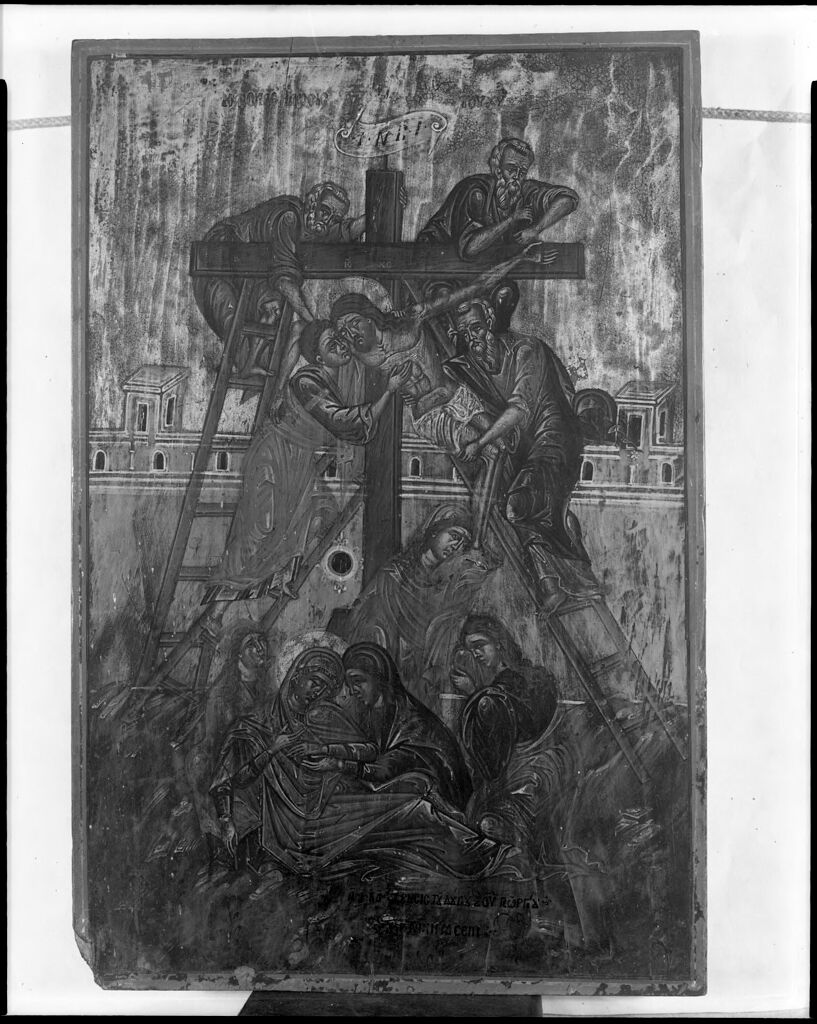
When did color learn to lie? The essence of balance lies within the delicate interplay of faith and emotion, captured in a moment that transcends time and space. Focus on the central figure of Christ, suspended between heaven and earth, where his body is rendered with somber hues, contrasting starkly against the vibrant robes of the Virgin. Notice how the gold leaf details shimmer, not merely as decoration but as a divine light that draws the eye upwards, inviting contemplation.
To the left, the praying woman adds a human touch, her humble pose echoing the piety that permeates the scene, while Saint John stands steadfast, embodying both sorrow and hope in his downcast gaze. Deeper insights arise from the tension between the figures. The somberness of the crucified Christ underlines a profound sacrifice, while the bright colors of the Virgin symbolize maternal love and protection. The praying woman, with her outstretched arms, embodies the plea for divine mercy, a poignant reminder of the human struggle for balance between despair and faith.
Together, these elements weave a narrative of reverence, inviting viewers to reflect on their place in this sacred moment. This artwork emerged from an unidentified artist in the late 13th century, a time when devotional images flourished as expressions of faith in the medieval world. The artist's location remains a mystery, yet the style and technique reveal a deep-rooted commitment to conveying the spiritual narrative of Christ's crucifixion. Amidst the rising influence of Gothic art, this piece stands as a testament to the artistic exploration of emotion and faith during an era of profound religious fervor.