
De melkbocht — History & Facts
In the stillness of a moment captured, the essence of loss permeates the air, beckoning the viewer to confront the quiet ache of absence. Look to the right at the gentle curve of the path that leads through an expansive meadow, bordered by distant trees that dissolve into soft hues of green and gold. The painter’s brushwork evokes a tender intimacy, with subtle strokes reflecting the fading light of day. Mauve’s palette is a symphony of earth tones, creating a scene that breathes with nostalgia and longing, drawing you into its embrace as if to whisper secrets long forgotten. As you linger, notice the solitary figure cradled within the landscape.
The farmer, hunched and contemplative, appears lost to his thoughts, embodying the weight of unexpressed sorrow. Each brushstroke seems to echo an unfulfilled promise, magnifying the loneliness that resides in the heart of the painting. The tranquility of the setting contrasts with the emotional turmoil that stirs beneath, a poignant reminder of life’s fleeting nature. In the years between 1870 and 1888, Anton Mauve painted De melkbocht during a time when he found solace in rural subjects.
Living in the Netherlands, surrounded by the simplicity of farm life, he sought to portray the profound emotionality found in everyday existence. The painting reflects both his personal journey and the broader artistic movement of Realism, which aimed to depict the raw truths of human experience amidst a rapidly changing world.
More Artworks by Anton Mauve

Going to Pasture
Anton Mauve
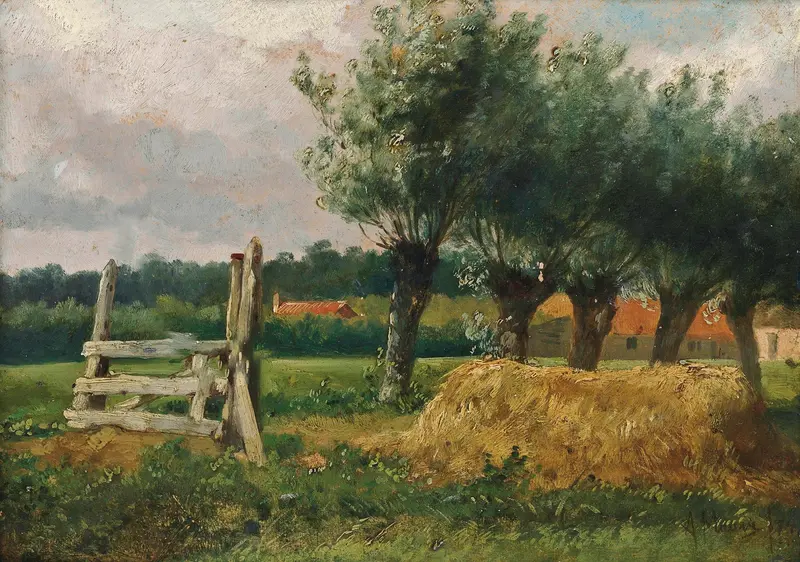
Landscape with willow trees
Anton Mauve
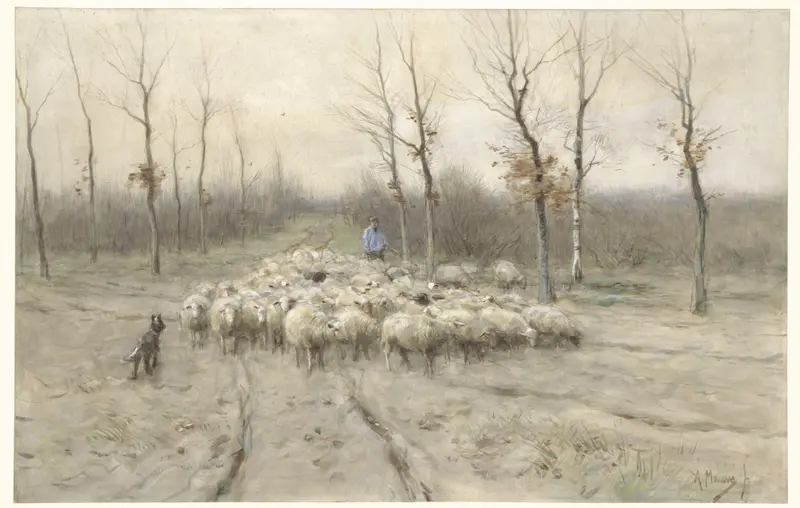
Schapenkudde op de heide bij Laren
Anton Mauve
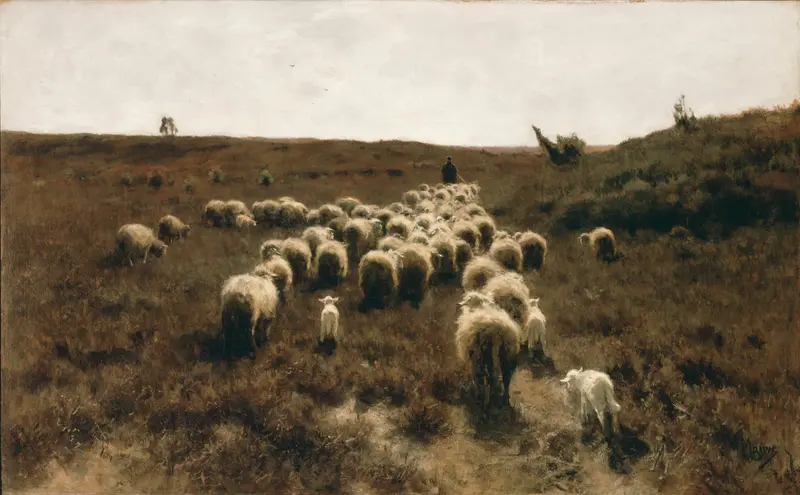
The Return of the Flock, Laren
Anton Mauve
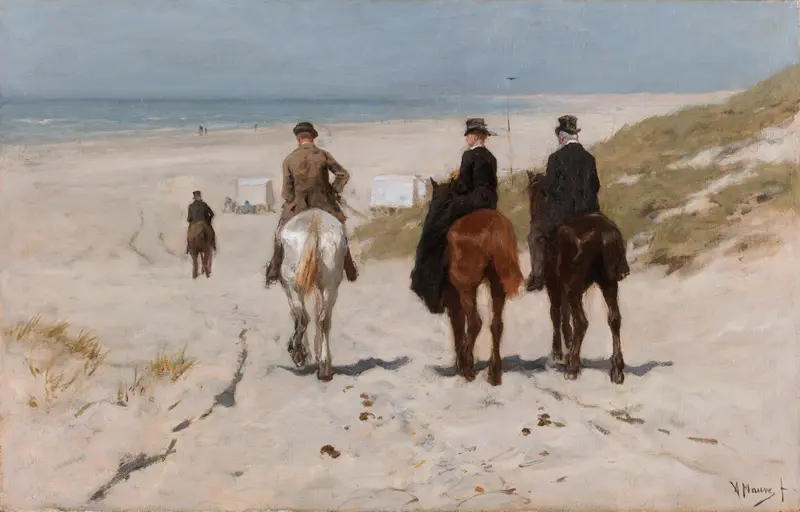
Morning Ride along the Beach
Anton Mauve
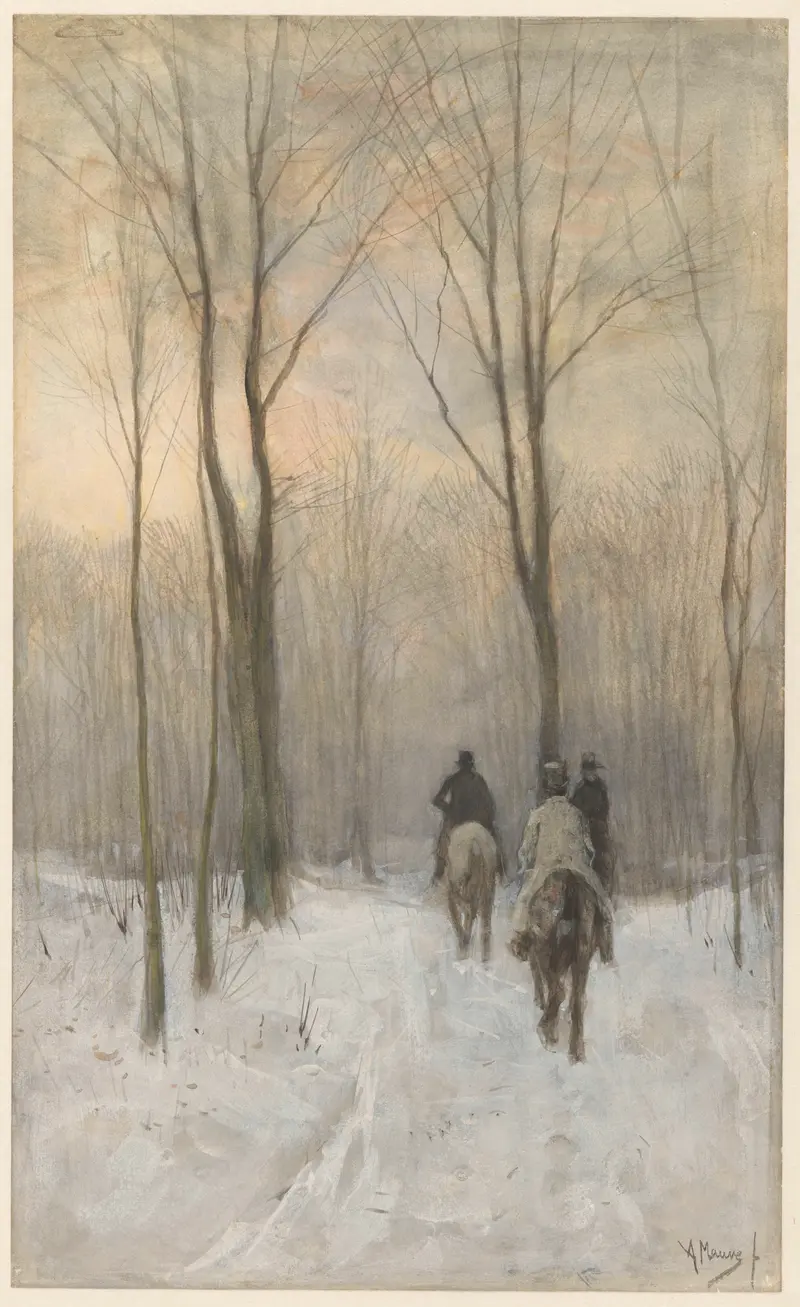
Riders in the Snow in the Haagse Bos
Anton Mauve
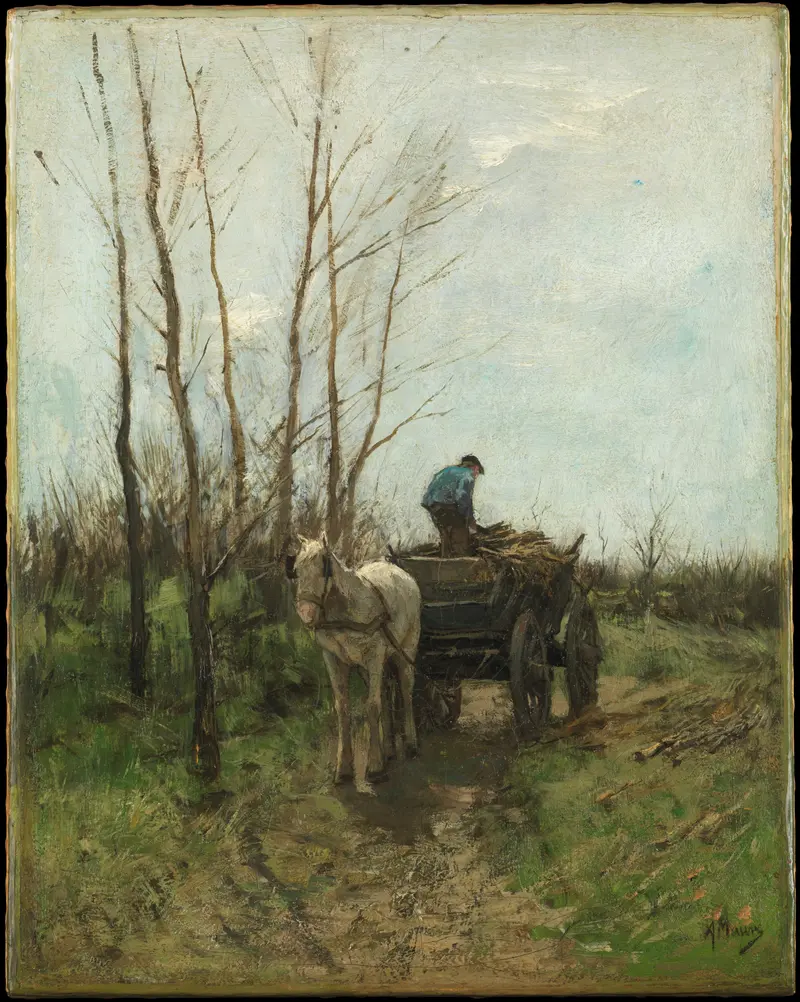
Gathering Wood
Anton Mauve
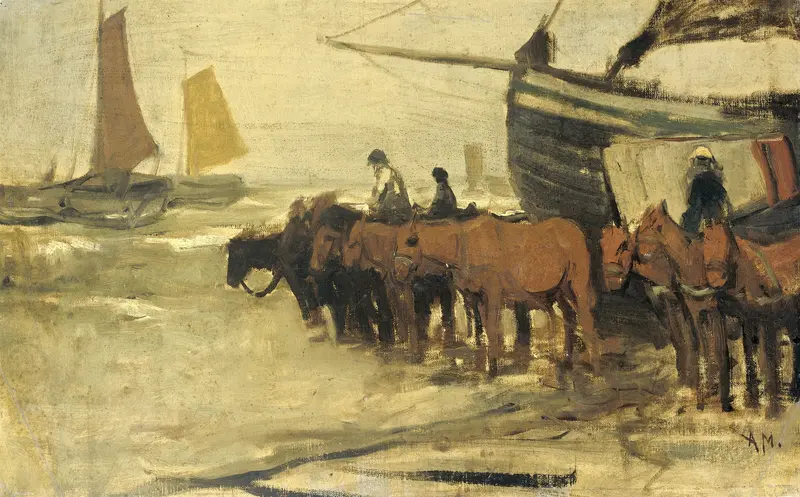
Het in zee brengen van een visserspink
Anton Mauve
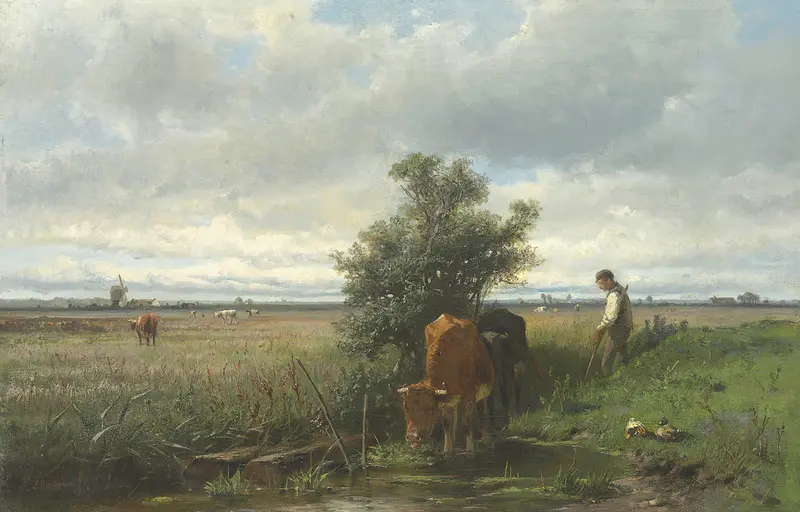
Cattle Watering
Anton Mauve
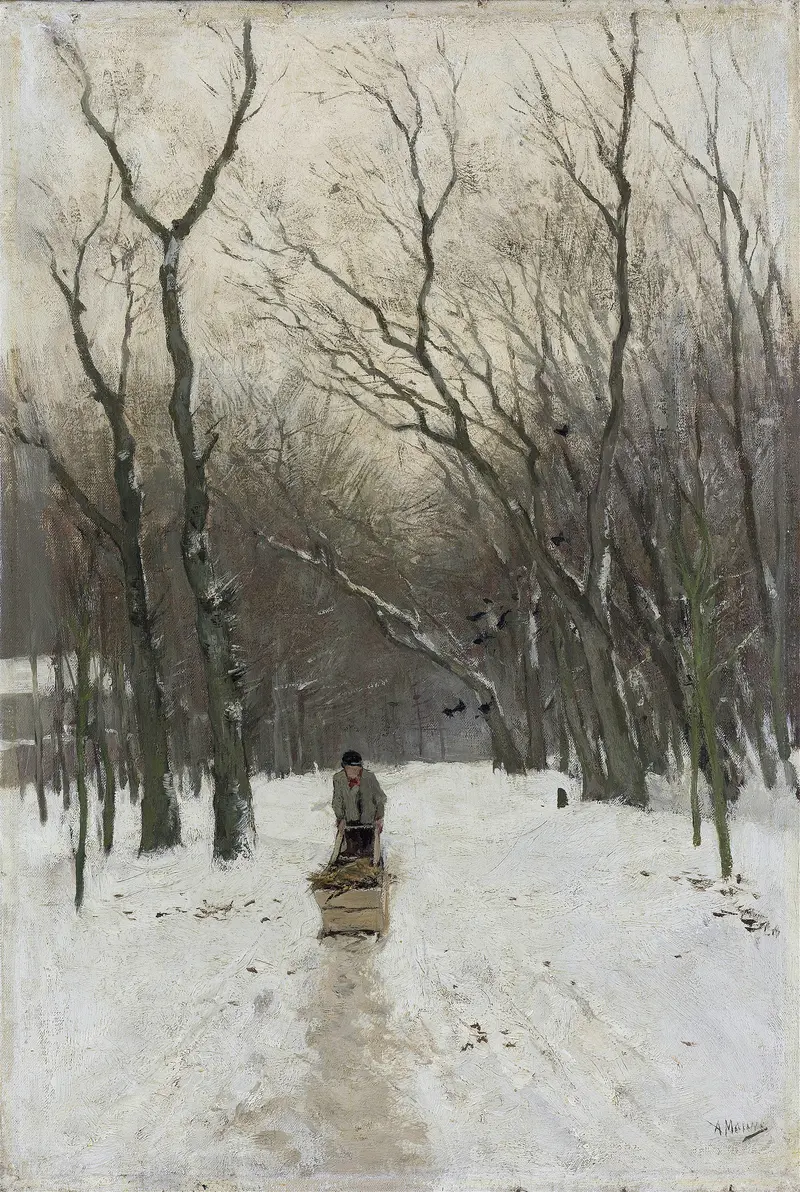
Winter in the Scheveningen Woods
Anton Mauve
More Landscape Art

The Starry Night
Vincent van Gogh

View of Delft
Johannes Vermeer

Water Lilies
Claude Monet

The Grand Canal, Venice, looking north-west from the Ca' Corner to the Ca' Contarini degli Scrigni, with the campanile of Santa Maria della Carità
Canaletto

Windsor Castle
Canaletto

The Grand Canal looking North-East from the Palazzo Dolfin-Manin to the Rialto Bridge
Canaletto