Riders in the Snow in the Haagse Bos — History & Analysis
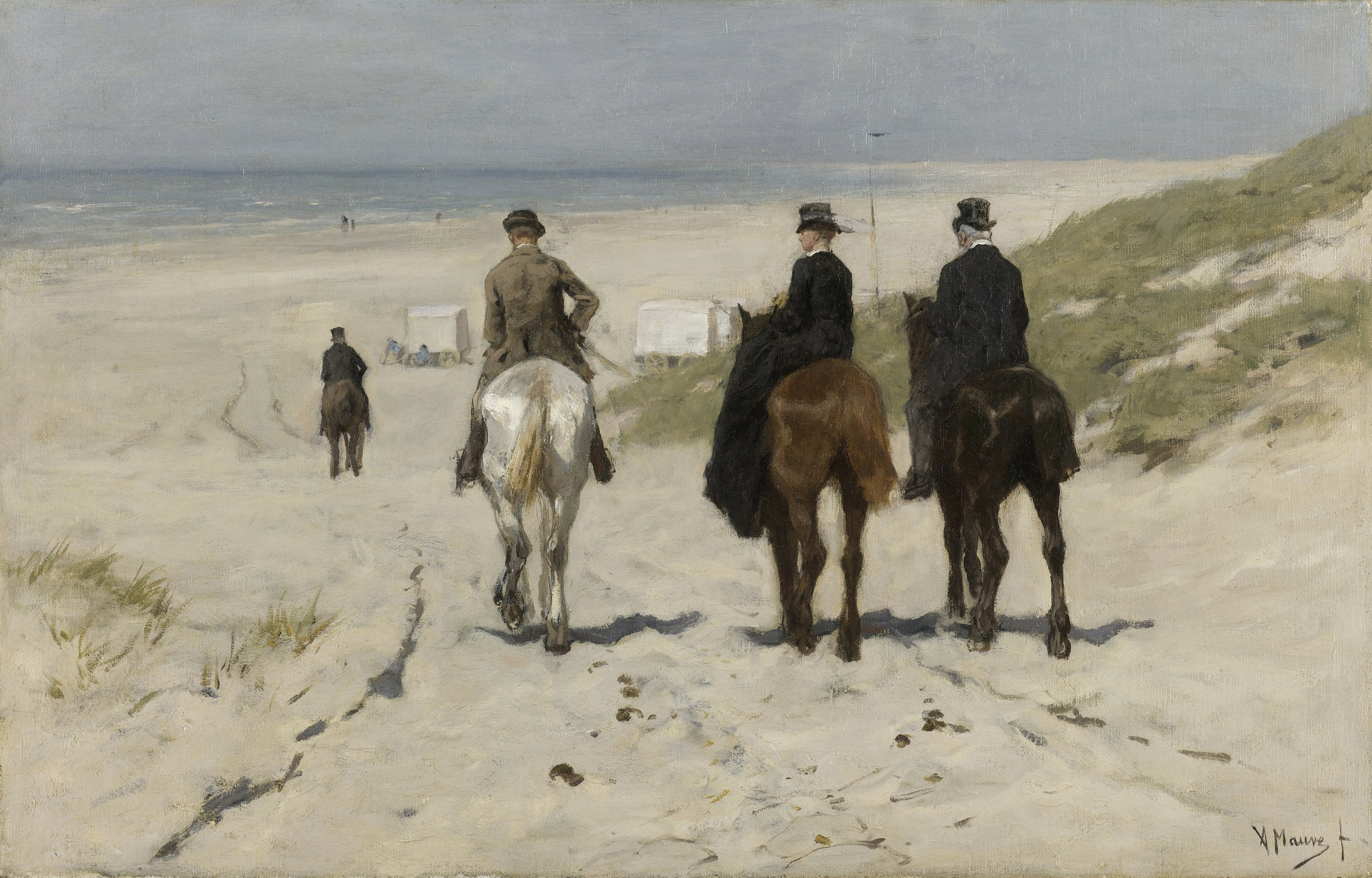
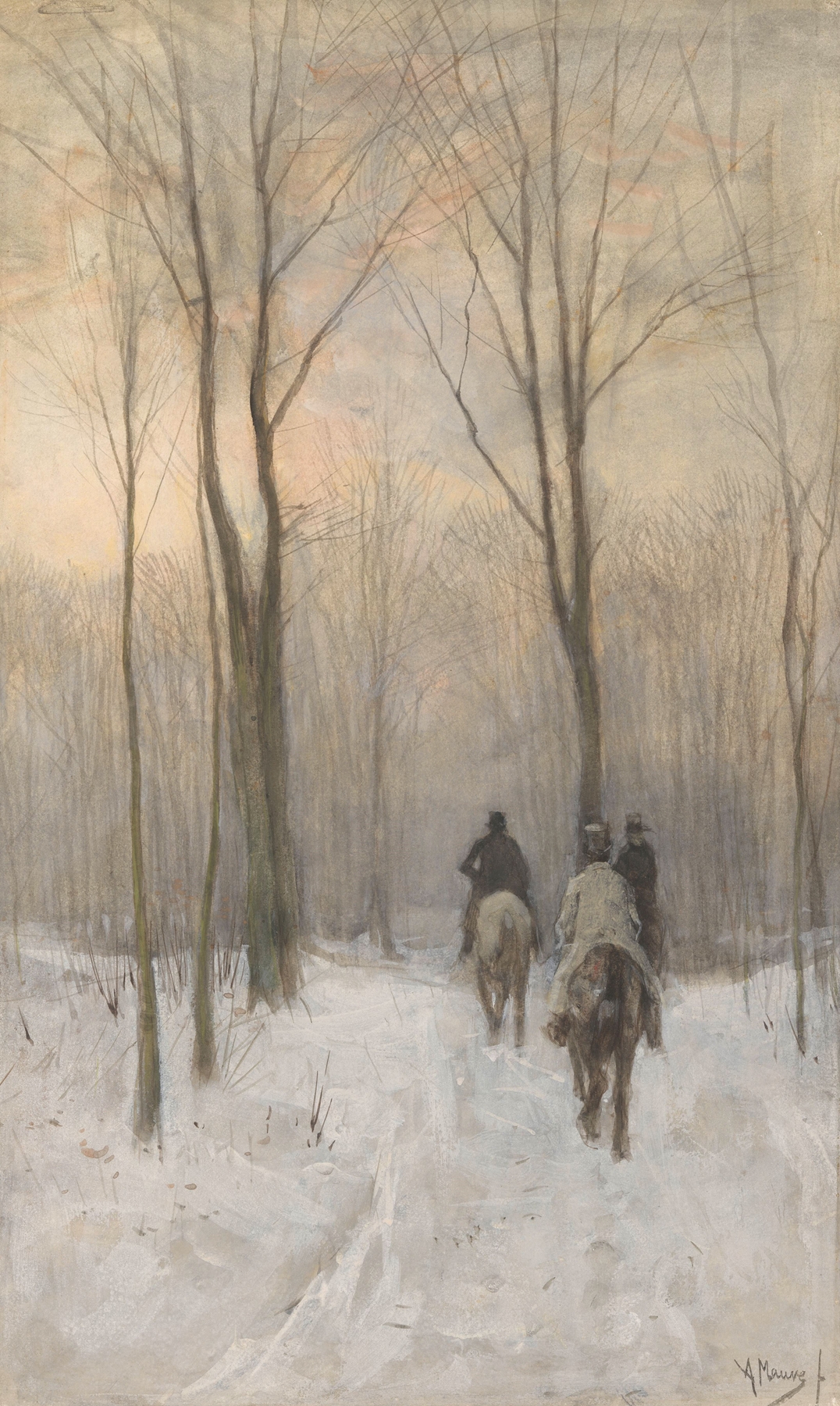
“Every silence here is a confession.” In the hushed expanse of winter, where snow blankets the earth, a quiet tension brews, hinting at the revolutionary change that lies beneath the surface. The scene whispers of journeys taken and the unspoken stories that linger in the crisp air, waiting for the right moment to emerge. Look to the center of the composition where figures on horseback emerge from the soft white haze, their forms delicate against the overwhelming vastness of snow. Notice how the muted palette—soft grays and whites with touches of earthy tones—captures the chill and stillness of the moment. Mauve’s brushwork brings a textured richness to the scene, allowing each stroke to evoke the weight of the snow as it clings to the trees and trails. The horizon recedes, drawing your gaze into an infinite silence, while the riders, almost spectral, glide as if transcending time. Hidden within this tranquil image lies a profound tension between the placid beauty of nature and the underlying movement of change. The juxtaposition of the serene landscape with figures who could be bound for a distant destination hints at the unrest brewing in society. Each hoofprint in the snow, fleeting and fragile, speaks to the impermanence of existence, while the quietude evokes an unvoiced yearning for freedom. In 1880, Anton Mauve was immersed in the artistic community of The Hague, a period marked by a growing sense of individuality and social consciousness. He was a key figure in the Dutch realist movement, exploring themes of rural life and nature. His work during this time reflected both personal and societal shifts, as the world grappled with rapid changes in art and the onset of modernity.