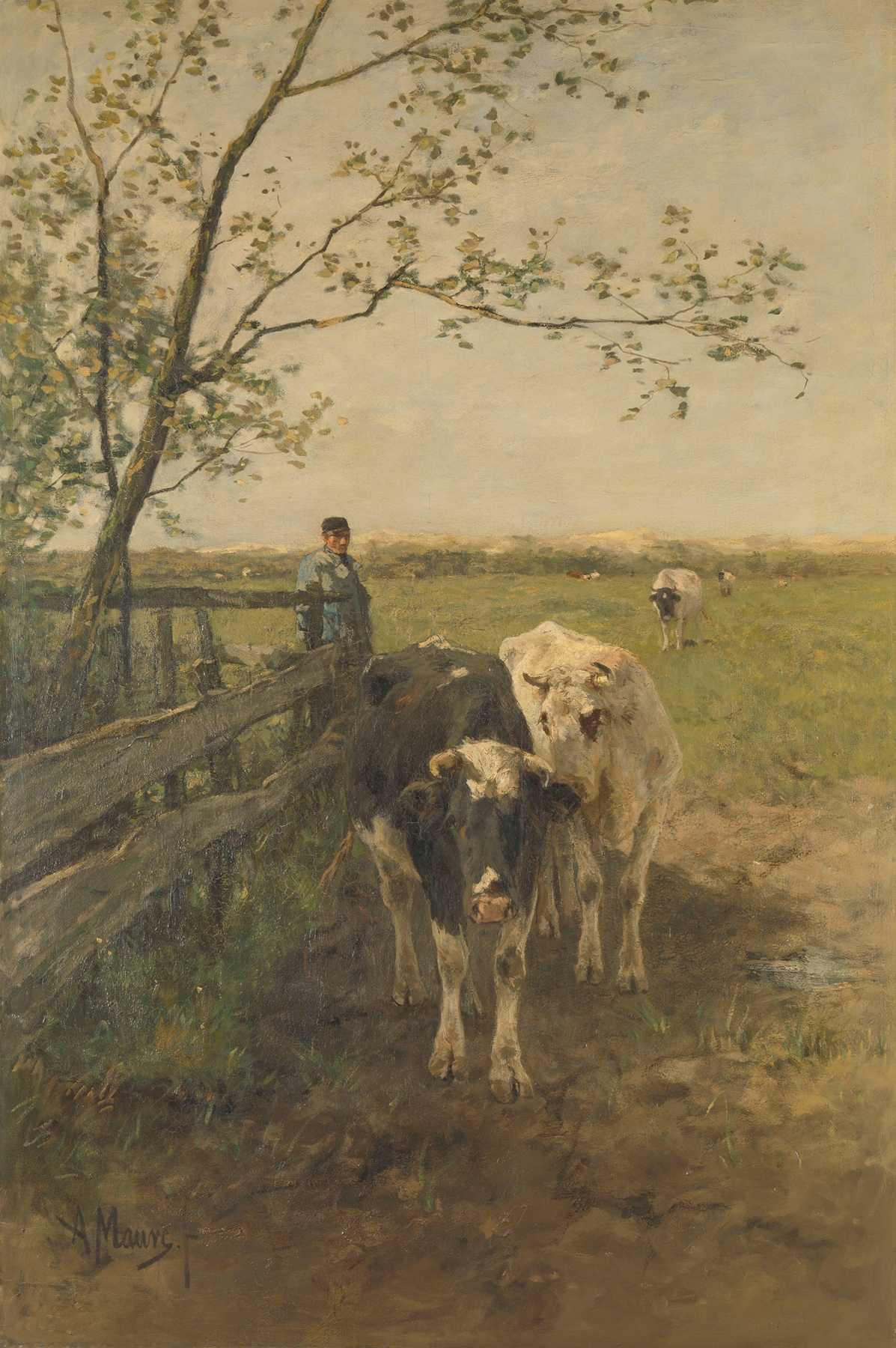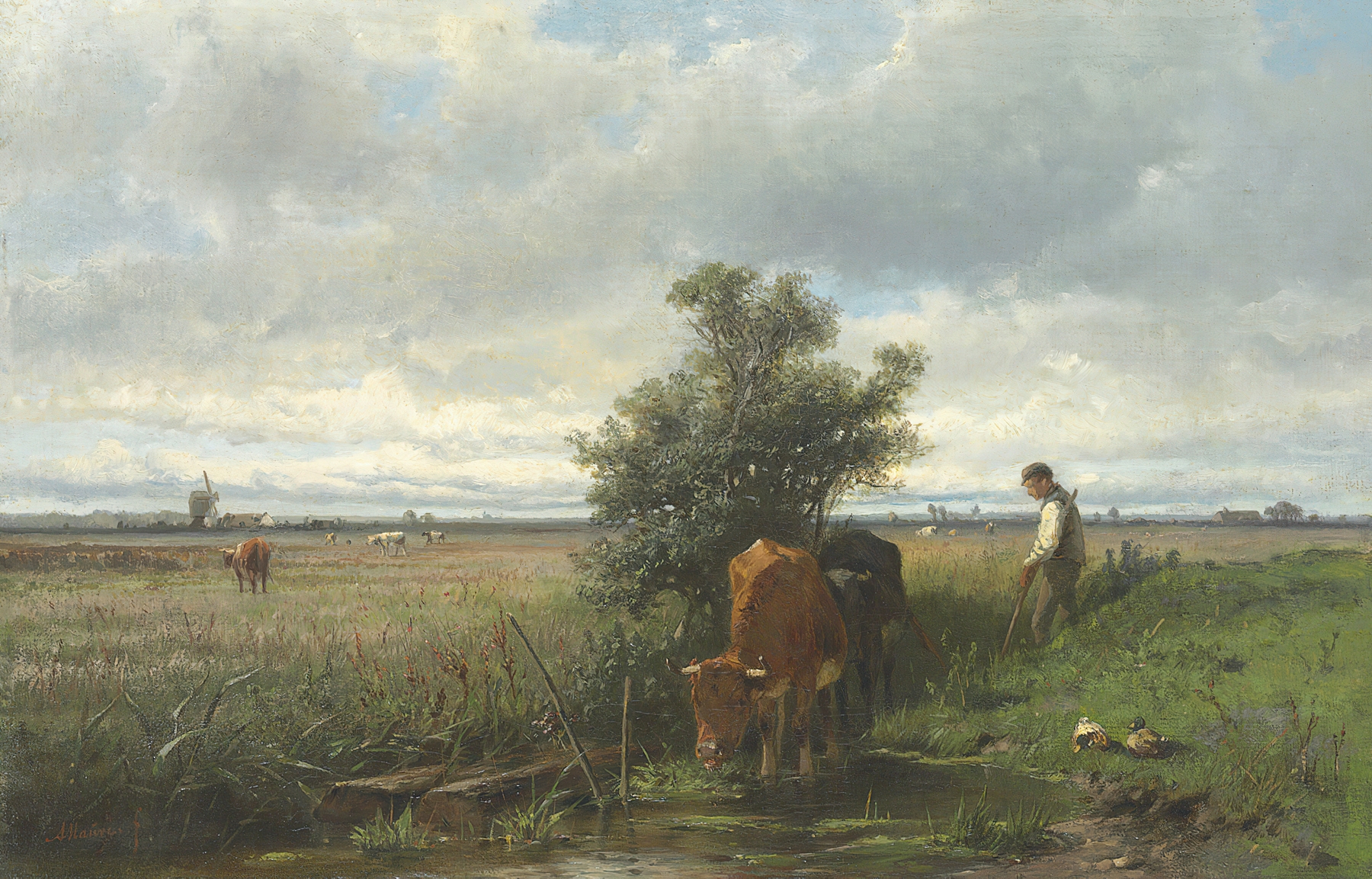
“The canvas doesn’t lie — it simply waits.” In moments of quiet innocence, the world unfolds in simple yet profound ways, echoing the beauty of life itself. Look to the center of the piece where a gentle gathering of cattle engages in the essential ritual of drinking from a tranquil watering hole, their sleek, dark forms contrasting with the soft pastel hues of the landscape. Notice how the light falls upon their glossy coats, creating a play of shadows that dance across the soil, emphasizing the serene rhythm of their existence. The sweeping brushstrokes create a textured sky, suggesting the warmth of an afternoon sun that envelops the scene, inviting the viewer to breathe in the moment. Yet beneath this peaceful tableau lies a deeper reflection on the cycle of life and the innocence of nature. The cattle, seemingly unburdened by the world beyond, symbolize a harmony that is often lost in human complexities. The subtle interplay of shadows and light captures a fleetingness, a reminder of life’s transient beauty. This scene transcends mere rural imagery, inviting contemplation of our own connections to the world and the innocence we often overlook. During a period largely defined by realism and a focus on everyday life, the artist found his voice in depicting pastoral scenes, often influenced by the Dutch masters. Working in the late 19th century, he sought to capture the essence of rural existence, reflecting both his own experiences and the burgeoning appreciation for naturalism in art. Mauve’s brush captured not only the visual beauty of the moment but also its emotional resonance, creating a lasting dialogue with his audience.