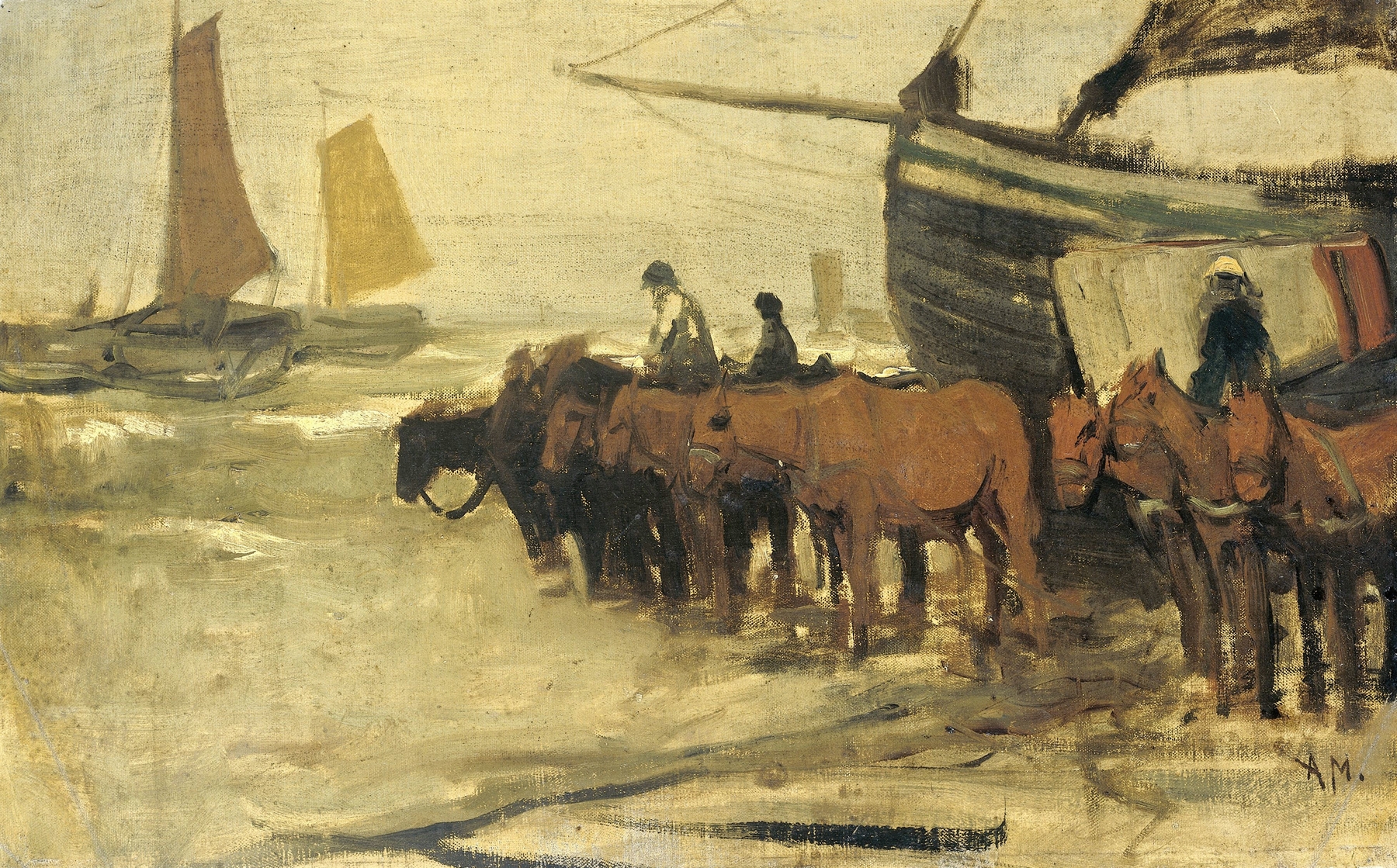
Het in zee brengen van een visserspink — History & Analysis
Can paint confess what words never could? The innocence found within brush strokes often speaks louder than the loudest proclamation, revealing truths masked by the silence of colors. Focus on the tender interaction between the figures in this artwork. The soft, muted palette envelops them, inviting your gaze first to the fishermen as they prepare their boat, their forms harmonizing with the gentle lapping of the sea. Notice how the light caresses their faces, illuminating both their labor and camaraderie, while shadows dance playfully on the water's surface, hinting at both the tranquility of the moment and the unspoken challenges ahead. As you delve deeper, consider the stark contrast between the serene coastal setting and the weight of the fishermen’s task. The subtle tension between hope and uncertainty is palpable; the boat symbolizes both livelihood and the fragility of existence. The innocence of their endeavor is underscored by the surrounding nature, representing a world untouched by the modern complexities that lie just beyond the horizon. This duality invites contemplation on the balance between human struggle and the serenity found in nature’s embrace. During the period between 1870 and 1888, Anton Mauve was immersed in the artistic innovations of the Dutch Romantic movement, often painting rural life in its simplest forms. Living in the Netherlands, Mauve was influenced by the shifting tides of naturalism and impressionism, both of which emphasized the importance of capturing the essence of everyday moments. This work emerges from a time when he sought to convey not just the visual reality of his subjects, but also the emotional depths that resonate within their simple lives.