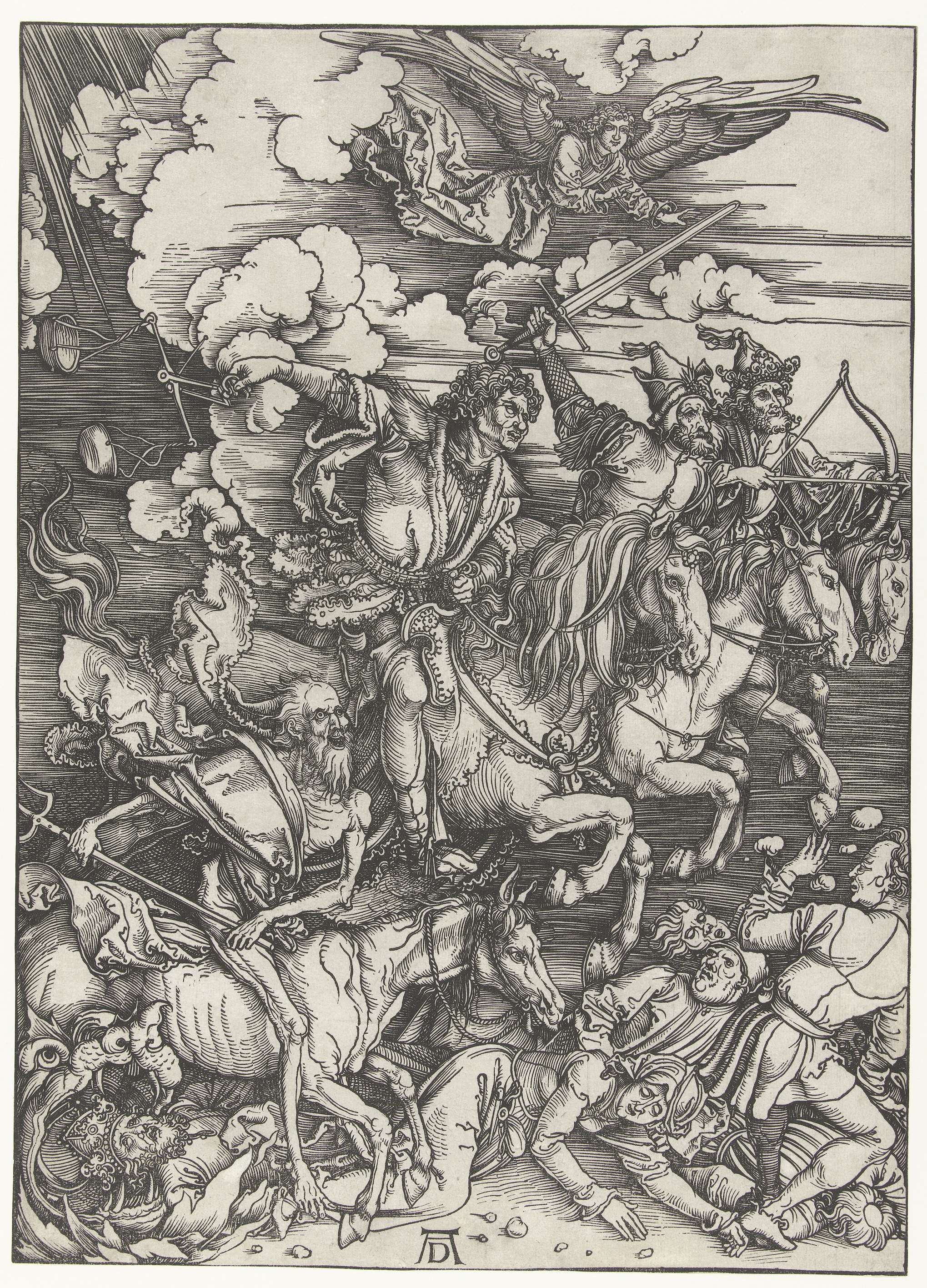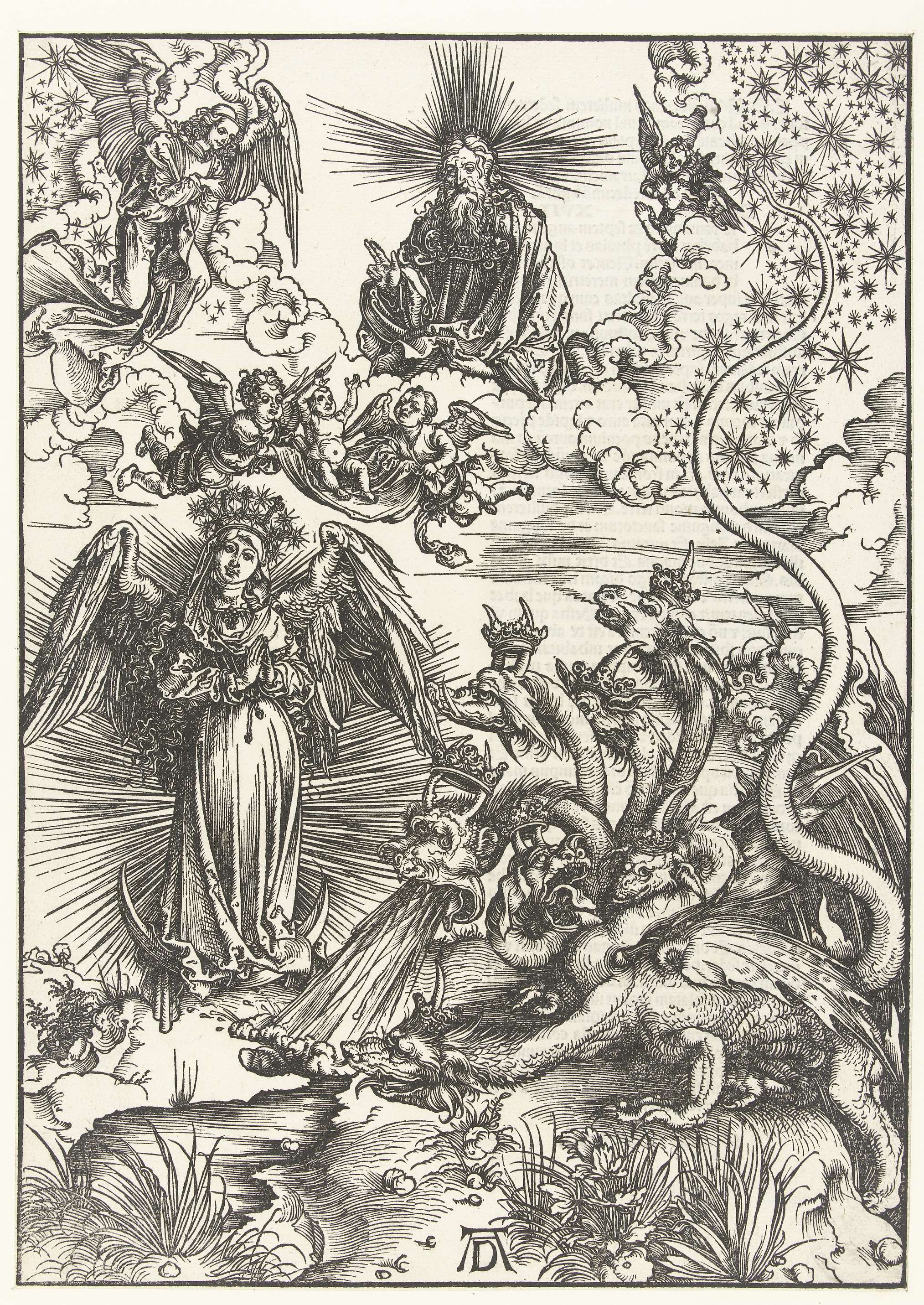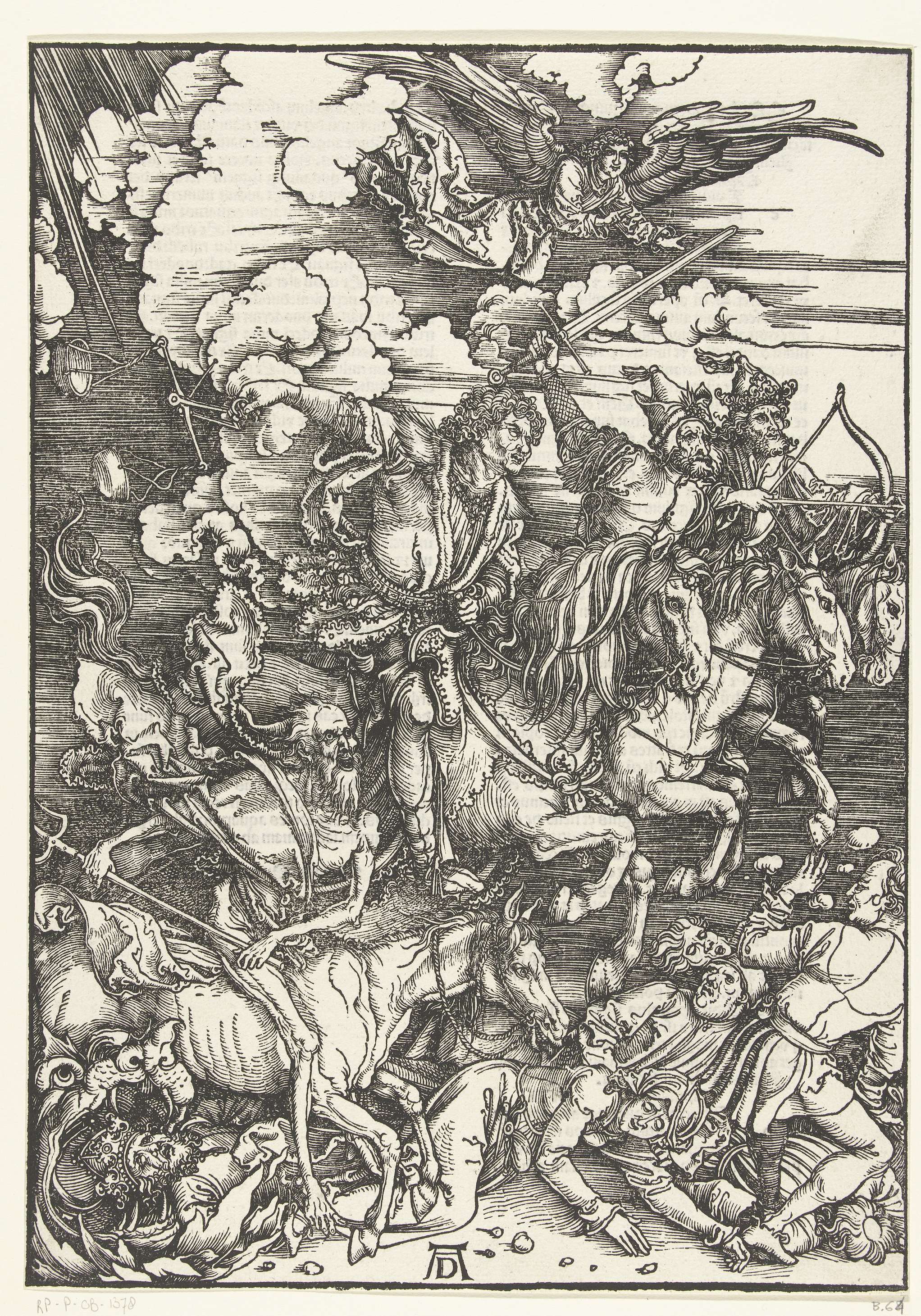
What secret hides in the quiet of the canvas? Albrecht Dürer’s *De vier ruiters van de apocalyps* speaks to the inevitability of transformation, a chilling testament to the powerful forces that mark human existence. Look to the left at the bold, rhythmic strokes that define the figure of War, his fierce presence dominating the composition. The deep reds and blacks invoke a sense of foreboding, contrasting sharply with the lighter hues that represent the figure of Pestilence on the right, whose skeletal frame is clothed in wisps of smoke. Notice how the texture of the horses’ manes seems to swirl with the chaos of their riders, each horse depicted with frantic energy that mirrors the tumultuous circumstances of the world—nature yielding to destruction and despair. As you explore this dynamic piece, consider the weight of Death’s calm stance amidst the chaos, balancing the urgency of the other riders. The contrast between the vibrant action of the steeds and the stillness of the grim reaper evokes a profound meditation on mortality and fate. The intermingling of the riders illustrates an apocalyptic prophecy, their intertwined destinies challenging the viewer to confront the relentless cycle of destruction and rebirth. Dürer created this woodcut in 1511 during a time of significant change in Europe, marked by social upheaval and the burgeoning Renaissance. His mastery of form and technique during this period reflects a transition in artistic focus towards the human condition and the complexities of life and death. This artwork, part of a series on the Apocalypse, showcases his innovative approach to printmaking, emphasizing the themes of turmoil and transformation that resonate deeply with audiences even today.