Melancholia — History & Facts
A winged figure crowned with a wreath sits in the foreground, her head resting on her hand in a pose of deep thought or sorrow. She wears a long, flowing robe with intricate folds rendered in fine, precise lines, and holds a compass loosely in her right hand. Beside her, a large polyhedron rests on the ground, its many facets carefully shaded to give a sense of weight and solidity.
A sleeping dog lies curled at the base of the polyhedron, its body thin and its fur marked by delicate hatching. Scattered around the lower edge of the composition are various tools and objects: a sphere, a saw, a plane, nails, and a ruler, each drawn with meticulous attention to detail. To the left, a pair of scales hangs from a structure that resembles a building or a large block, and an hourglass is suspended above the seated figure.
A ladder leans against this structure, leading upward toward a radiant burst of light that fills the sky in the upper left corner. A magic square, a bell, and an hourglass are fixed to the wall behind the main figure, each rendered with crisp, clear lines. The entire scene is composed in monochrome, with the artist using a dense network of cross-hatching and parallel lines to create depth, texture, and dramatic contrasts of light and shadow.
The composition is tightly packed, with each object and figure carefully arranged to guide the viewer’s gaze across the image. The Rijksmuseum’s record lists the work’s title as Melancholia and confirms its date as 1514.
Sources: Rijksmuseum, record RP-P-OB-1237
More Artworks by Albrecht Dürer

St. George and the dragon.
Albrecht Dürer
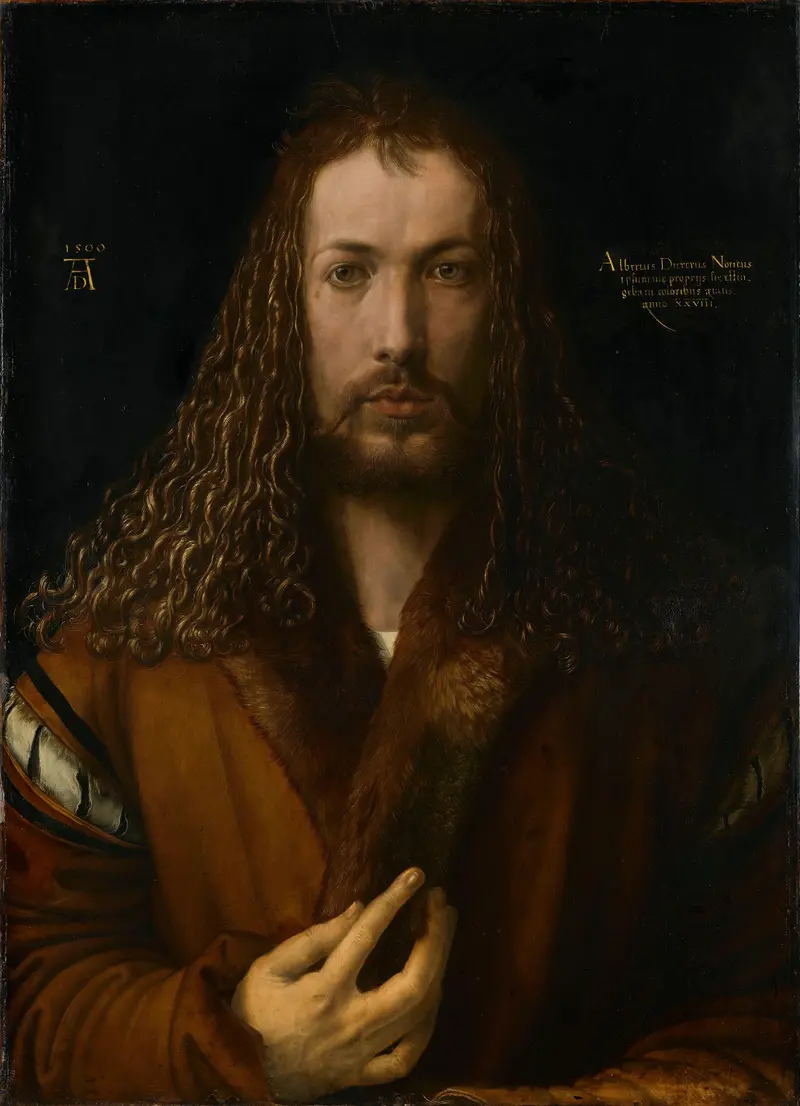
Self-Portrait with Fur-Trimmed Robe
Albrecht Dürer

Wing of a European Roller
Albrecht Dürer
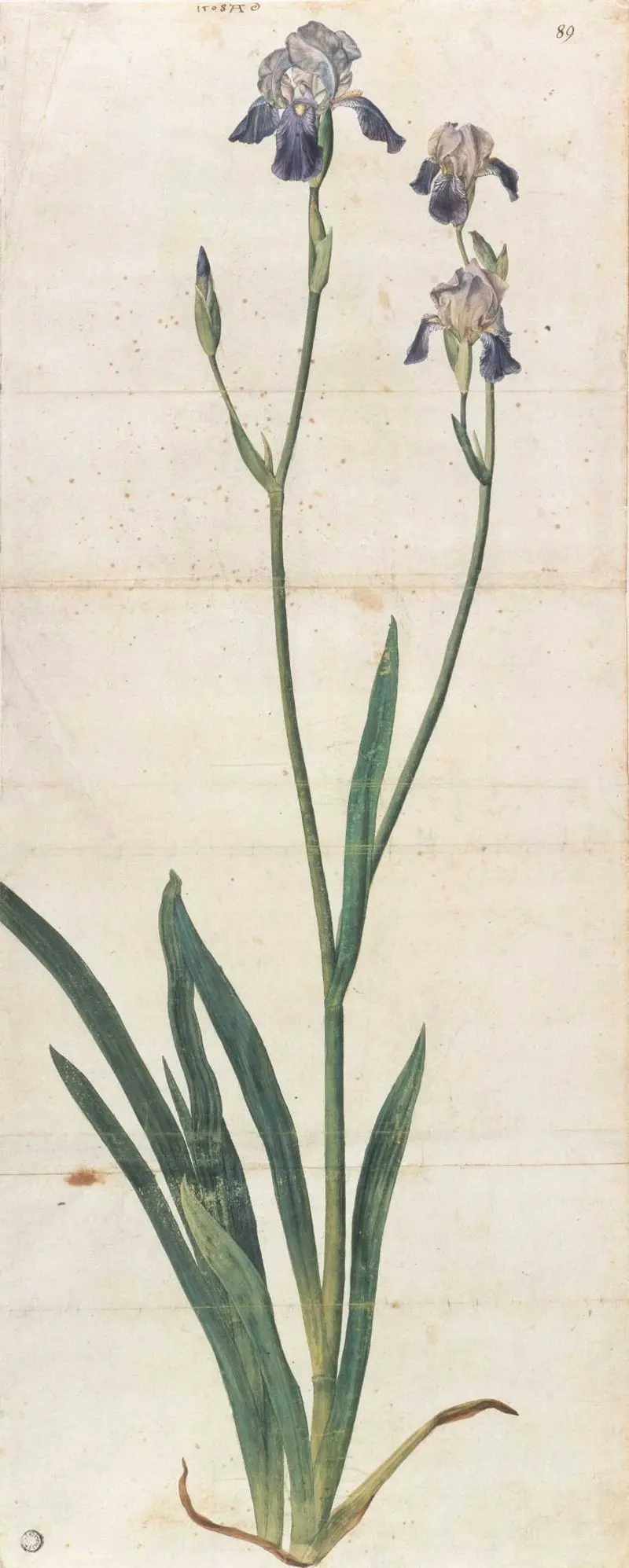
Iris
Albrecht Dürer
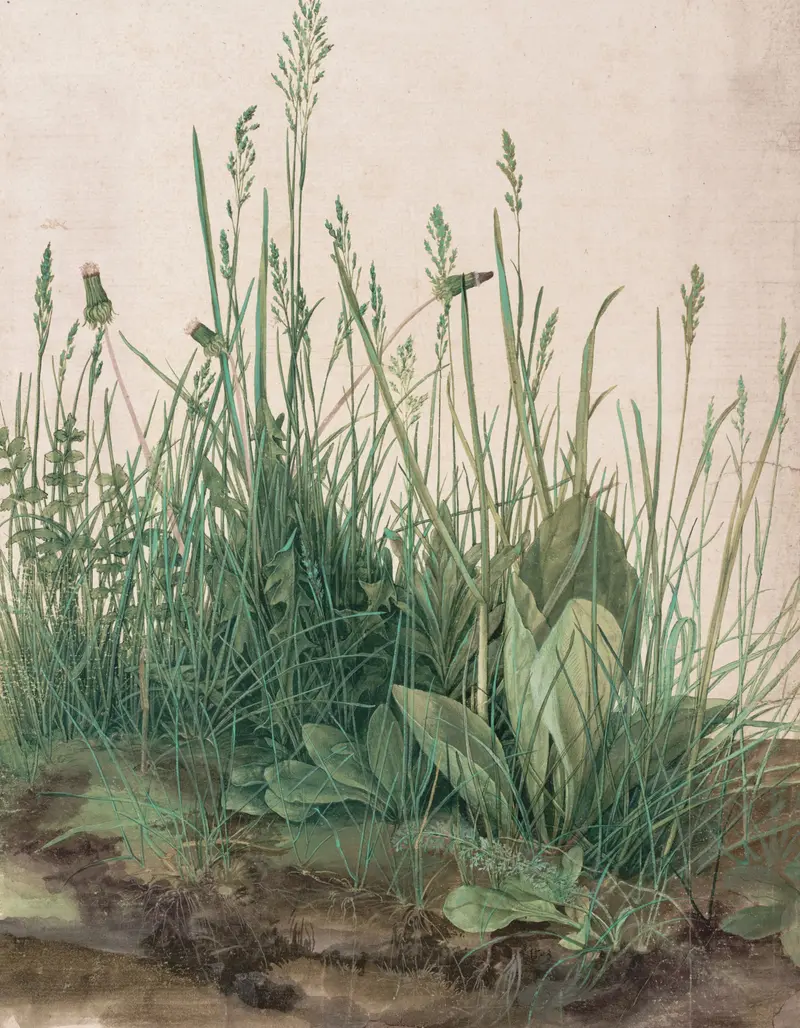
The Great Piece of Turf
Albrecht Dürer
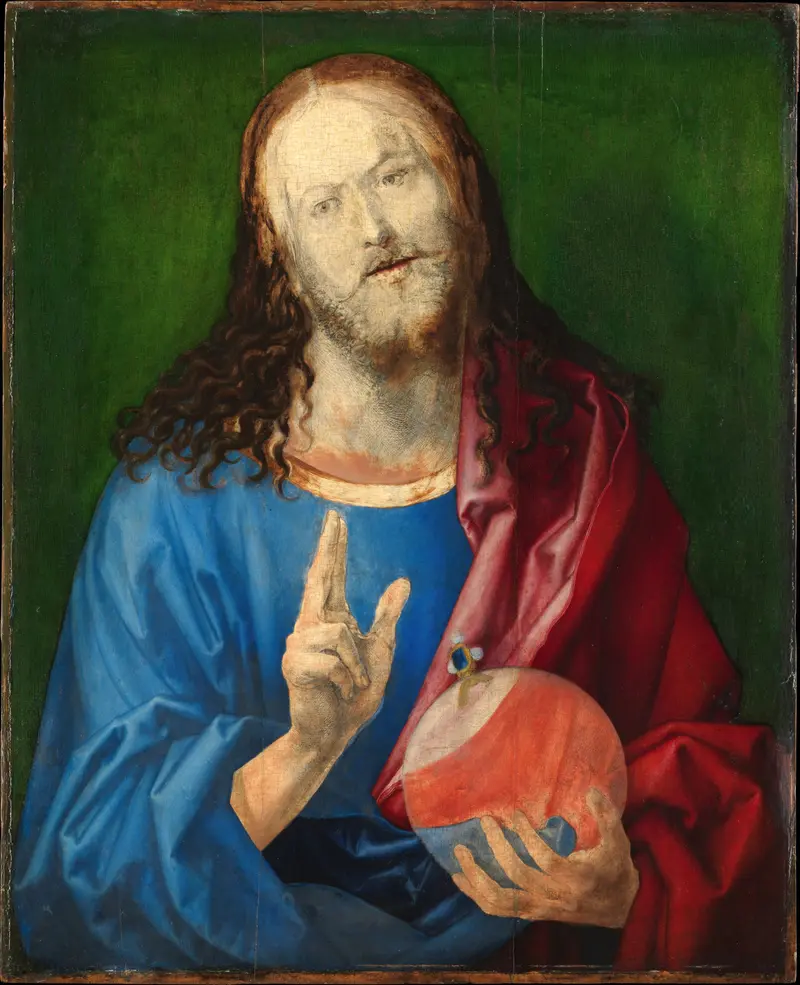
Salvator Mundi
Albrecht Dürer
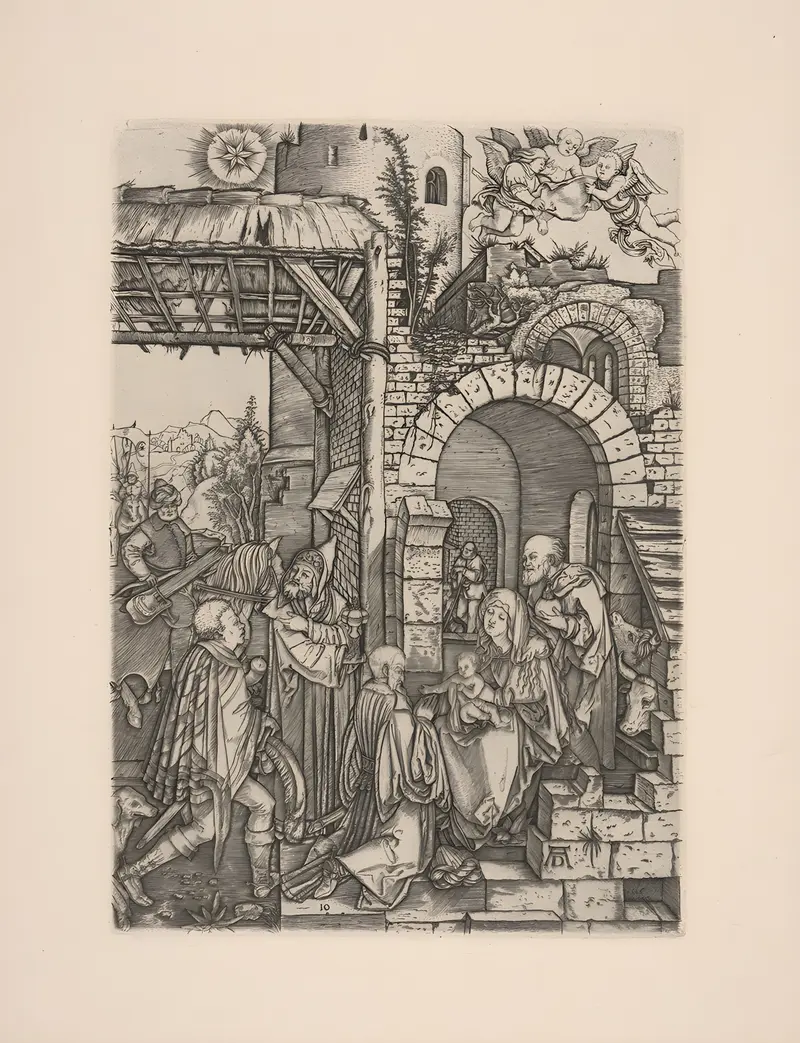
The Adoration of the Magi
Albrecht Dürer
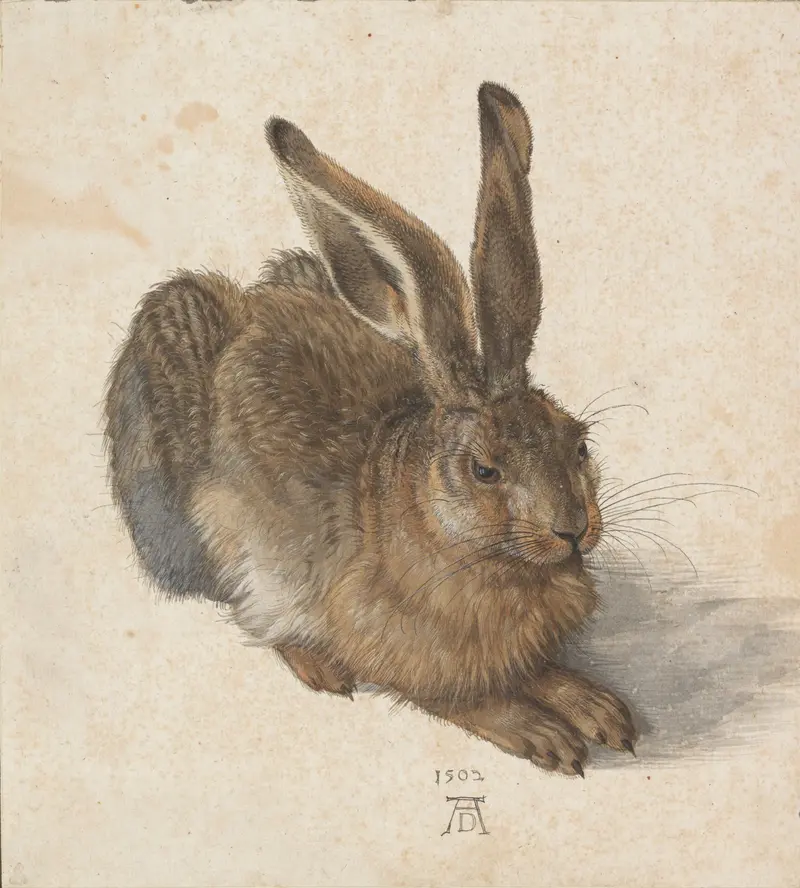
Young Hare
Albrecht Dürer
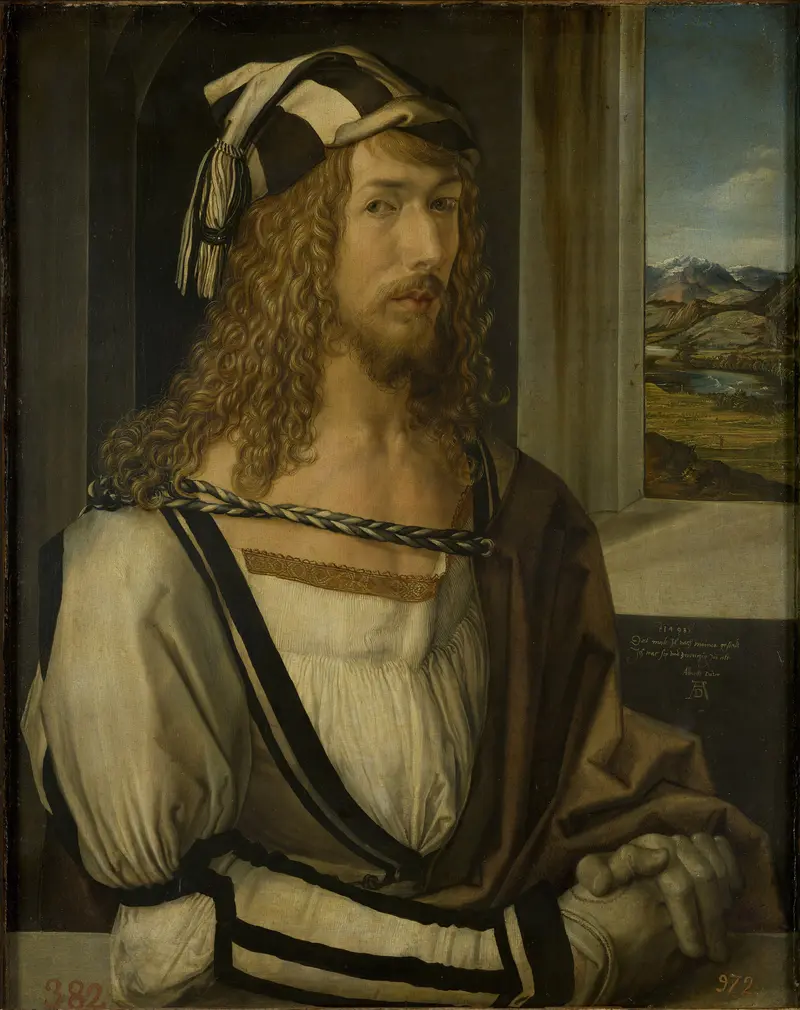
Self-portrait
Albrecht Dürer
Adam and Eve (The Fall of Man)
Albrecht Dürer