
Neushoorn — History & Facts
A rhinoceros stands in profile, facing right, its head lowered towards the ground as if sniffing or grazing. The folds of skin around the neck and shoulders are rendered with dense, curving lines, giving a sense of both volume and texture. Each of the rhinoceros’s legs is thick and sturdy, ending in three prominent toes, and the skin is shown as densely scaled, with small, rounded shapes covering the surface.
The back of the animal is topped with a prominent, shell-like ridge, which is divided by vertical grooves and edged with a scalloped border. The head is massive, with a sharply curved horn at the tip of the snout and a smaller secondary horn on the forehead, both marked by strong, dark lines. The animal’s tail is visible at the left edge of the image, ending in a tuft of hair.
The ground beneath the rhinoceros is lightly indicated with a few tufts of grass and scattered stones, while the background is left blank, focusing attention on the creature itself. Dürer uses a dense network of parallel and cross-hatched lines to create shading and volume, especially along the animal’s flanks and belly, giving the print a strong sense of three-dimensionality. The composition fills the rectangular sheet, with the rhinoceros’s massive form dominating nearly the entire space.
The print is executed in black and white, relying entirely on the contrast between the inked lines and the white of the paper for its visual impact. The surface of the animal’s skin is described with remarkable attention to detail, each plate and scale carefully differentiated by the direction and density of the lines. Neushoorn is attributed to Albrecht Dürer, as stated in the museum’s record. The Rijksmuseum’s catalogue lists this work as a woodcut.
Sources: Rijksmuseum, record RP-P-OB-1473
More Artworks by Albrecht Dürer

Melancholia
Albrecht Dürer

St. George and the dragon.
Albrecht Dürer
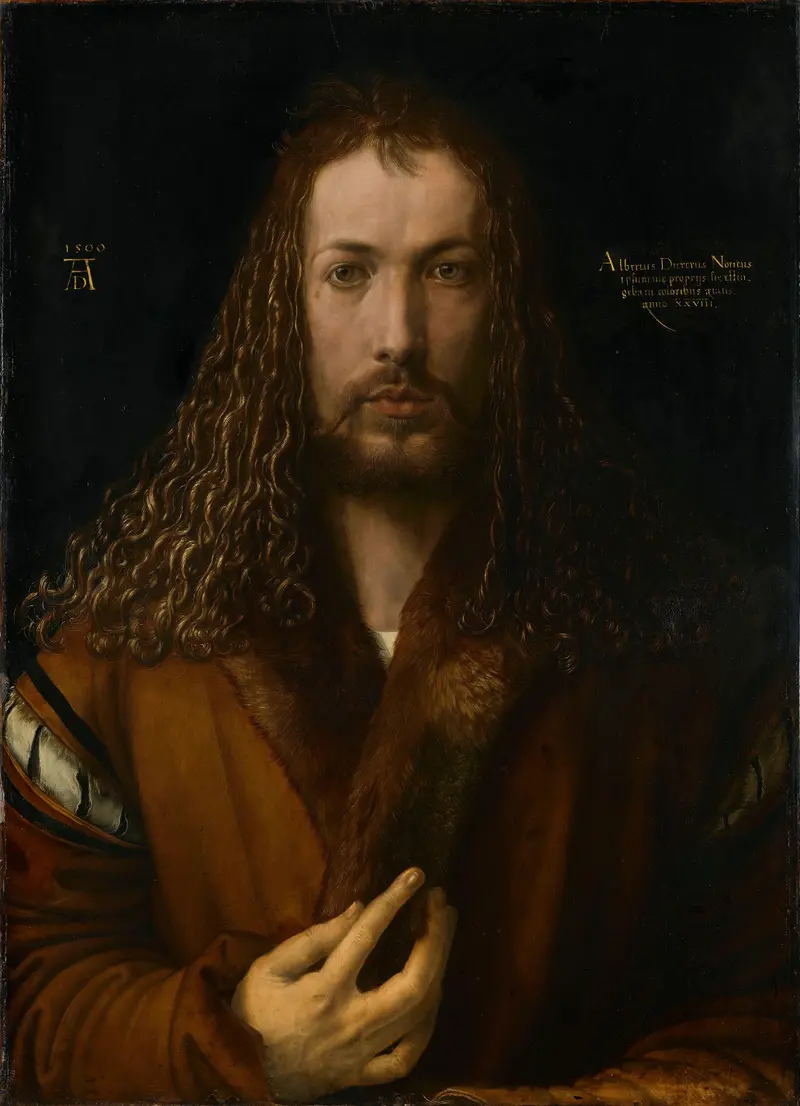
Self-Portrait with Fur-Trimmed Robe
Albrecht Dürer

Wing of a European Roller
Albrecht Dürer
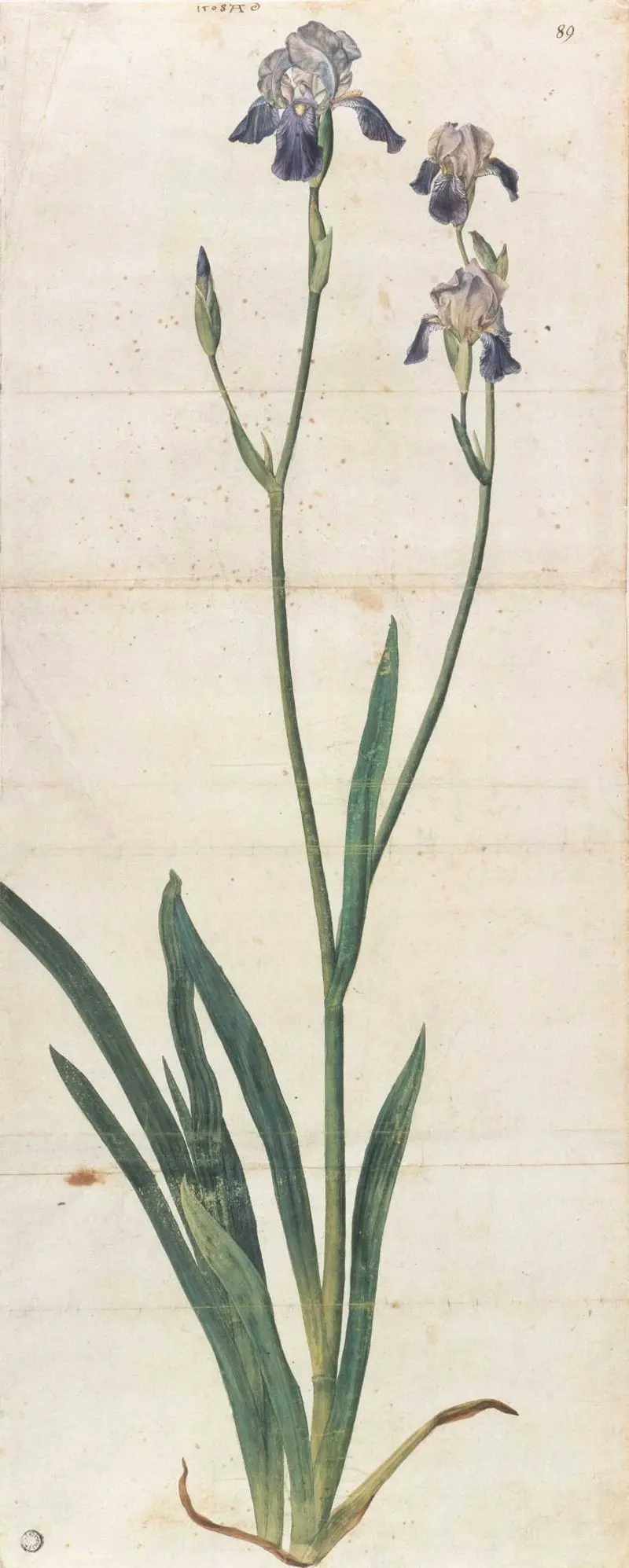
Iris
Albrecht Dürer
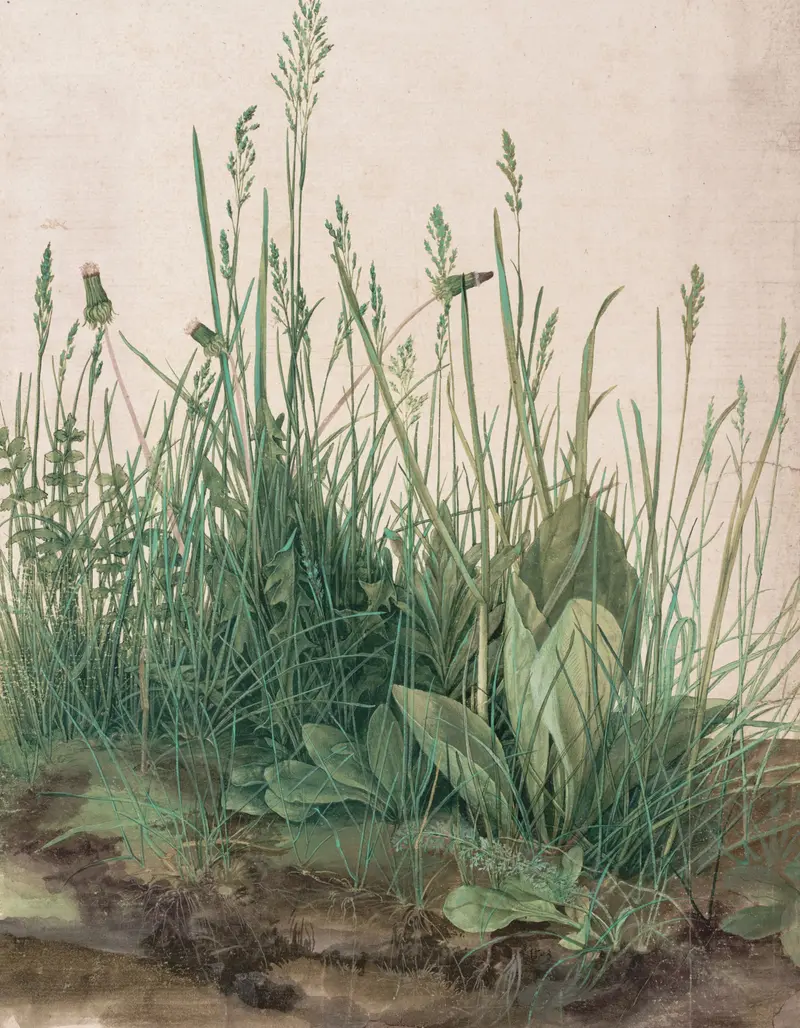
The Great Piece of Turf
Albrecht Dürer
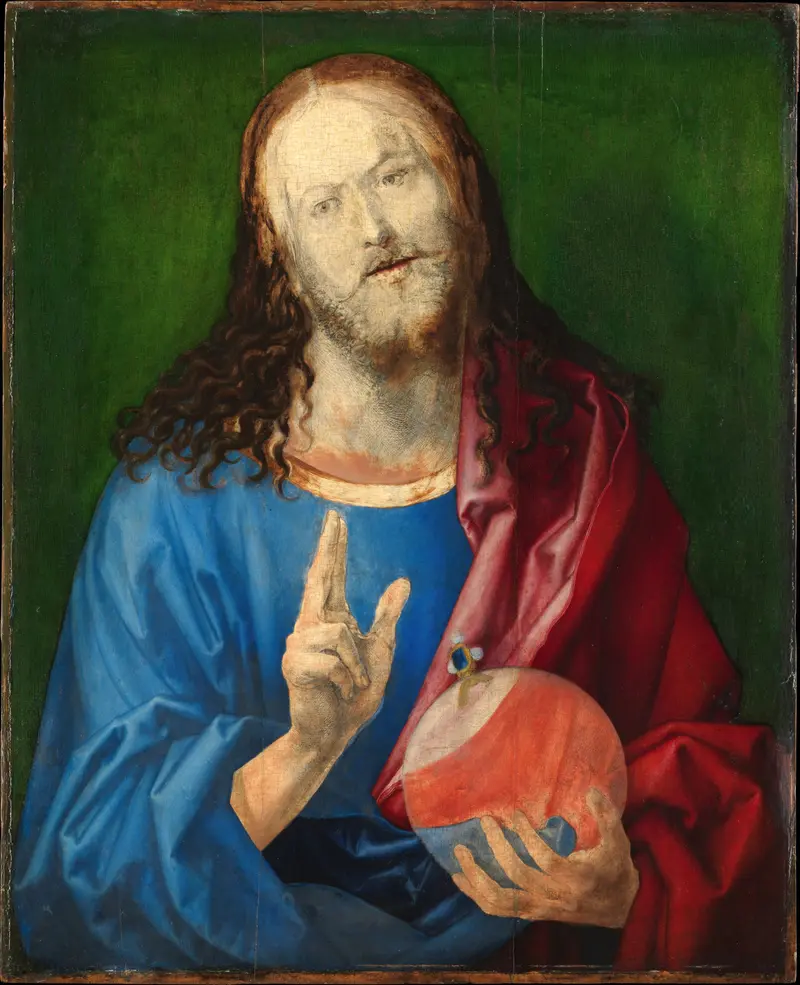
Salvator Mundi
Albrecht Dürer
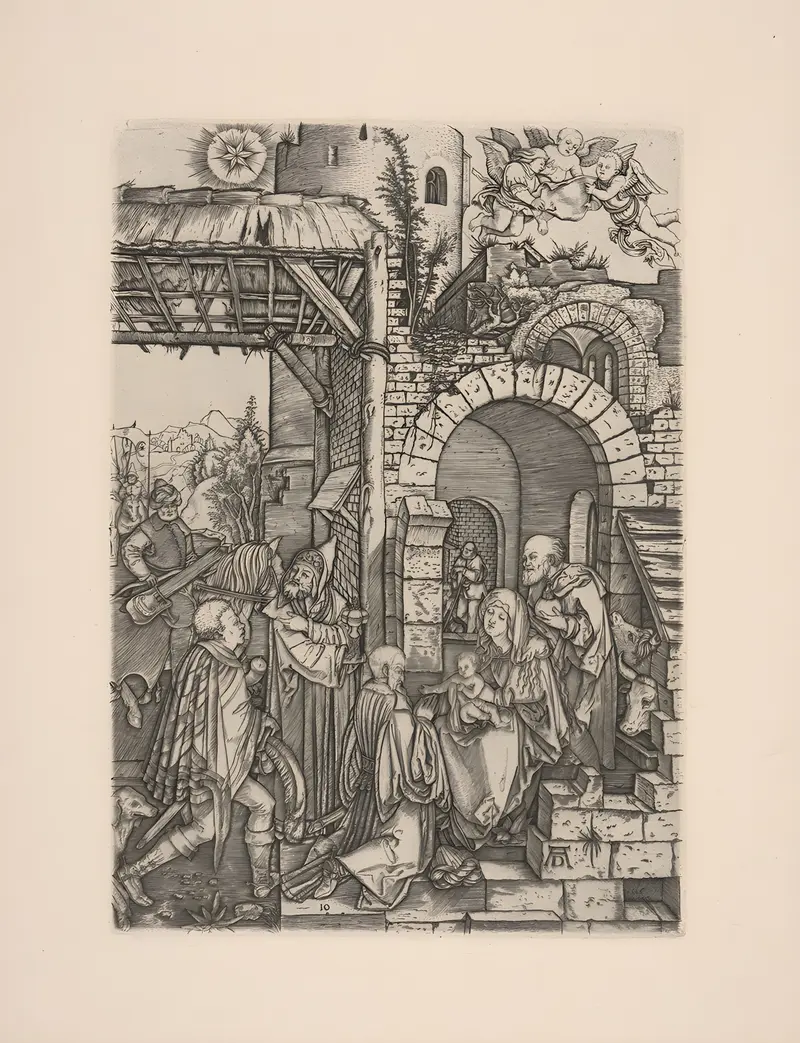
The Adoration of the Magi
Albrecht Dürer
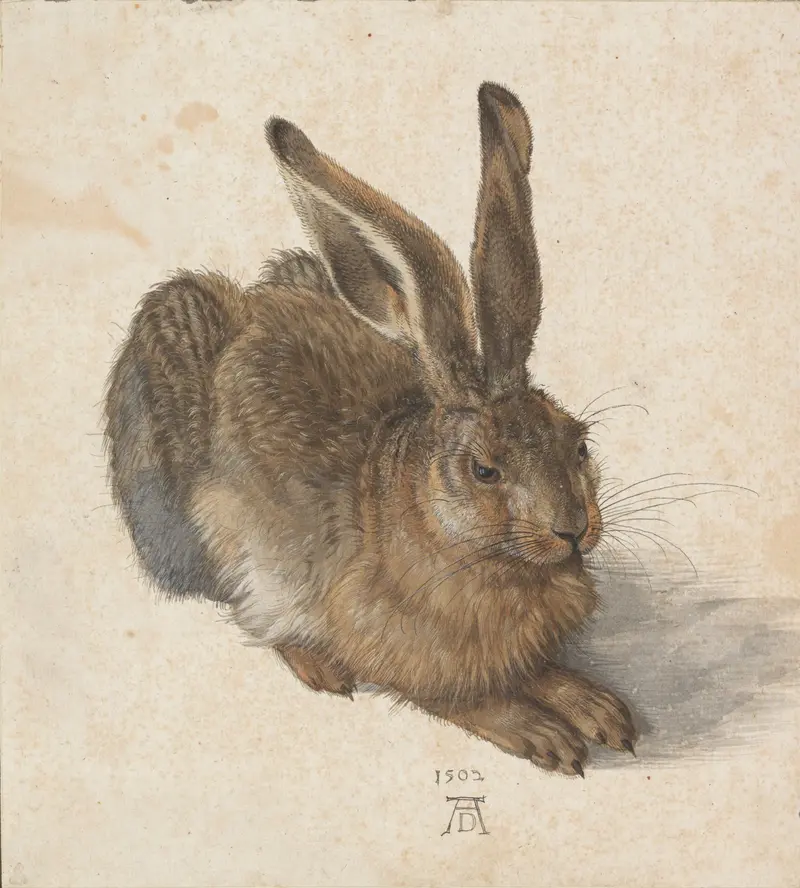
Young Hare
Albrecht Dürer
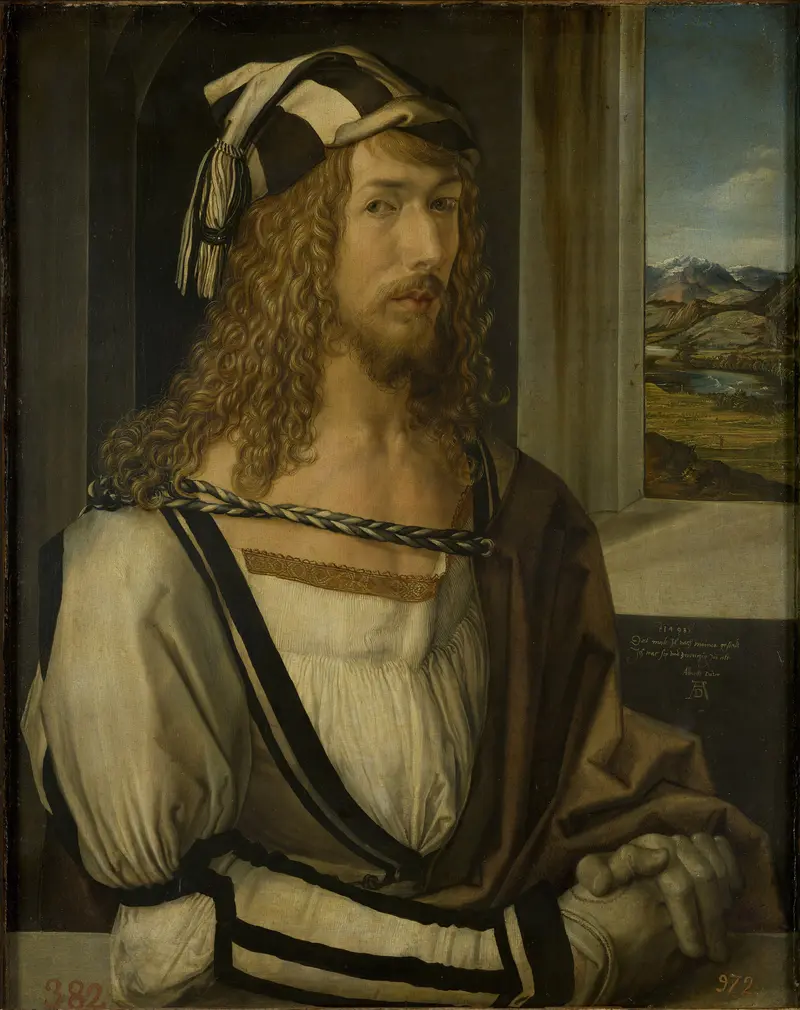
Self-portrait
Albrecht Dürer




