
De Heilige Hiëronymus in zijn studeervertrek — History & Facts
A bearded man sits at a slanted desk, absorbed in writing, his head bent low and his hand steady on the page. He wears a long robe that drapes in heavy folds around his body and spills across the bench, its textured surface rendered with dense, parallel lines. A large lion lies at his feet, its head resting on its paws, mane curling in intricate lines, and its body filling the lower left corner of the scene.
Behind the man, a shelf holds an array of bottles and vessels, each carefully outlined, suggesting a space of study and contemplation. To the right, a small window lets in a shaft of light that falls across the man’s workspace, illuminating the objects on his desk and casting shadows along the curved wall. A large curtain, drawn back to the left, frames the scene and emphasizes the intimacy of the interior.
Books, a crucifix, and writing implements are scattered across the desk and shelves, each object precisely described with fine hatching and cross-hatching that give depth and texture to the print. The composition is tightly arranged, with every element contributing to a sense of quiet concentration and order. The artist uses crisp, controlled lines to create sharp contrasts of light and shadow, especially in the folds of fabric and the lion’s mane.
The signature 'AD' and the date '1511' appear on the front of the desk, identifying the work’s creator and year. The Art Institute of Chicago describes the print as executed in black on ivory laid paper, a technique that allows for striking contrasts and delicate detail.
Sources: Art Institute of Chicago, record 1965.17 · Wikidata Q18339715
More Artworks by Albrecht Dürer

Melancholia
Albrecht Dürer

St. George and the dragon.
Albrecht Dürer
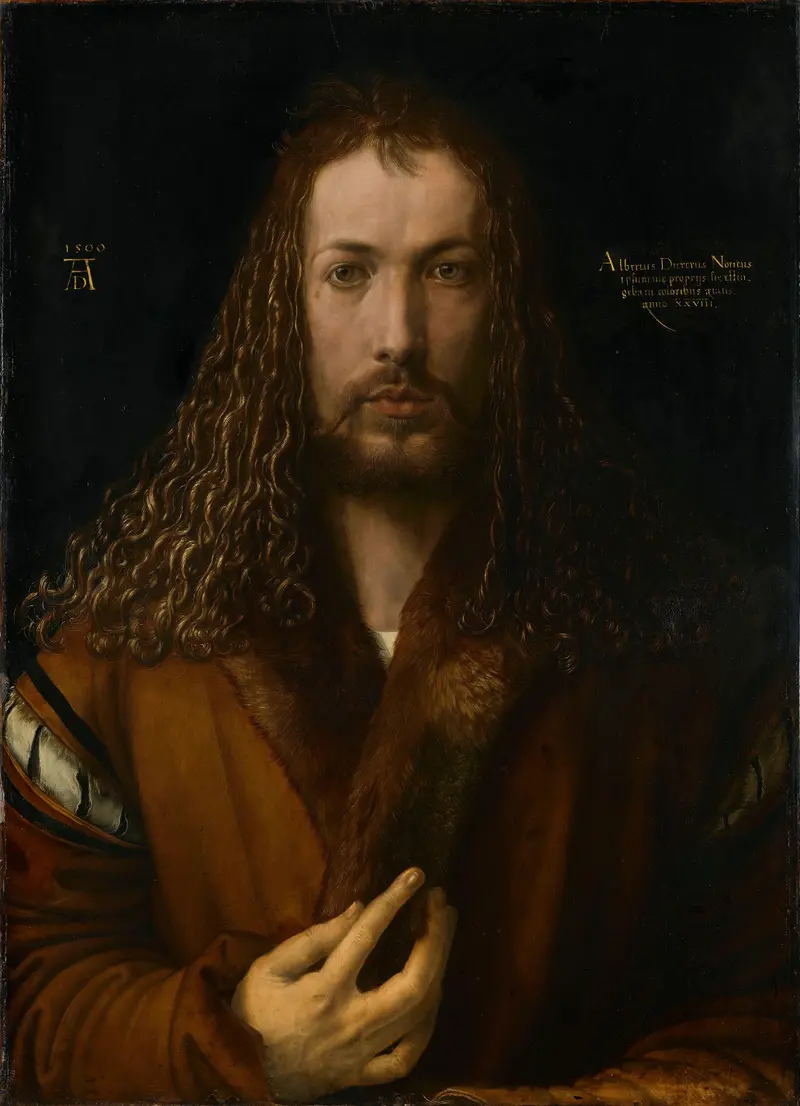
Self-Portrait with Fur-Trimmed Robe
Albrecht Dürer

Wing of a European Roller
Albrecht Dürer

Iris
Albrecht Dürer

The Great Piece of Turf
Albrecht Dürer
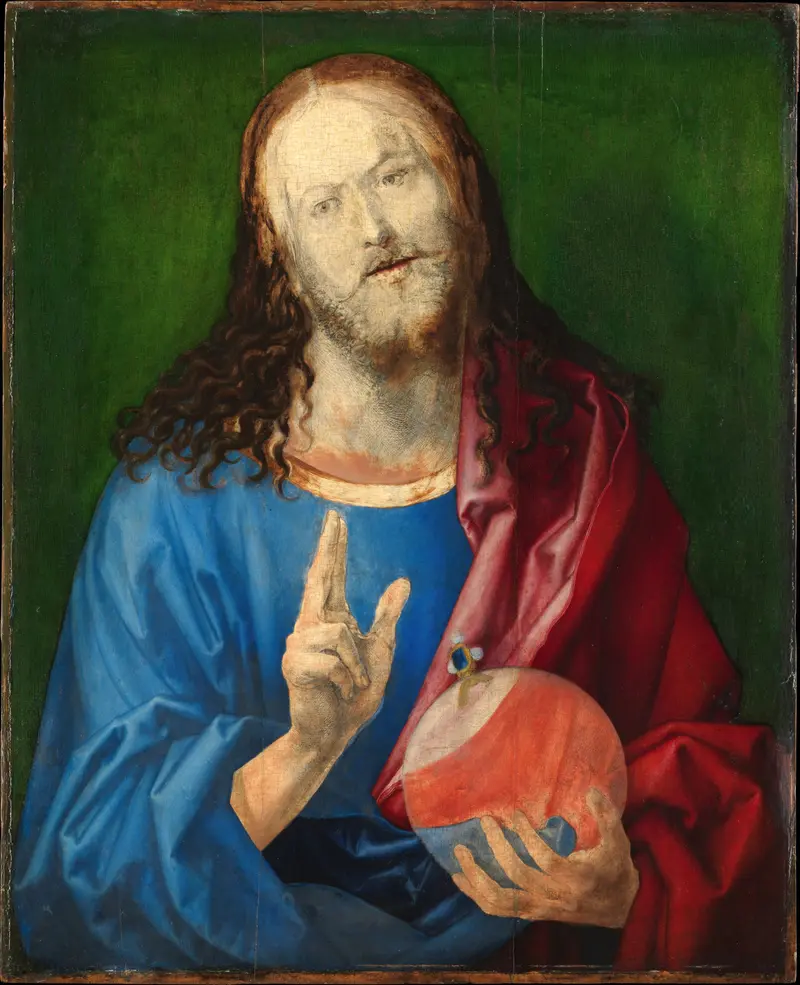
Salvator Mundi
Albrecht Dürer
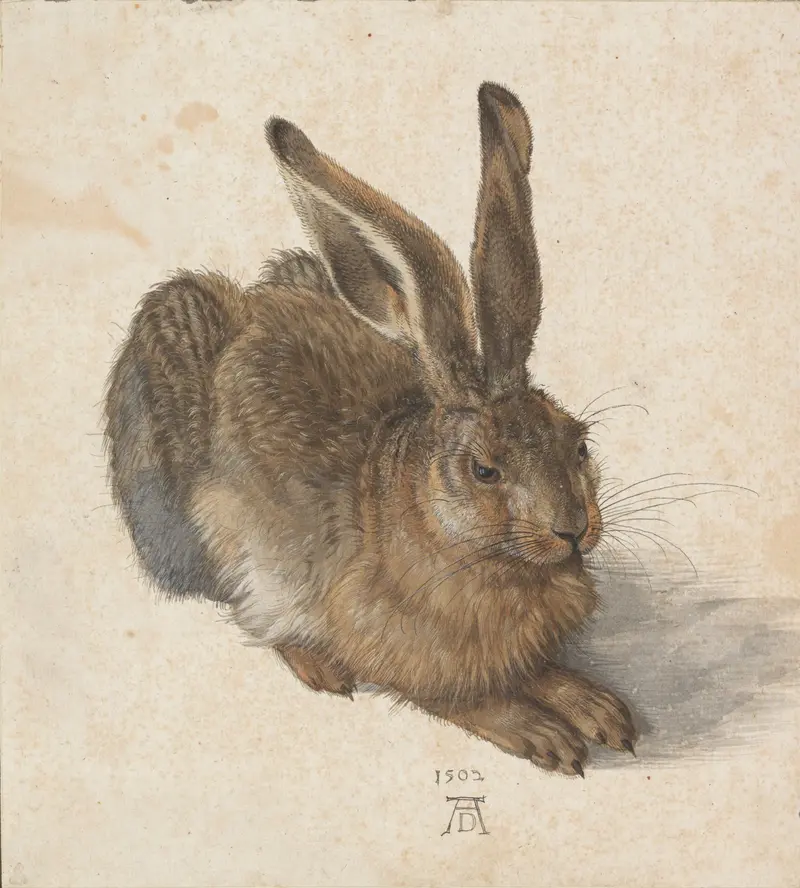
Young Hare
Albrecht Dürer
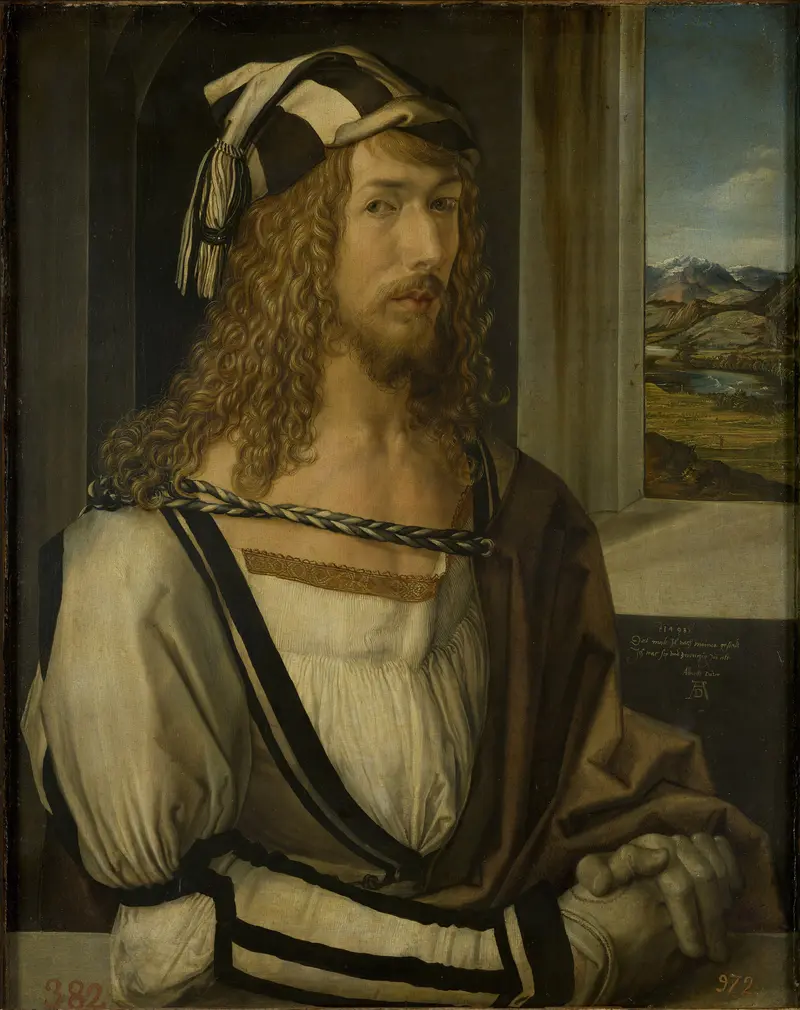
Self-portrait
Albrecht Dürer
Adam and Eve (The Fall of Man)
Albrecht Dürer





