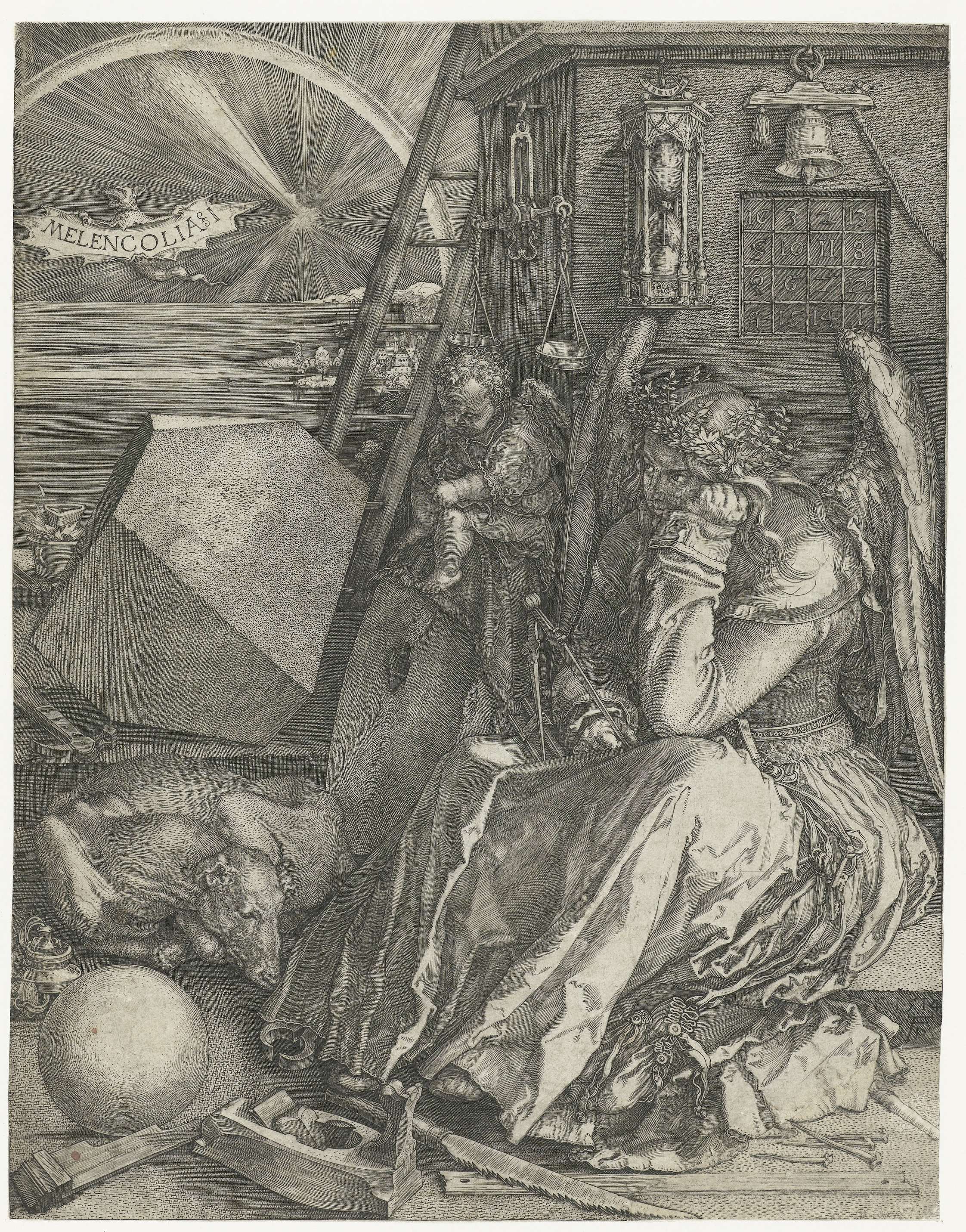
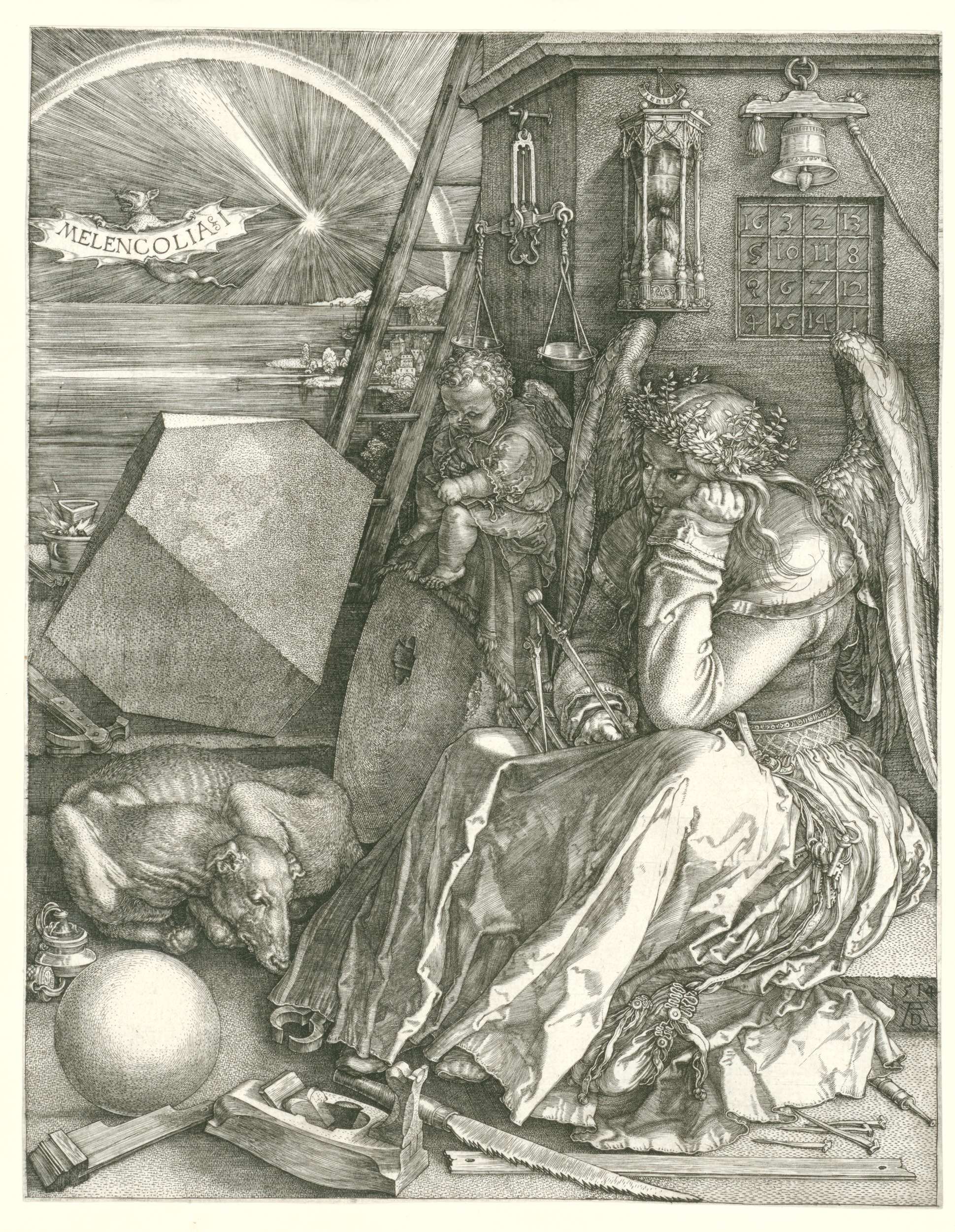
What if silence could speak through light? In Albrecht Dürer’s *Melancholie*, the shadows whisper of a profound interior struggle, revealing the weight of introspection and fear. Look to the figure at the center, a contemplative angel cloaked in somber tones. The delicate lines of Dürer’s engraving guide your gaze to her furrowed brow and the heavy tools scattered around her, each a metaphor for creativity stifled by despondency. Notice how the light delicately illuminates her face, striking a stark contrast against the darkness that looms in the background. This careful interplay of light and shadow reveals the tension between hope and despair, encapsulating the essence of melancholy. In this work, the scattered tools symbolize the burden of unfulfilled potential, while the hourglass hints at the passage of time weighed down by inaction. The angel's gaze, filled with both wisdom and torment, reflects a universal struggle—an inner tumult that many face yet few articulate. The juxtaposition of the ethereal figure against a backdrop of mundane objects reinforces the tension between aspiration and the fear of inadequacy, creating an atmosphere thick with unspoken emotion. Dürer created *Melancholie* in 1514, during a time marked by both personal and broader societal challenges. Living in Nuremberg, he was navigating the complexities of the Renaissance, where art flourished, yet the specter of existential doubt loomed large. This engraving emerged from a period of innovation and introspection, as the artist grappled with his identity and the evolving role of the artist in a rapidly changing world.