Der Sängerfestzug in Wien 22.Juli 1928 — History & Analysis
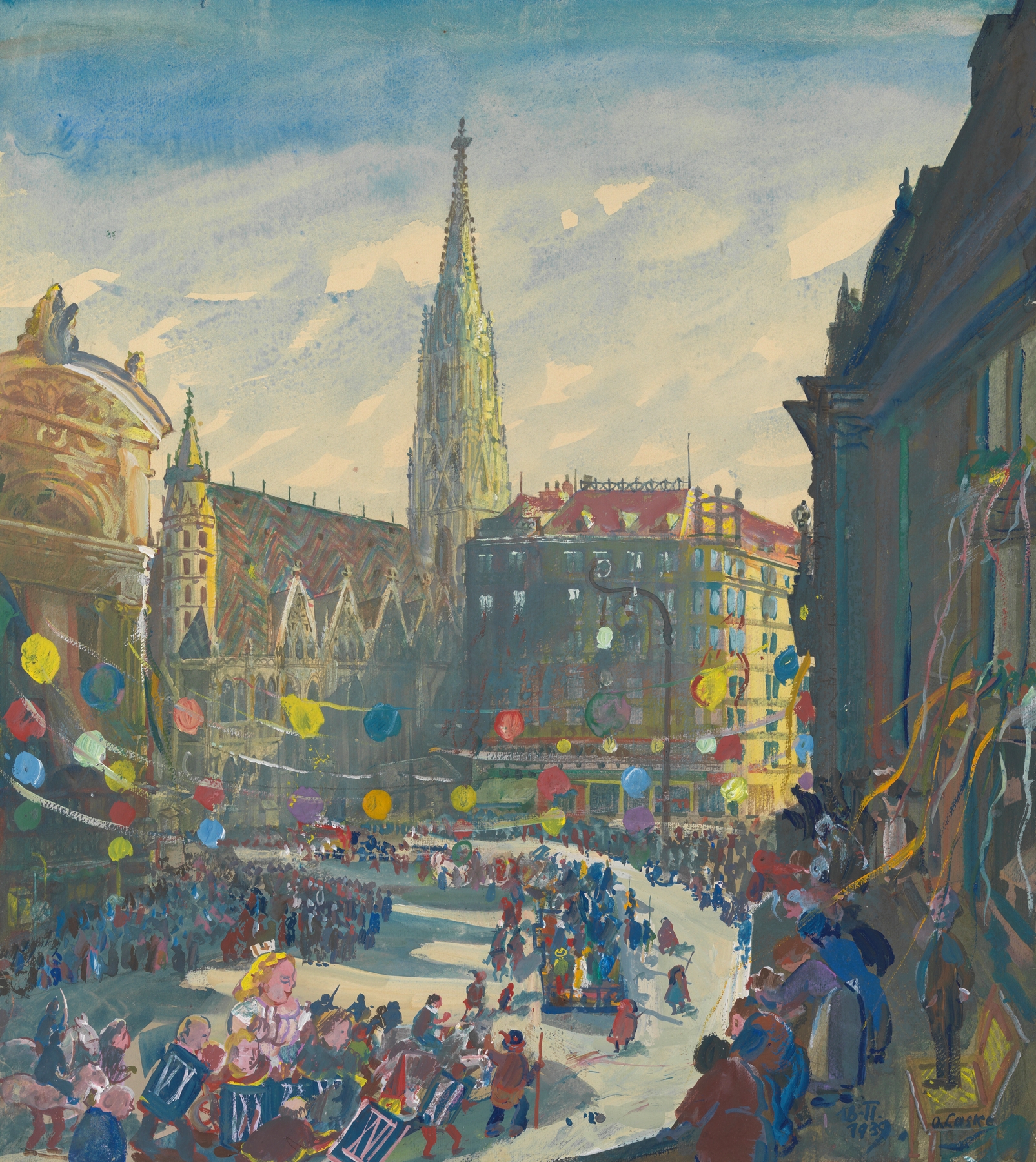
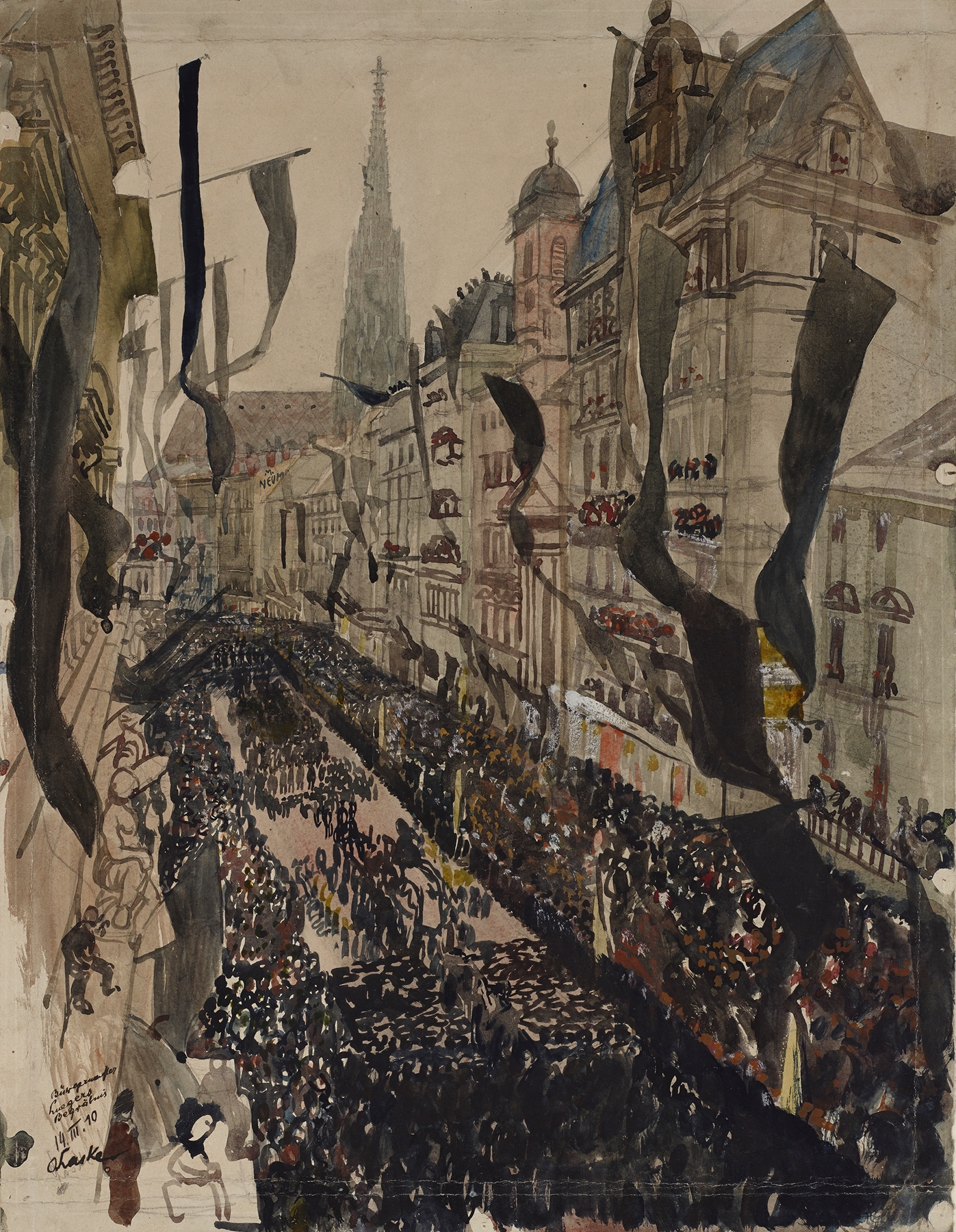
“Sometimes beauty is just pain, disguised in gold.” This sentiment echoes through the vibrant strokes and complex compositions of that time, revealing layers beneath the surface of artistry. In Der Sängerfestzug in Wien, Oskar Laske captures a moment rife with communal joy yet shadowed by an undercurrent of loss. Look to the center of the canvas, where figures clad in ornate traditional attire parade with spirited zeal. The vivid colors of their garments contrast sharply with the muted, somber background, suggesting an ephemeral celebration amidst an uncertain future.
The rhythmic movement of the marchers draws the eye, each figure telling a silent story, while the fluid brushwork creates a sense of continuity that seems to hold time still. Beneath this festive exterior lies a poignant tension. The placement of figures in varying degrees of brightness hints at the isolation felt even in unity; some march confidently, while others appear hesitant, as if grappling with the weight of nostalgia. The parade's joyous sounds resonate, yet one can almost hear the echoes of those who are no longer part of the celebration, reminding us that loss is often entwined with beauty.
In 1928, amid a rapidly changing Europe, Laske’s work emerges as a reflection of Vienna’s cultural vibrance against the backdrop of looming uncertainty. The artist, known for his ability to capture the spirit of the moment, was navigating the complexities of a society on the brink of upheaval. This painting embodies both the exuberance of the singer's festival and the latent sorrow of a world in transition, marking a significant point in his career and the broader artistic landscape.