Schönbrunn (Winter) — History & Analysis
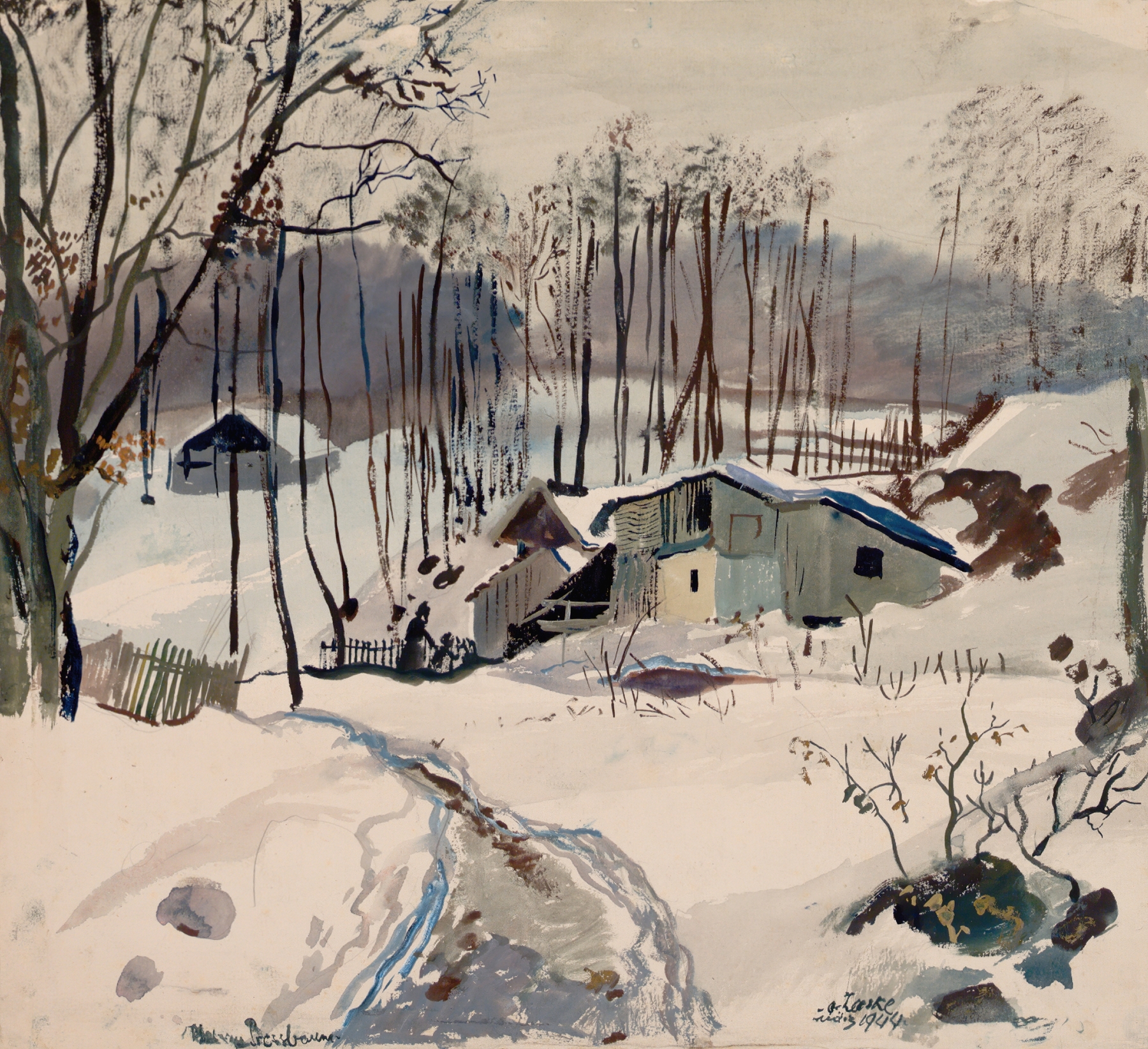
Where does light end, and longing begin? In the gentle embrace of winter, Schönbrunn (Winter) captures the exquisite tension between the two, revealing a world that speaks to both ecstasy and solitude. Look to the upper left, where a soft glow spills over the snow-covered rooftops, illuminating the palace’s ornate architecture. The delicate hues of blues and whites blend together, creating an ethereal quality that invites the viewer to linger. Notice how the brushstrokes vary in texture; the smooth swathes of the sky contrast with the crisp, meticulous details of the frost-laden trees in the foreground.
This interplay of light and shadow composes a serene yet charged atmosphere, evoking a sense of nostalgia. Beneath the tranquil surface lies a deeper emotional resonance. The expansive, empty spaces suggest a yearning for connection, while the vibrant light seeping across the landscape hints at hidden joys waiting to be discovered. The juxtaposition of the cold winter landscape with the warmth of illumination reflects the duality of human experience—where moments of ecstasy can stem from profound solitude.
Each detail, from the distant figures strolling through the snow to the intricate patterns of frost, enriches the narrative, inviting endless contemplation. In 1920, Oskar Laske created this piece during a period of searching for identity in the post-World War I era. Living in Vienna, he was influenced by the tensions in the art world as movements like expressionism and modernism were emerging. This painting, set against a backdrop of societal upheaval, reflects both the beauty and melancholy of the time, capturing the essence of a city yearning to rediscover itself in the quiet contemplation of winter.