Die Bockenheimer Warte zu Frankfurt am Main — History & Analysis
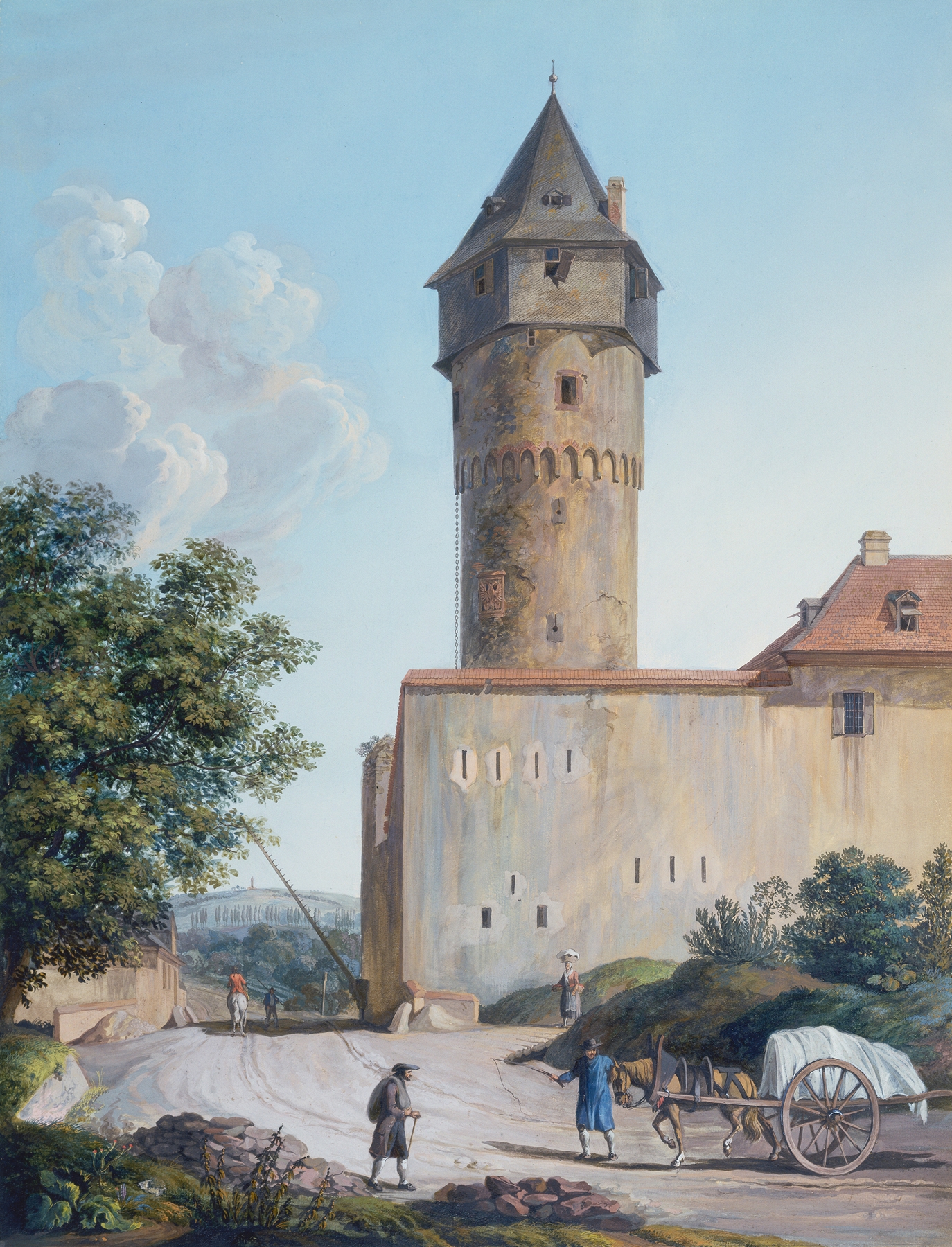
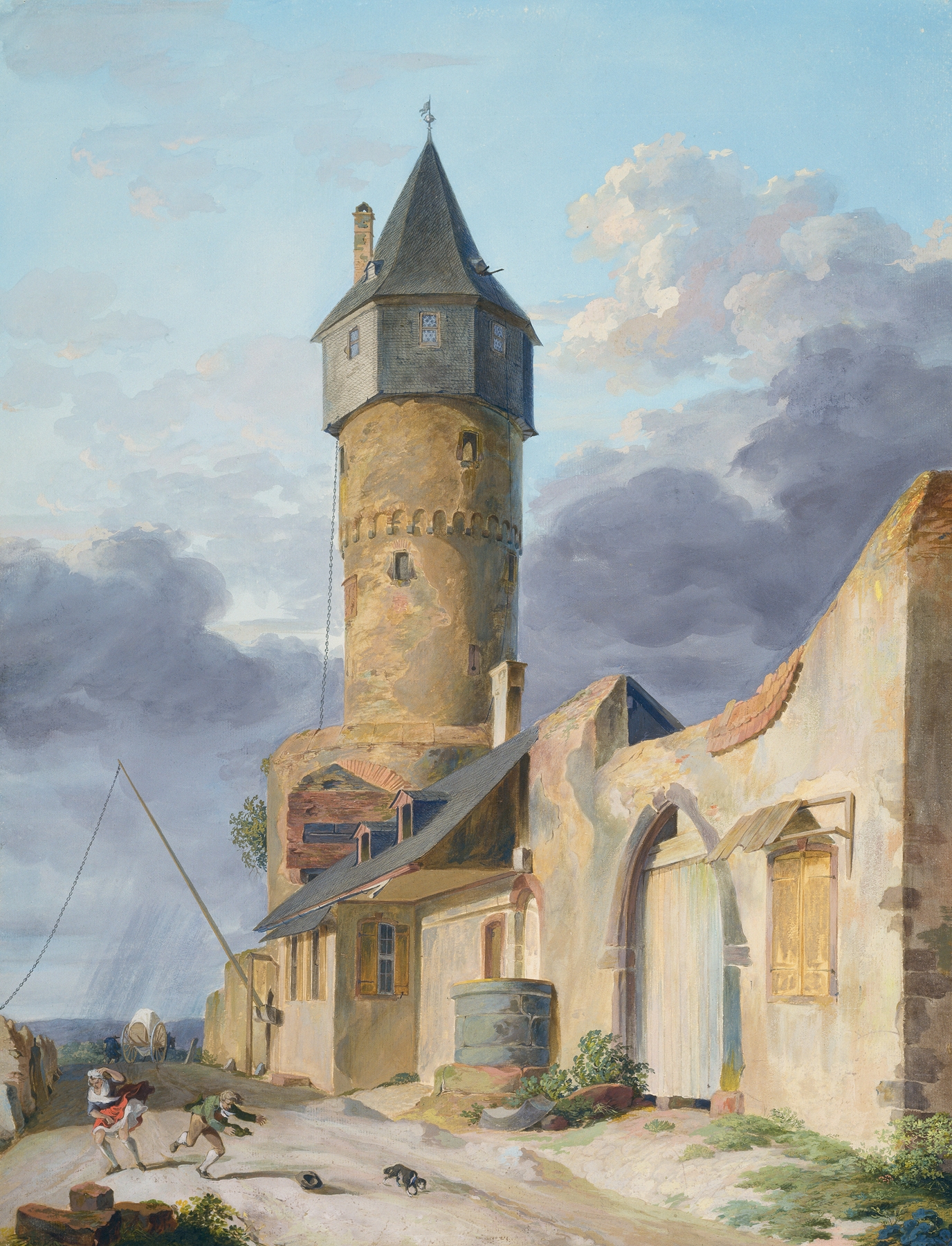
Who listens when art speaks of silence? In Anton Radl's Die Bockenheimer Warte zu Frankfurt am Main, the absence of chaos is its own kind of madness, whispering truths hidden in stillness. Look to the left at the imposing stone structure, a watchtower seemingly frozen in time. The muted colors envelop it, with grays and browns creating a somber atmosphere. Notice how the shadows cast by the tower stretch across the canvas, merging with the muted landscape, evoking a sense of isolation.
The meticulous detail of the bricks draws attention, guiding the eye to the stark contrast between the sturdy tower and the fragile, ephemeral foliage around it, emphasizing the weight of history against the lightness of life. Yet, beneath its quiet exterior, this work pulses with deeper meanings. The tower stands as a guardian of untold stories, echoing moments of introspection and solitude. The surrounding landscape hints at the madness of the human condition, where nature’s beauty exists alongside the weight of time, suggesting the fragility of existence.
It is as if the viewer is invited to ponder the relationship between permanence and transience, between what we choose to remember and what is inevitably lost. Radl created this piece at a time when the art world was exploring the boundaries of expressionism and realism, though the exact date remains unknown. His focus on architectural forms and landscapes reflected the shifting dynamics of post-war Germany, a nation grappling with its collective memory and identity. This work embodies a moment of contemplation amidst societal upheaval, a testament to the artist's desire to capture a space where silence reigns, inviting viewers to confront their own thoughts and emotions.