Die römische Ruine in Schönbrunn — History & Analysis
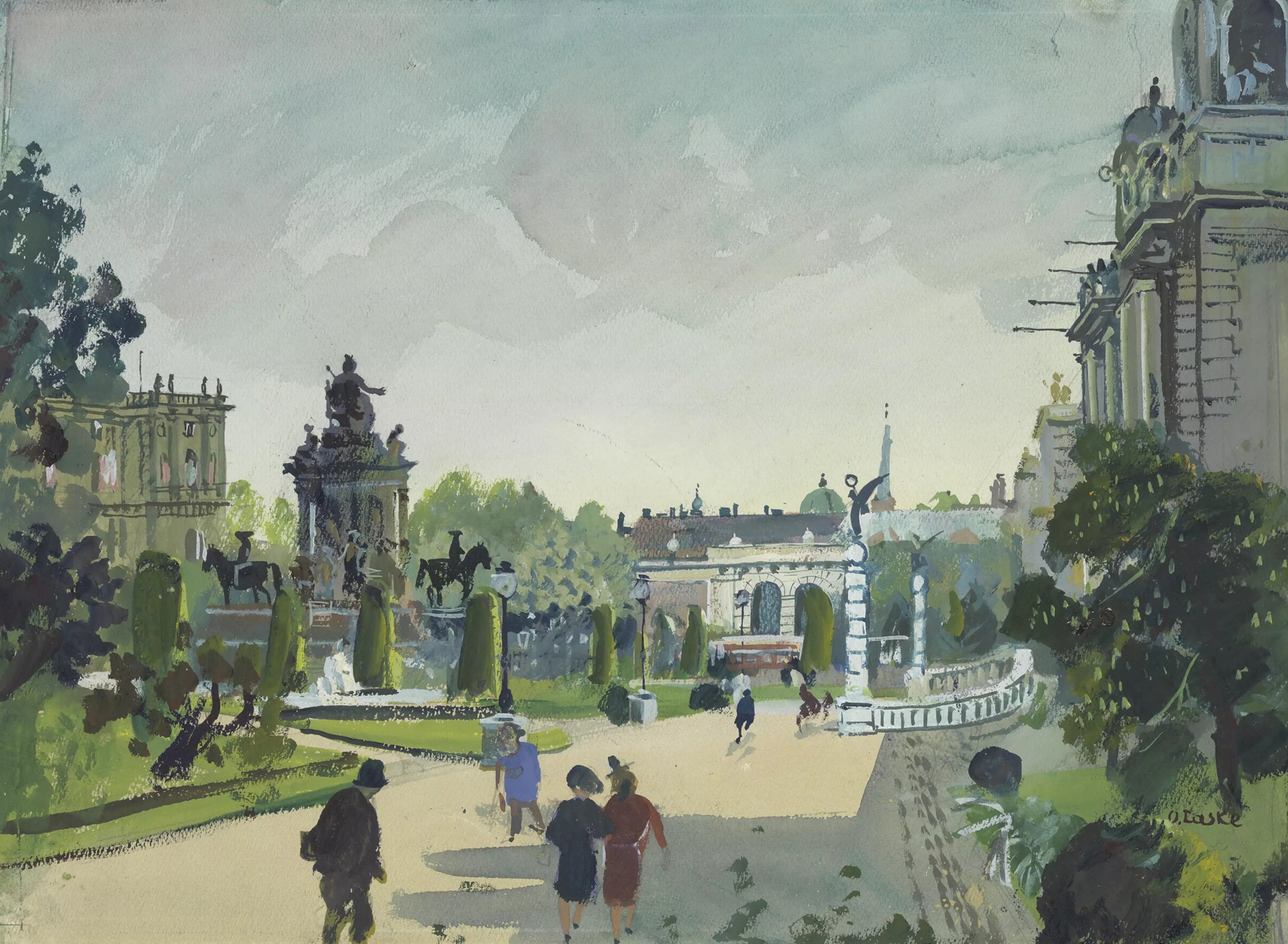
Can beauty exist without sorrow? In the haunting stillness of Die römische Ruine in Schönbrunn, a conversation unfolds between the remnants of grandeur and the inevitable passage of time. Focus first on the delicate interplay of light and shadow that dances across the weathered stone columns. Look to the left at the crumbling archway, where soft sunlight spills through, revealing the intricate carvings that once celebrated life.
The muted palette of earthy browns and soft greys evokes a sense of nostalgia, inviting viewers to contemplate both the majesty of the past and the fragility of the present. Each brushstroke carries a whisper of history, urging an examination of what remains when beauty begins to fade. Delve deeper into the painting’s emotional landscape, where contrasts emerge between the vibrant life once witnessed here and the stillness that now envelops it. The lush greenery surrounding the ruins acts as a poignant reminder of nature's resilience, thriving in the absence of human grandeur.
In this juxtaposition, one can sense a lingering sorrow, suggesting that beauty is often intertwined with loss, as if the ruins themselves hold a secret grief for what they once were. Oskar Laske painted this piece in 1940, during a tumultuous period marked by the build-up to World War II. Living in Austria, he experienced the mounting tensions within Europe, which may have influenced his reflections on decay and beauty. This work arose amidst a shift in the art world, as modernist ideas began to take hold, yet Laske remained committed to capturing the emotive power of landscapes and architecture, allowing the viewer to find deeper truths within their quiet decay.