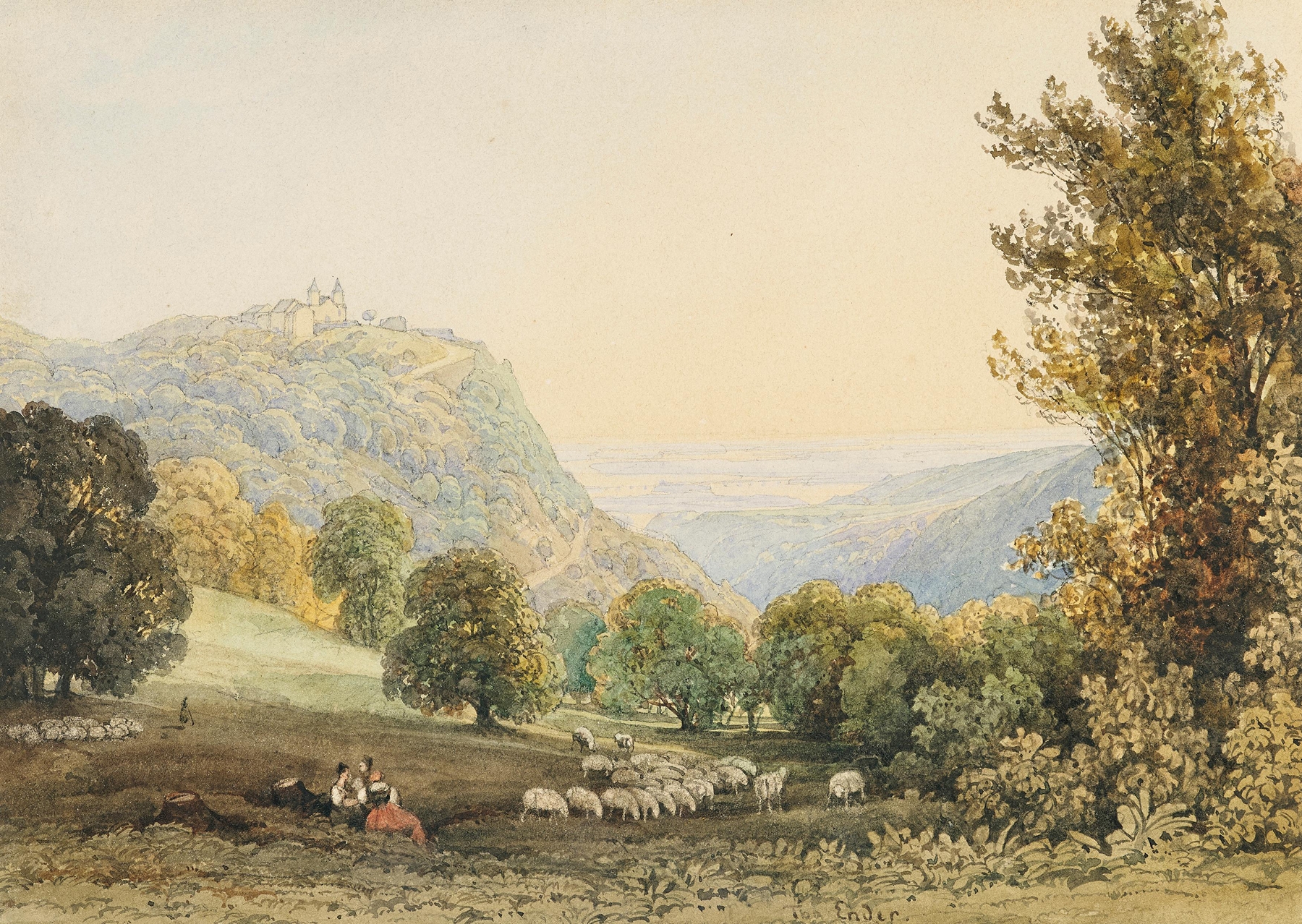
Die Ruine Rauhenstein bei Baden — History & Analysis
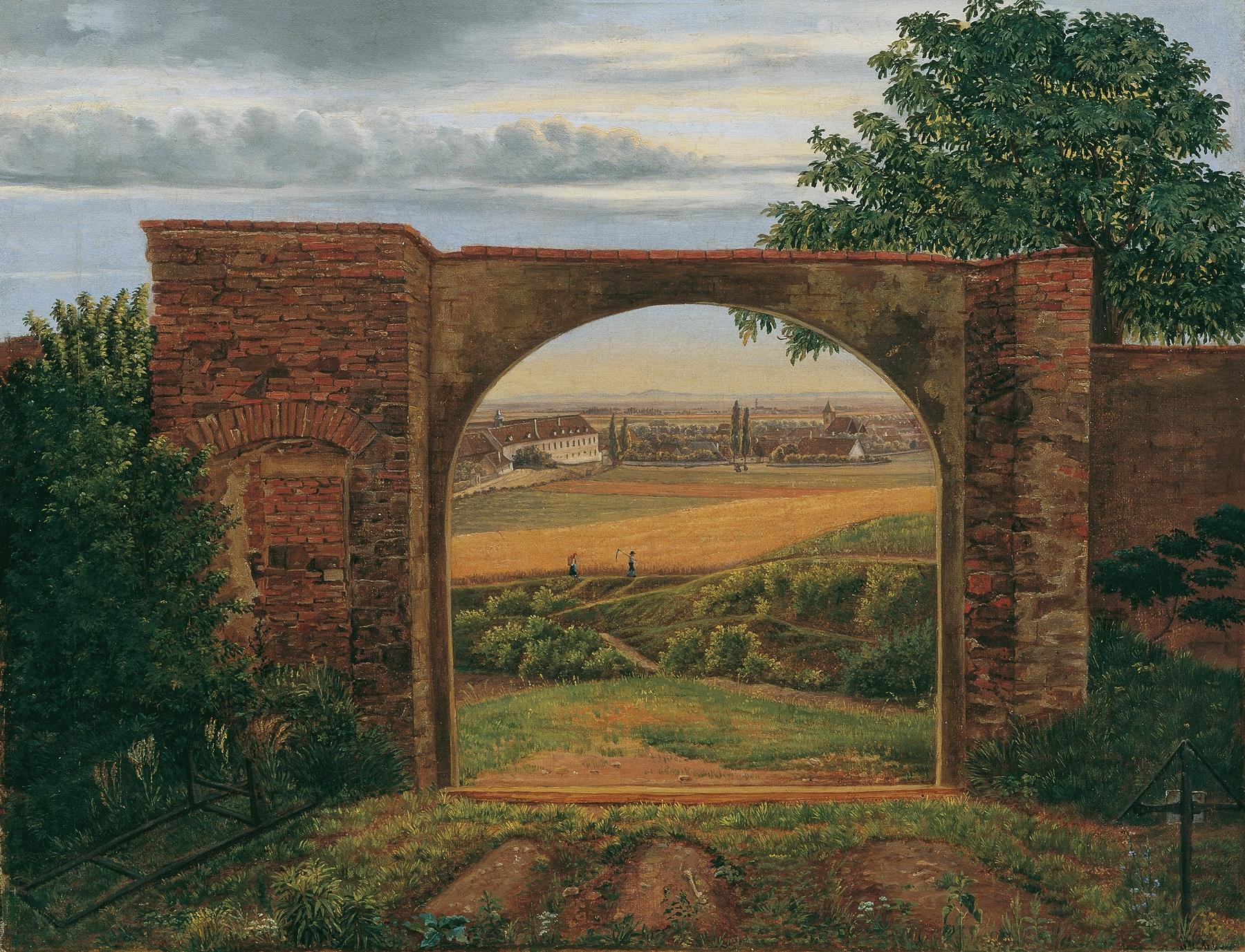
Who listens when art speaks of silence? In Die Ruine Rauhenstein bei Baden, the whispers of history and nature intertwine, inviting us into a moment steeped in both time and faith. Look to the left at the crumbling stone edifice that dominates the scene, a testament to the passage of time. Notice how the artist uses a soft, muted palette; the grays and greens blend harmoniously, evoking a sense of serenity. The gentle brushstrokes convey the texture of the ruins, while the dappled light filters through the surrounding trees, creating a play of shadow and illumination that dances over the landscape.
The composition draws the eye upwards, hinting at the remnants of a once-mighty structure, now humbled and embraced by nature. Within this peaceful decay lies a profound tension between resilience and transience. The ruins stand as a metaphor for faith amid desolation, suggesting that beauty can endure even when the tangible world fades. The half-covered stones may represent forgotten hopes, while the verdant foliage symbolizes life that perseveres, whispering to us of possibilities still hidden.
It challenges the viewer to reflect on their own encounters with faith and impermanence, urging us to listen closely to what is left unsaid. In 1825, Thomas Ender painted this piece during a pivotal moment in his career while exploring the Austrian landscape. At that time, he was deeply engaged with the Romantic movement, which emphasized the sublime beauty of nature and the human experience within it. The political changes in Europe were also influencing artists to seek solace in the familiar, often invoking themes of nostalgia and memory—elements clearly present in this evocative work.