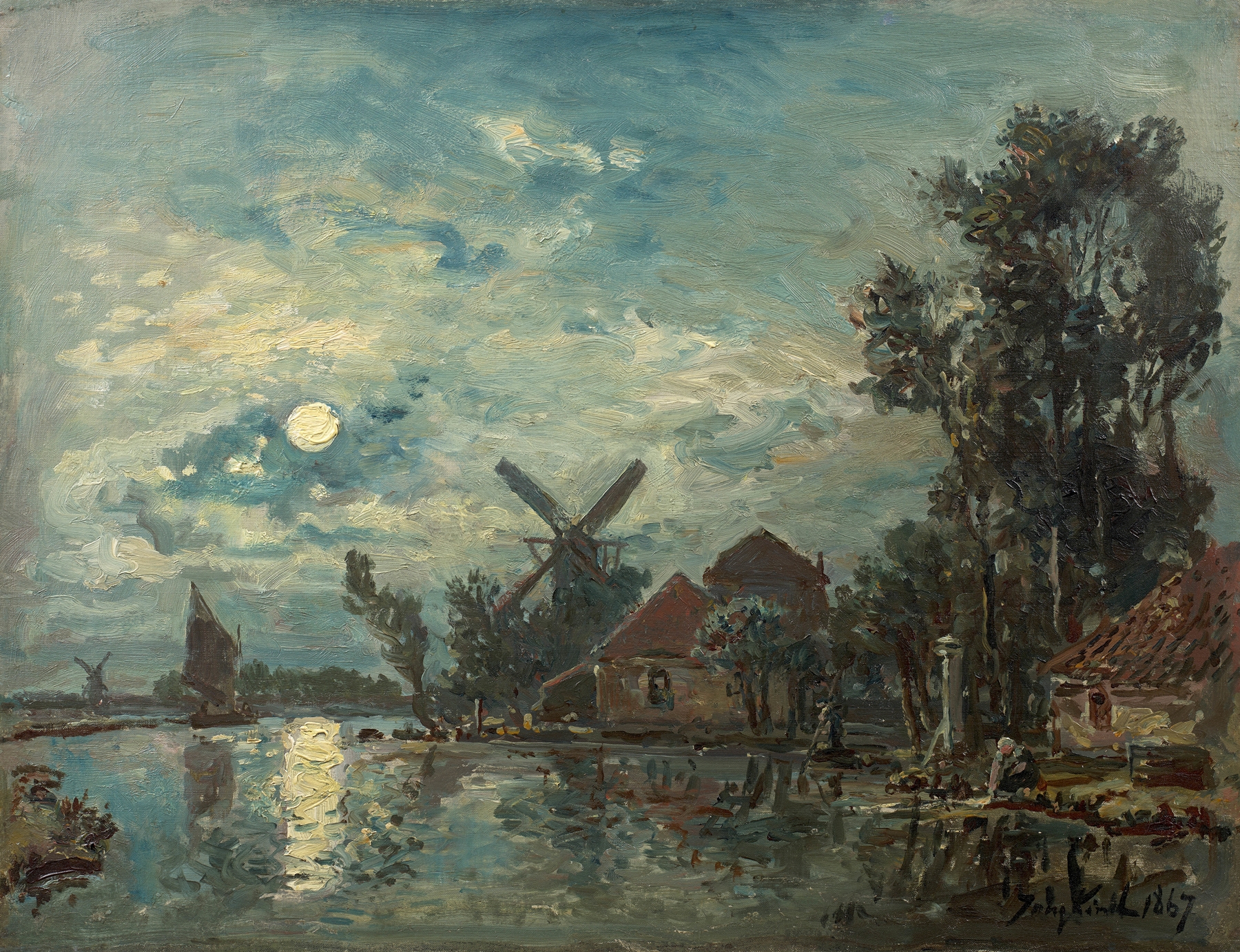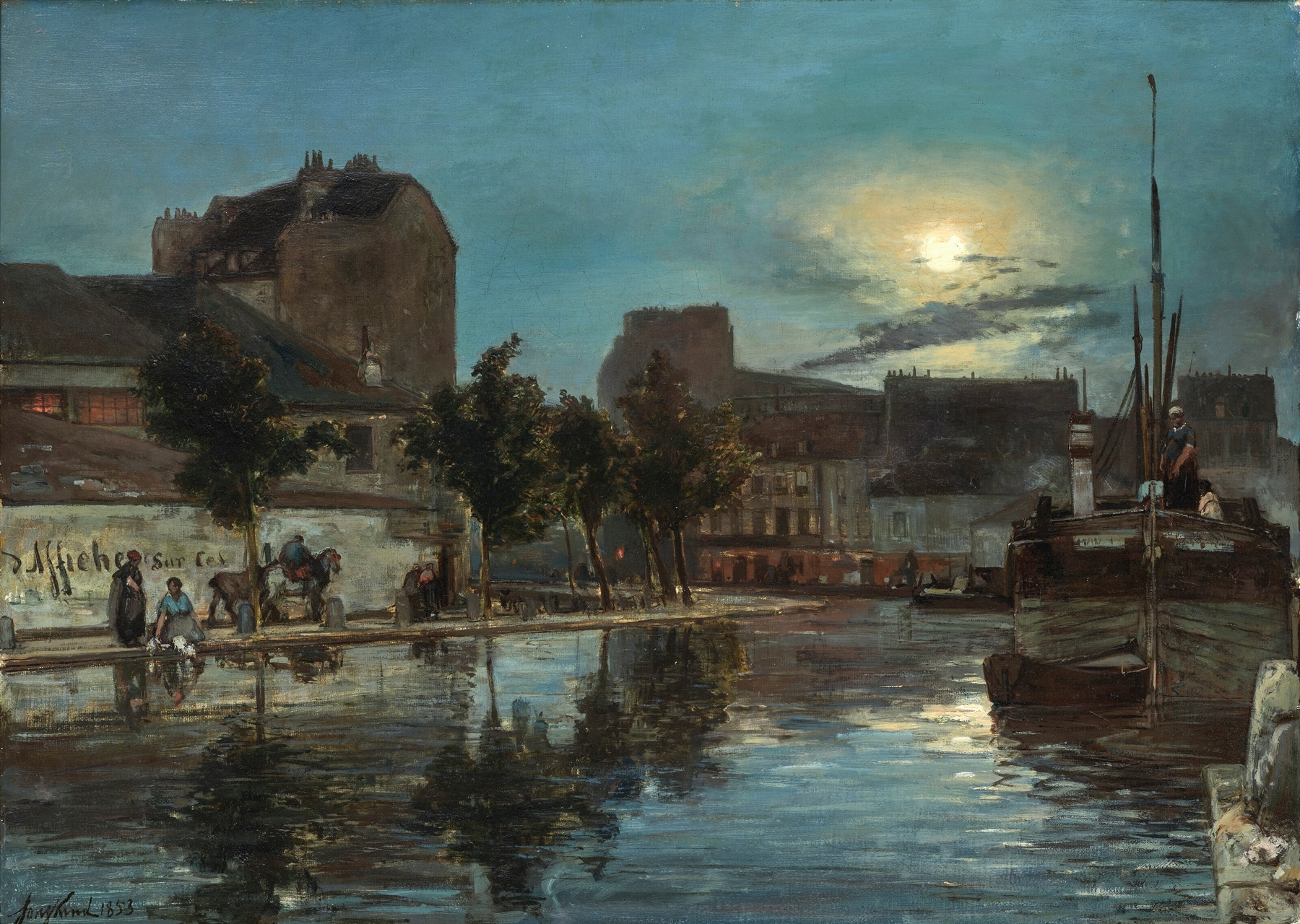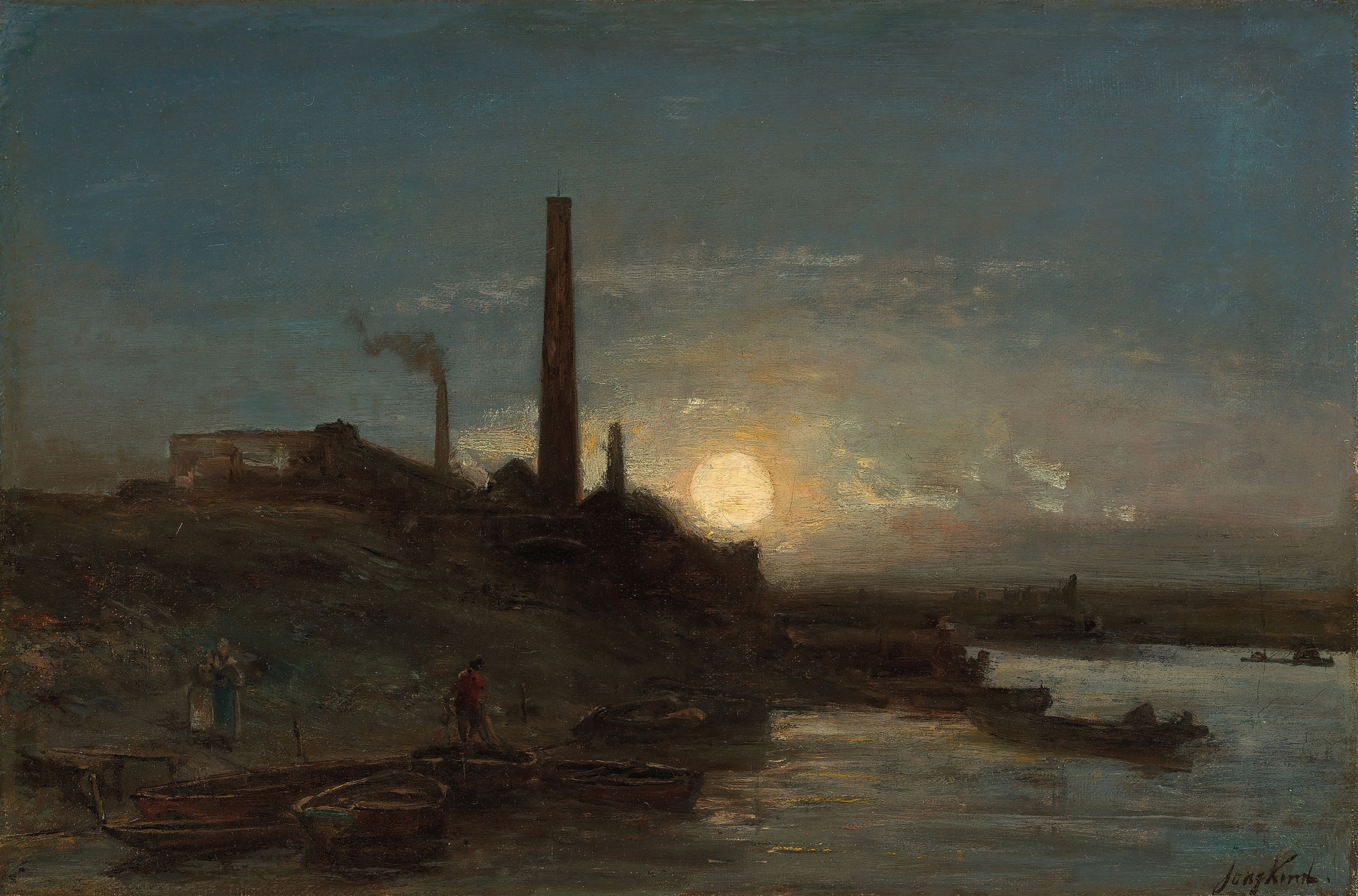
When did color learn to lie? In *Effet de lune*, the world whispers secrets in the moonlight, casting a shroud of betrayal over what seems serene. Look to the left at the deep cerulean sky, where the moon hangs like an imposter, illuminating the water below with a deceptive glow. The brushstrokes dance across the canvas, creating a shimmering reflection that ripples and blurs, suggesting a divide between reality and illusion. The gentle strokes of white and pale blue pull the viewer’s gaze across the surface of the water, inviting contemplation of the scene's tranquility and the unease lurking beneath. Beneath the calm, the interplay of light and shadow evokes a tension that speaks of hidden truths. The dark silhouettes of trees on the horizon stand in stark contrast to the ethereal glow of the moonlit water, hinting at secrets overshadowed by beauty. The artist’s deliberate choice of color, oscillating between soft pastels and bold darkness, suggests a duality—a moment of serene beauty juxtaposed against the potential for deception. In 1853, while living in France, Jongkind was at a pivotal moment in his artistic journey. Influenced by the emerging Impressionist movement, he explored the nuances of light and atmosphere, challenging traditional approaches to landscape painting. This work reflects not only his technical experimentation but also the broader shifts in the art world, as artists began to embrace the complexities of perception and emotion.