Elijah in the Desert — History & Analysis
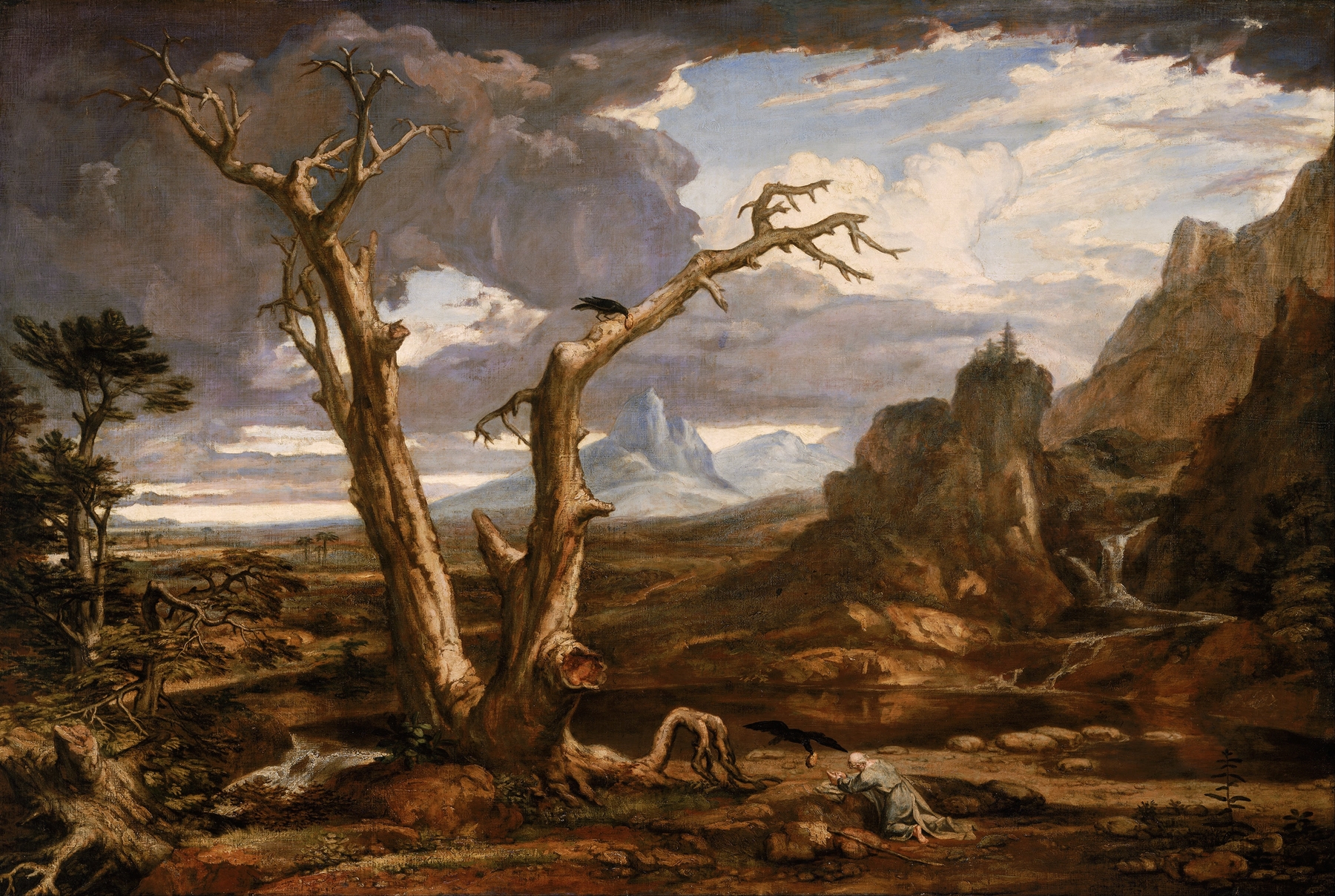
“Between color and silence, truth hides.” In the stillness of a vast desert, light trembles, coaxing forth the essence of solitude and divine connection. Here, the weight of silence resonates, beckoning introspection amidst the warmth and aridity of an endless expanse. Focus on the figure of Elijah, centrally positioned, surrounded by a magnificent play of light and shadow. The warm earth tones of the landscape encircle him, contrasting sharply with the vibrant sky, where soft hues of orange and blue intermingle.
Notice how Allston employs chiaroscuro to draw your eye towards the prophet’s contemplative expression, rendered in gentle strokes that seem to capture both his physical fatigue and spiritual yearning. Beneath the surface, the painting evokes profound themes of isolation and divine revelation. The stark desert represents both a physical and emotional landscape, waiting to be traversed. Elijah’s extended hand reaches upwards, an expression of hope amid despair, while the distant mountains loom, symbolizing obstacles that isolate him from the divine voice he seeks.
The tranquility of the scene belies a tension between despair and faith, inviting the viewer to ponder the profound struggle between human longing and divine presence. Washington Allston painted Elijah in the Desert in 1818 while living in Rome, a period marked by personal challenges and artistic exploration. As a prominent figure in American Romanticism, he sought to convey deep emotional truths through landscape and figure, drawing inspiration from both classical and contemporary themes. This work reflects not only his personal journey but also the broader artistic movement's embrace of nature as a conduit to transcendental experiences.