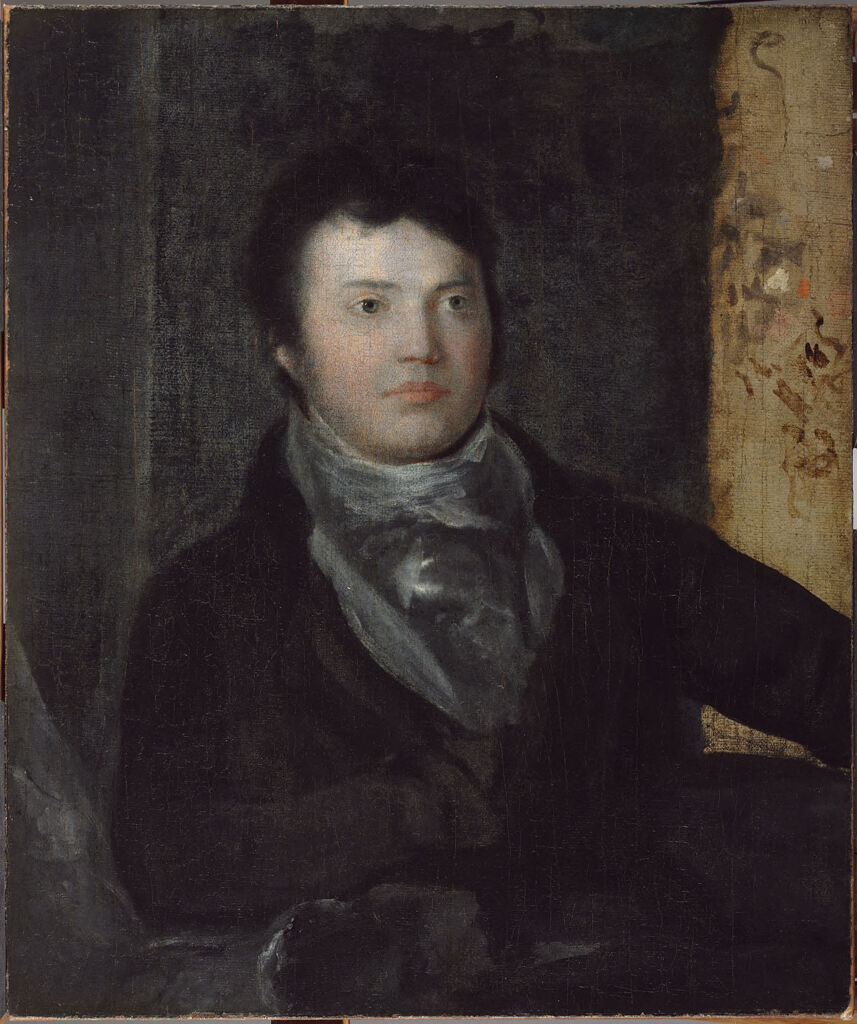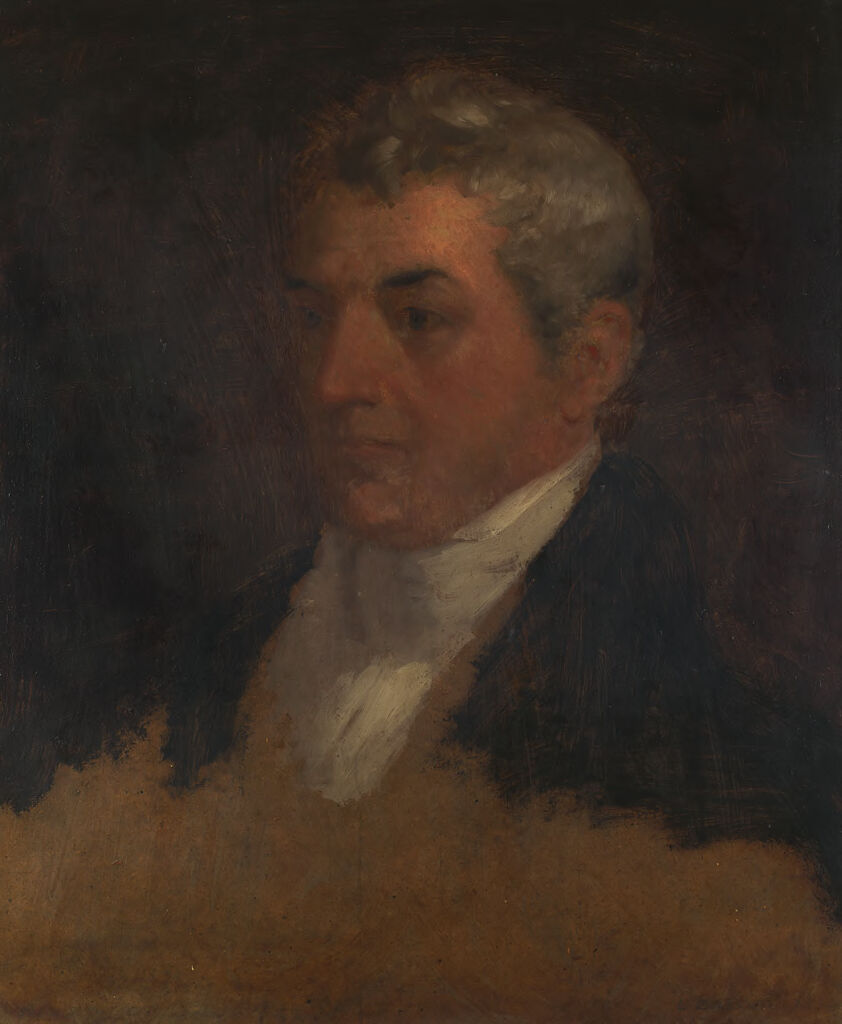
Loammi Baldwin, Jr. (1780-1838); verso: Study for Female Head — History & Analysis
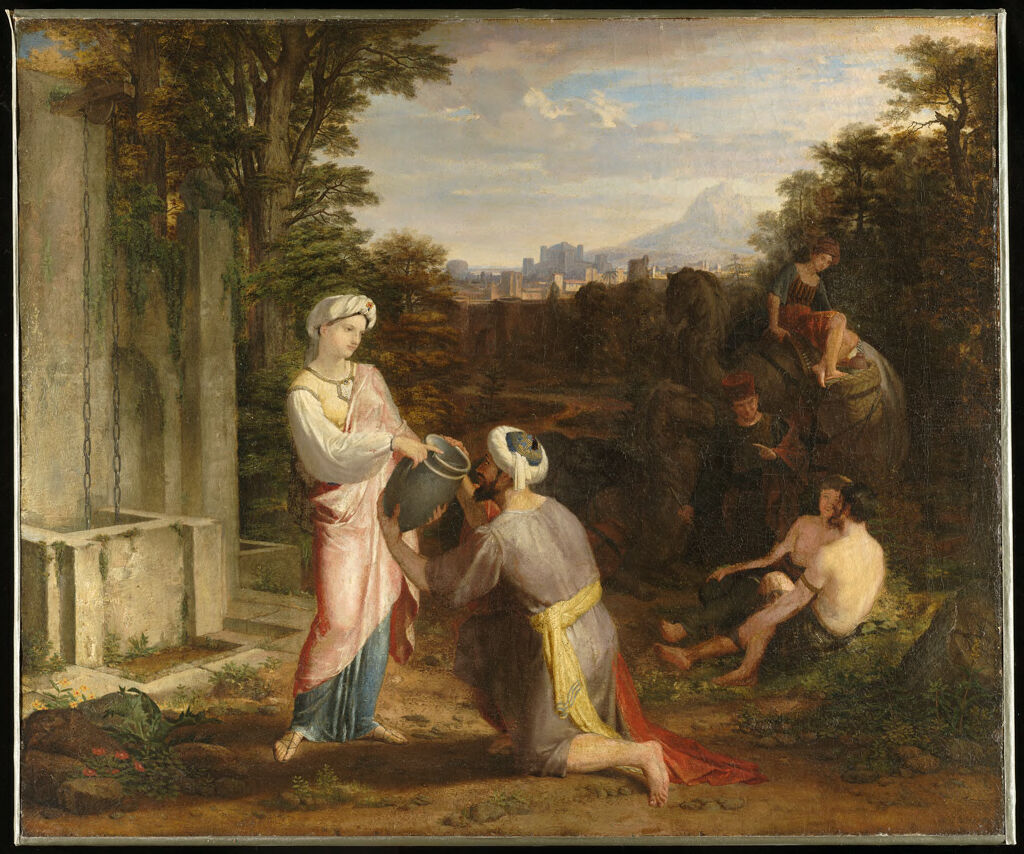
“Between color and silence, truth hides.” In the delicate brush strokes and muted tones of this study, we find a haunting reflection of madness and the human condition. The interplay between the vibrant hues and shadowy depths invites contemplation of the soul’s hidden struggles. Look to the left at the soft contours of the female head, where the artist’s careful lines craft an intimate portrait. Notice how the light falls upon her brow, illuminating the thoughtful yet troubled expression.
The subtle blend of colors enhances her ethereal quality, evoking both beauty and unease. Each stroke seems to whisper the unspoken thoughts of the subject, creating a palpable tension that draws the viewer in. Deeper meanings bubble beneath the surface, as the juxtaposition of light and shadow symbolizes the duality of sanity and madness. The way her eyes gaze into the distance captures a moment suspended between reality and the psyche's chaotic depths.
One can sense the artist's own struggles reflecting through this portrayal, hinting at the fragility of mental health amidst the creativity of artistic expression. In 1823, Washington Allston was immersed in a turbulent phase of his life, grappling with personal loss and the weight of artistic expectation. Working in Boston during a time when the American art scene was still finding its footing, he sought to balance Romantic ideals with his own observations of humanity. Loammi Baldwin, Jr. serves not only as a testament to his technical skill but also as a window into the complexities of his emotional landscape, a thoughtful meditation on the intersection of art and mental turmoil.