Parti fra Middelhavet med hvide bygninger ved kysten — History & Analysis
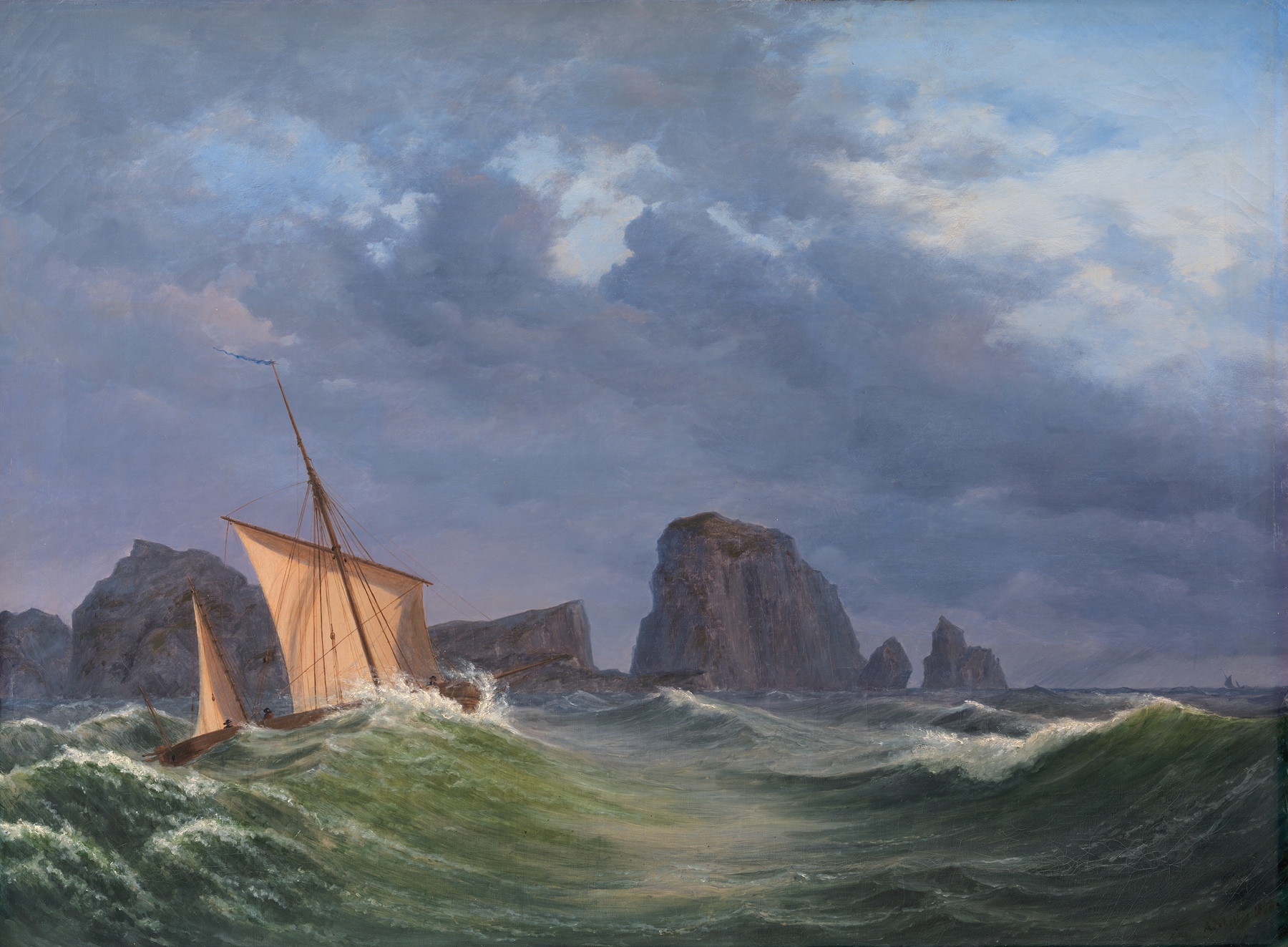
“The canvas doesn’t lie — it simply waits.” In the heart of this painting lies an unspoken fear, a haunting presence cloaked beneath the serene surface of its Mediterranean beauty. Look first to the shimmering blue waters that frame the coastal scene, where the waves roll gently against the craggy rocks. The white buildings dotting the shoreline seem to glow with an ethereal light, their starkness contrasting sharply with the deep greens of the landscape. The artist’s brushstrokes convey a meticulous detail that invites the viewer to explore every corner, yet the seemingly idyllic setting is layered with an undercurrent of unease, subtly woven into the tranquil facade.
Venture deeper into the painting, and one might sense a tension that belies the serenity: the buildings, perfectly aligned, evoke a sense of order, yet their isolation from the land conveys loneliness. The shadows cast by the structures hint at something lurking just beyond the comfort of sunlight, a reminder of vulnerability. Each brushstroke whispers of stillness, yet the viewer is left to grapple with a sense of foreboding, questioning what lies beneath the surface of such beauty.
During the creation of this artwork, the artist navigated a world of shifting artistic movements and personal struggles. Melbye, who worked in the mid-19th century, was influenced by both Romanticism and Realism, as he sought to capture the duality of nature's splendor and its inherent dangers. This painting reflects a time when artists were beginning to explore more profound emotional depths in their work, creating landscapes that engage the viewer not just visually, but also emotionally.