Evening in the Forest — History & Analysis
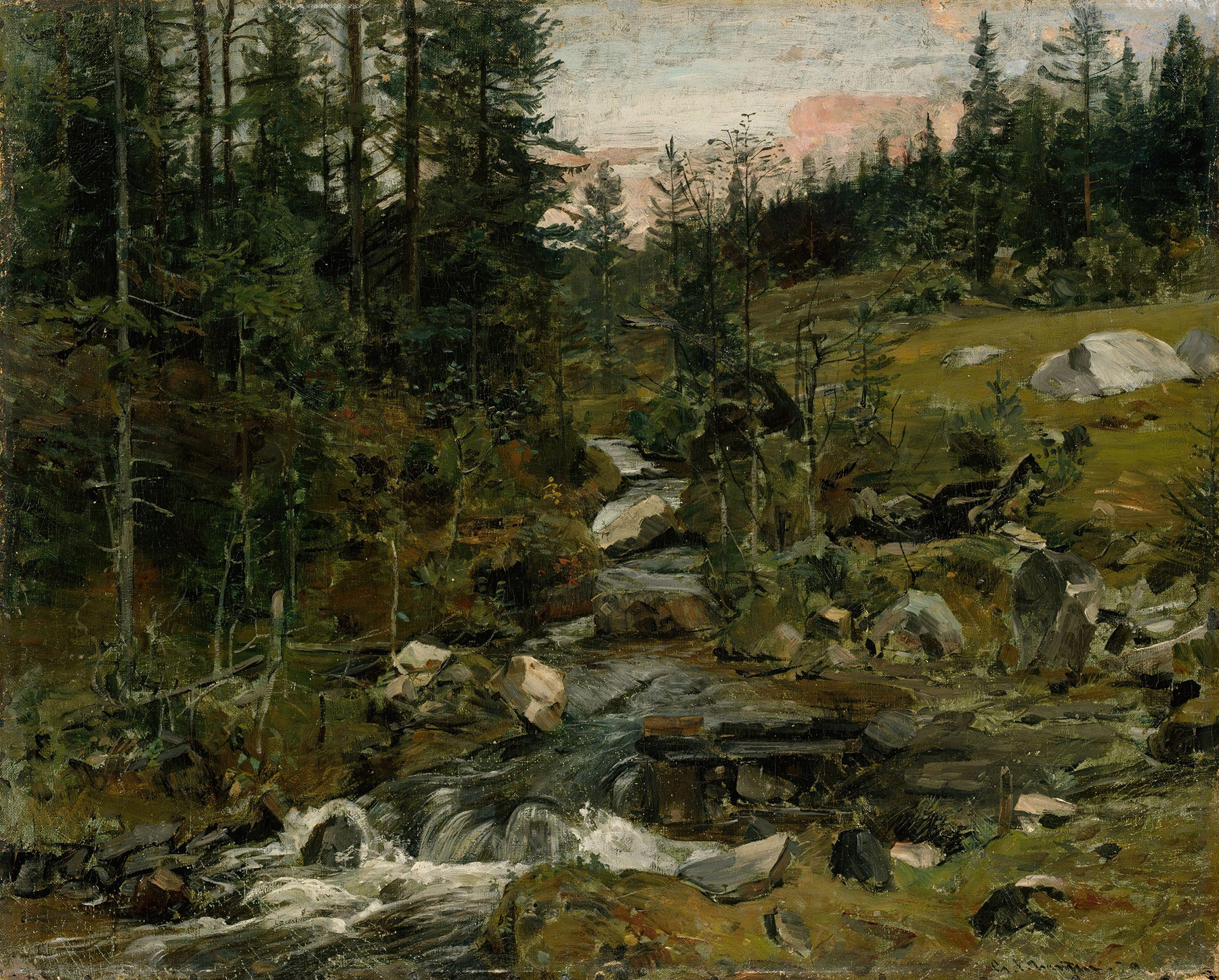
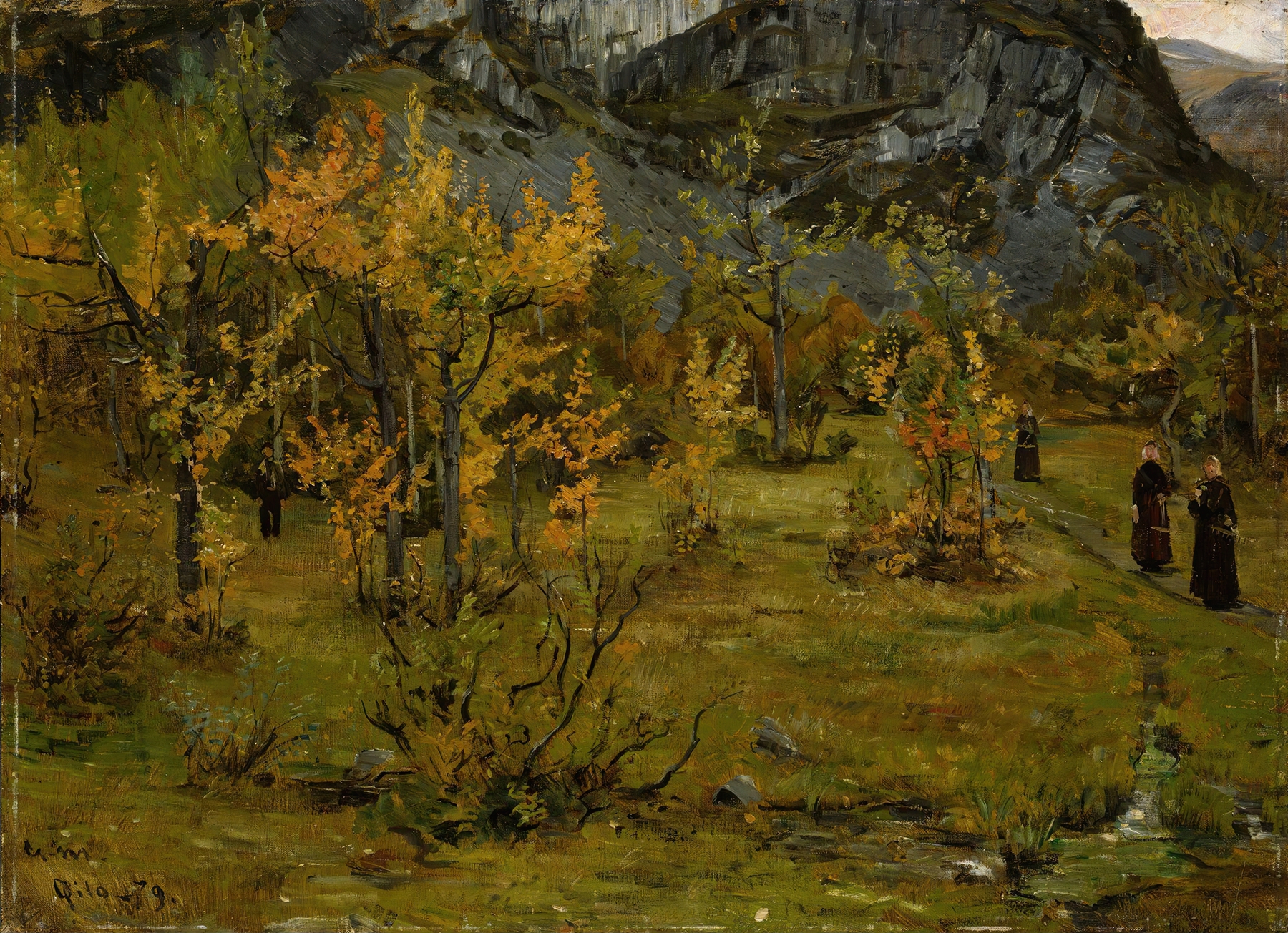
Where does light end, and longing begin? In Gerhard Munthe’s Evening in the Forest, the ethereal glow of twilight invites the viewer into a realm where nature whispers secrets and silhouettes beckon. Look to the left at the delicate interplay of pastel greens and blues that frame the scene. The trees stand tall, their trunks arching gracefully, almost as if they’re cradling the fading sun. Notice how the soft light filters through the leaves, creating a dreamlike atmosphere that contrasts with the deep shadows lurking in the underbrush.
This strategic use of color and light not only enhances the emotional depth but also envelops the viewer in a serene yet mysterious ambiance. Within this tranquil wilderness, there is an inherent tension between the warmth of the fading day and the encroaching night. The forest, teeming with life yet seemingly quiet, hints at stories yet untold. Small details, like the play of light on the ground and the subtle curves of the branches, suggest a hidden world bursting with potential revelation.
Munthe captures the essence of anticipation, where every moment in the forest feels like a prelude to something deeper, echoing the longing that resides in each of us. In 1880, Munthe was exploring themes of nature and symbolism in Norway, drawing on the burgeoning Symbolist movement. During this period, he was establishing a unique style that blended realism with emotive abstraction. The painting reflects both the personal search for beauty and the broader artistic conversations of the time, as the world was beginning to embrace a more introspective approach to visual storytelling.