
Fishing-Boats In The Channel — History & Facts
When did color learn to lie? Silence drapes over the canvas, inviting viewers to ponder the unspoken tales of the sea. Look to the right at the delicate brushstrokes that form the fishing boats, their sails catching the muted light filtering through a clouded sky. Notice how Melbye orchestrates a symphony of blues and grays, reflecting the coolness of the water and the somber mood of the scene. Each boat, tethered to the notion of livelihood, appears almost ghostly, suspended in the quiet embrace of the channel.
The horizon stretches, blurring the line between sea and sky, drawing your eye deeper into the tranquil expanse. Delve into the tiny details—the fishermen's figures, shrouded in shadow, reveal a sense of isolation and resolve. The stillness of the water contrasts sharply with the distant, unseen waves, suggesting a tension between the calm surface and the hidden depths below. It's as if time pauses, allowing the weight of their labor and the quietude of their surroundings to resonate, leaving an echo of contemplation in their stead. In 1844, Anton Melbye painted this evocative scene while living in Denmark, a period marked by a growing fascination with coastal and maritime life.
The world was evolving artistically, as romanticism intertwined with realism, and Melbye sought to capture both the beauty and the latent struggle of those who earned their living from the sea.
More Artworks by Anton Melbye

Marine med skibe på havet
Anton Melbye
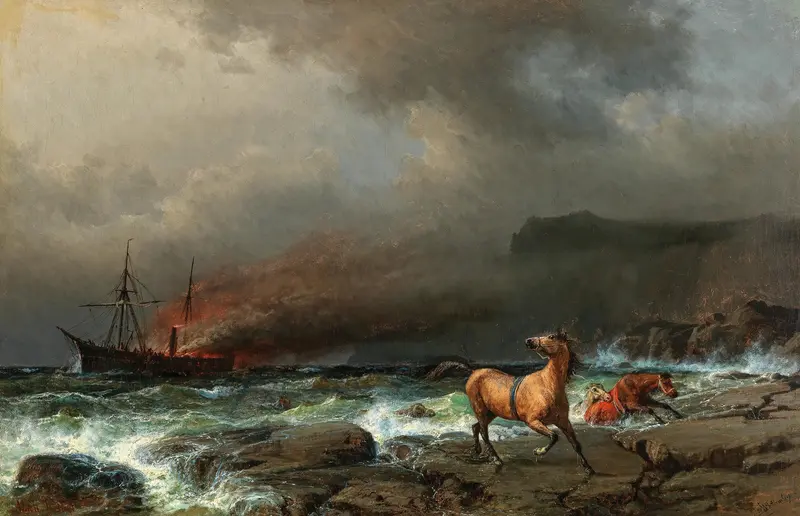
The Wreck of the Anglo Saxon
Anton Melbye
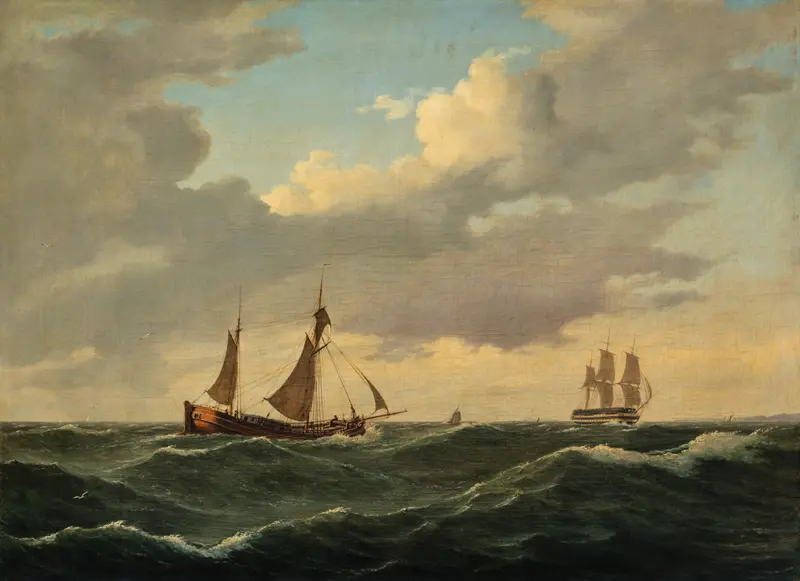
Dutch Koff And Ship Of The Line In A Moderate Breeze
Anton Melbye
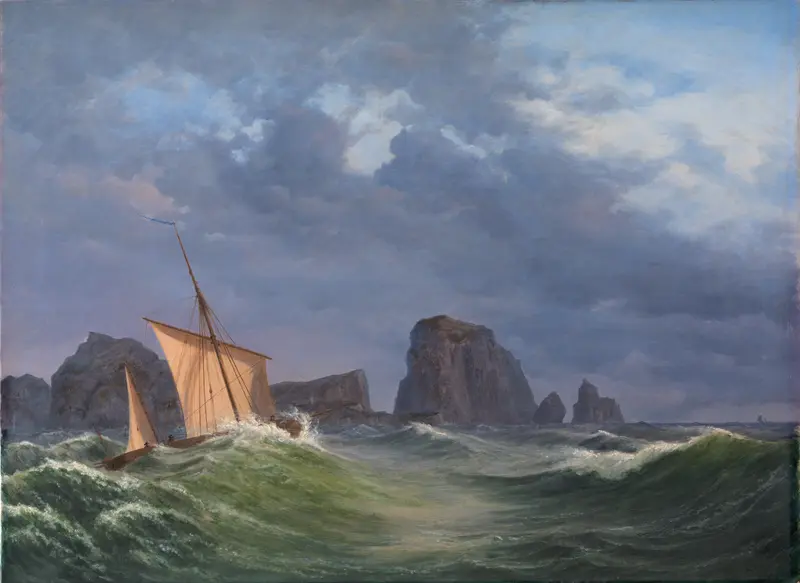
En shetlandsk fiskerbåd i stormfuldt vejr nord for Orkneyøerne
Anton Melbye
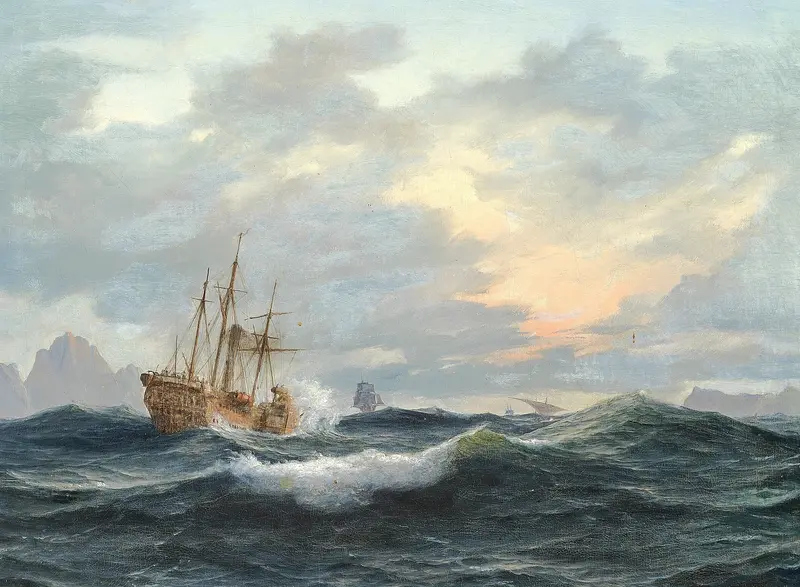
En hjuldamper og andre skibe på havet
Anton Melbye
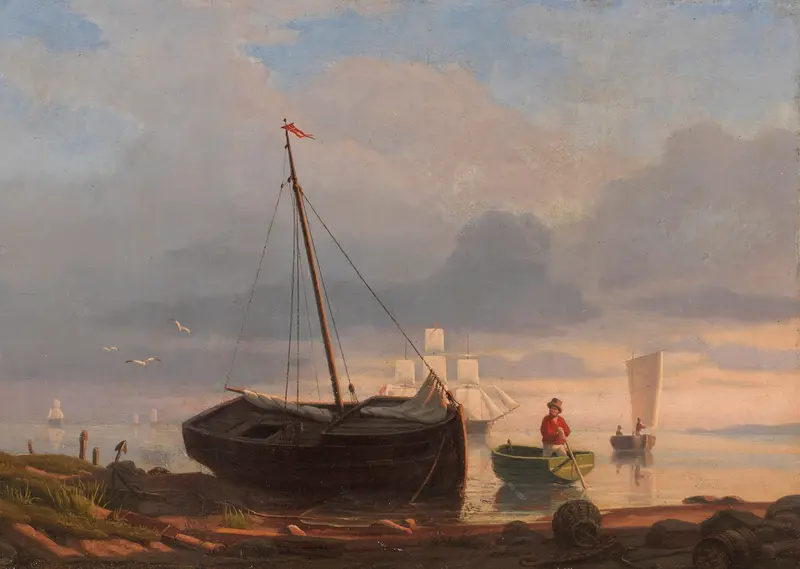
Fischerboote am Strand im Abendlicht
Anton Melbye
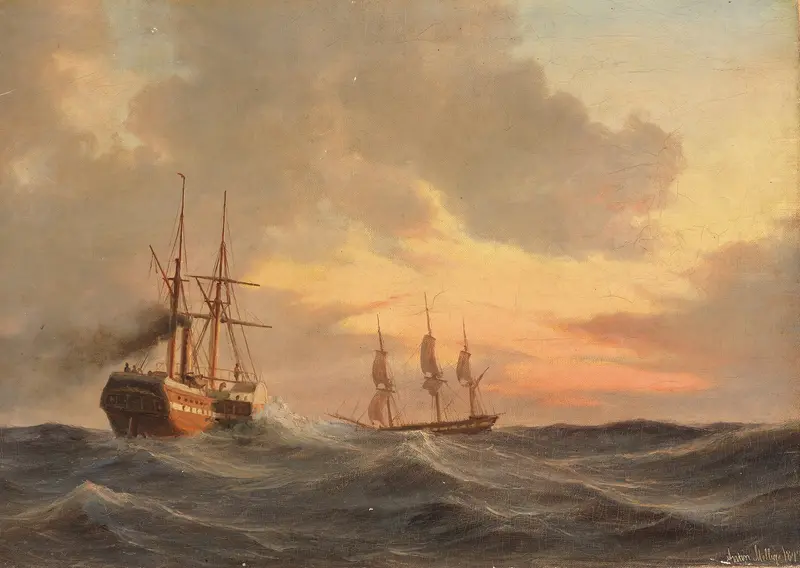
Dampfsegler und Dreimaster auf bewegter See
Anton Melbye
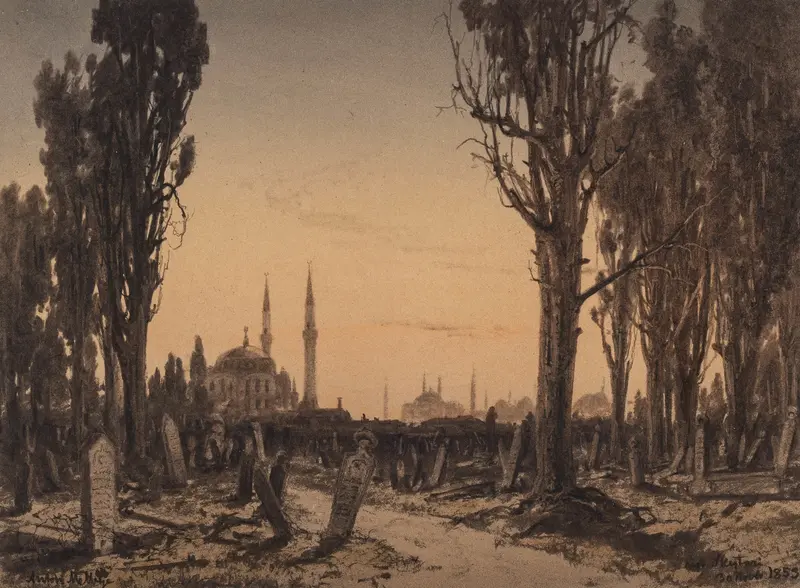
Turkish Cemetary. Scutari
Anton Melbye
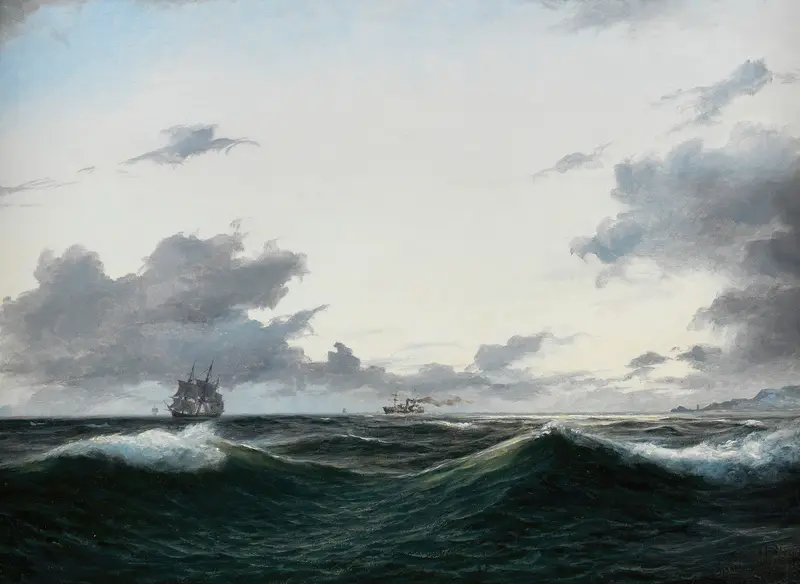
Segelschiff und besegelter Dampfer auf See vor einer Küste
Anton Melbye
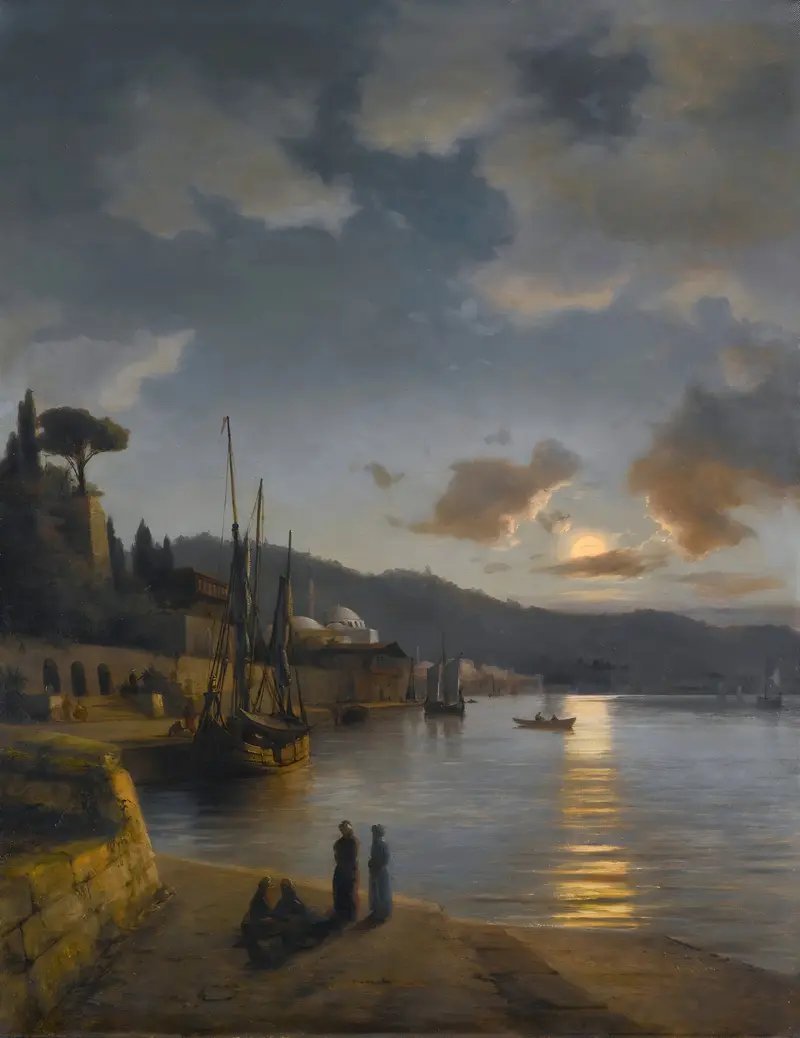
A Turkish Harbour By Moonlight
Anton Melbye





