Flower Beds, Central Park — History & Analysis
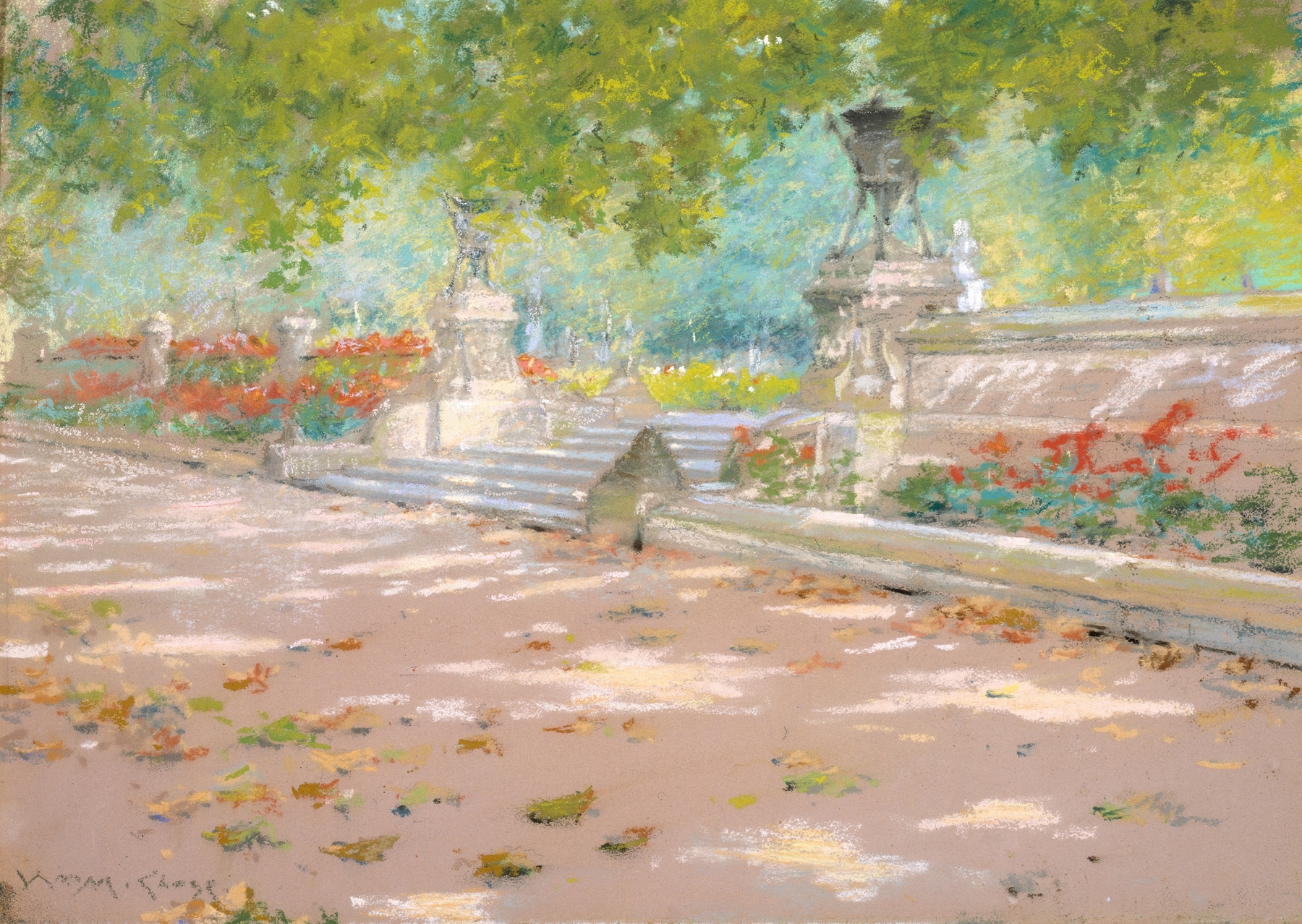
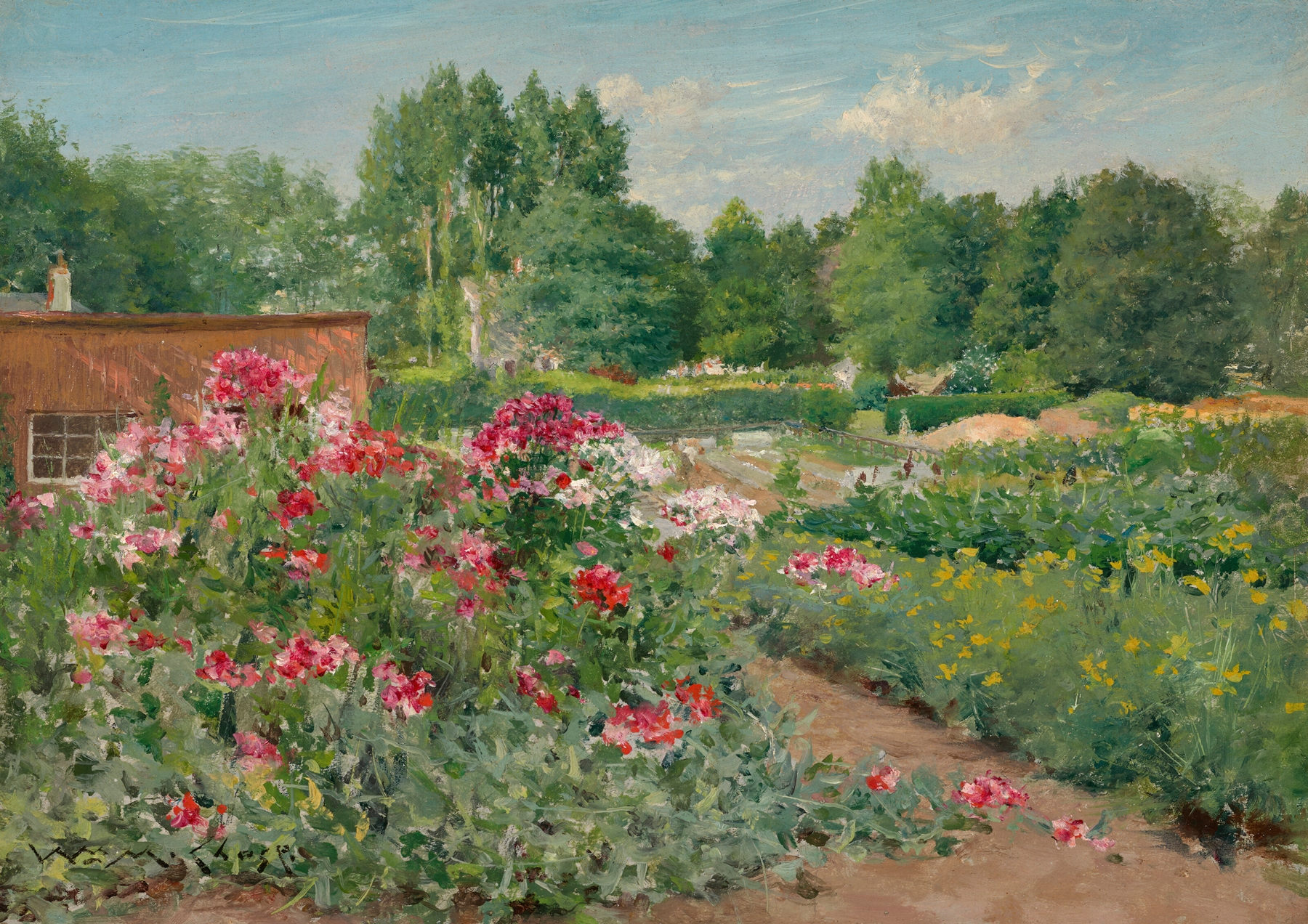
Can beauty exist without sorrow? In Flower Beds, Central Park, the answer unfolds gracefully in a vibrant tapestry of color and form, inviting you to explore the delicate balance of joy and melancholy that nature embodies. Look to the foreground, where clusters of blooming flowers burst into a riot of reds, yellows, and purples, each petal drawing the eye in a joyful dance. Notice how the light bathes the scene, casting soft shadows that suggest the fleeting nature of a perfect day.
The central composition, flanked by lush greenery, offers a serene oasis amidst the bustling world of the park, while the artist’s brushwork captures the liveliness of each flower with remarkable precision. As you study the piece further, reflect on the juxtaposition of the vibrant flora against the stillness of the surrounding park. The flowers, in their ephemeral beauty, evoke a sense of transience that speaks to the passage of time. Chase’s choice of a sun-dappled setting captures a moment of pure serenity, yet hints at the inevitable decay that accompanies such splendor, inviting viewers to ponder the spectrum of emotions that exist within nature.
In the summer of 1890, while exploring the artistic possibilities of plein air painting, the artist created this piece in New York City’s iconic Central Park. During this period, Chase was deeply influenced by the Impressionist movement, seeking to convey the immediacy of experience through light and color. The late 19th century marked a time of great transformation in American art, and Flower Beds stands as a testament to his commitment to capturing the beauty of the natural world.