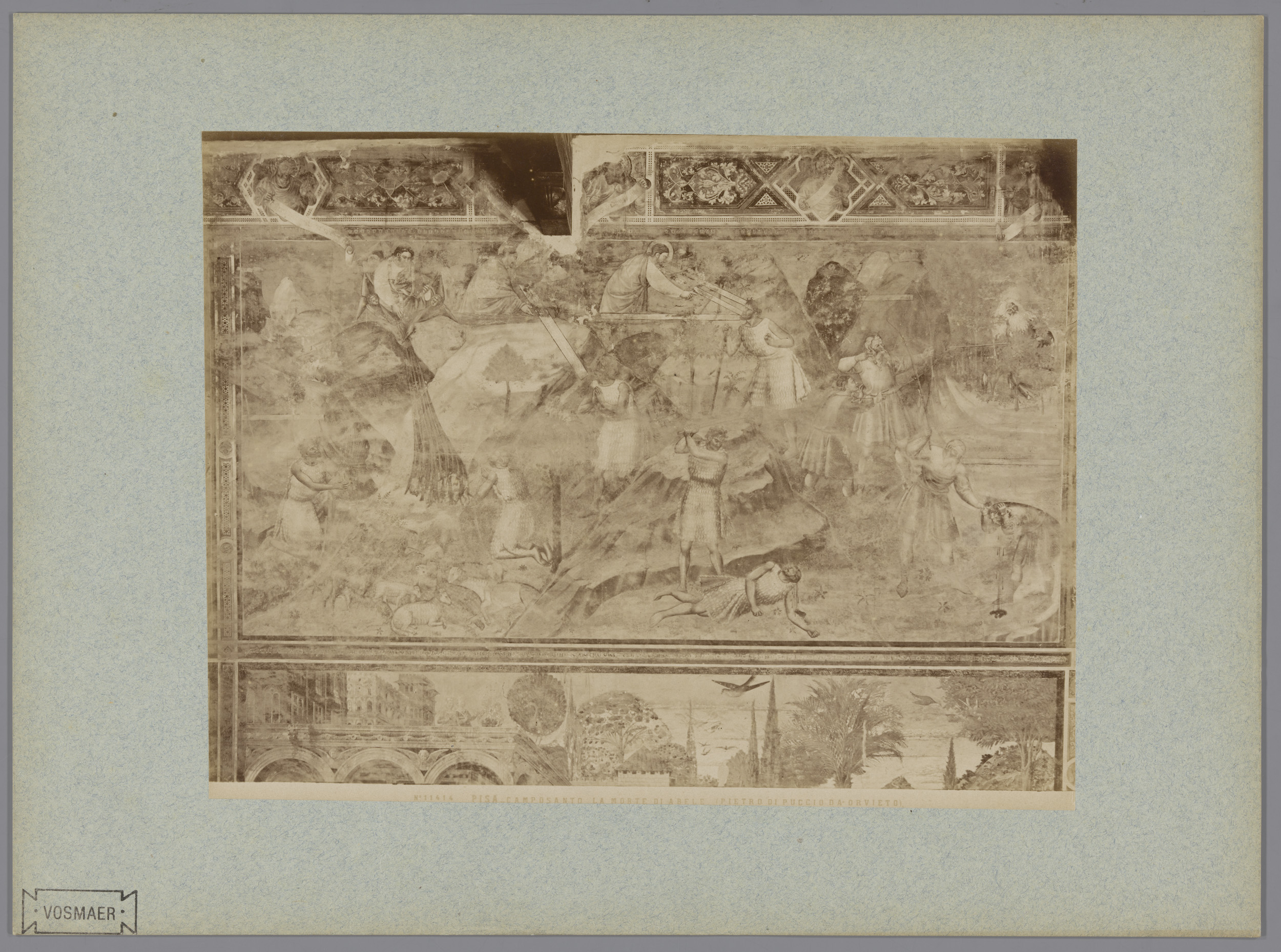
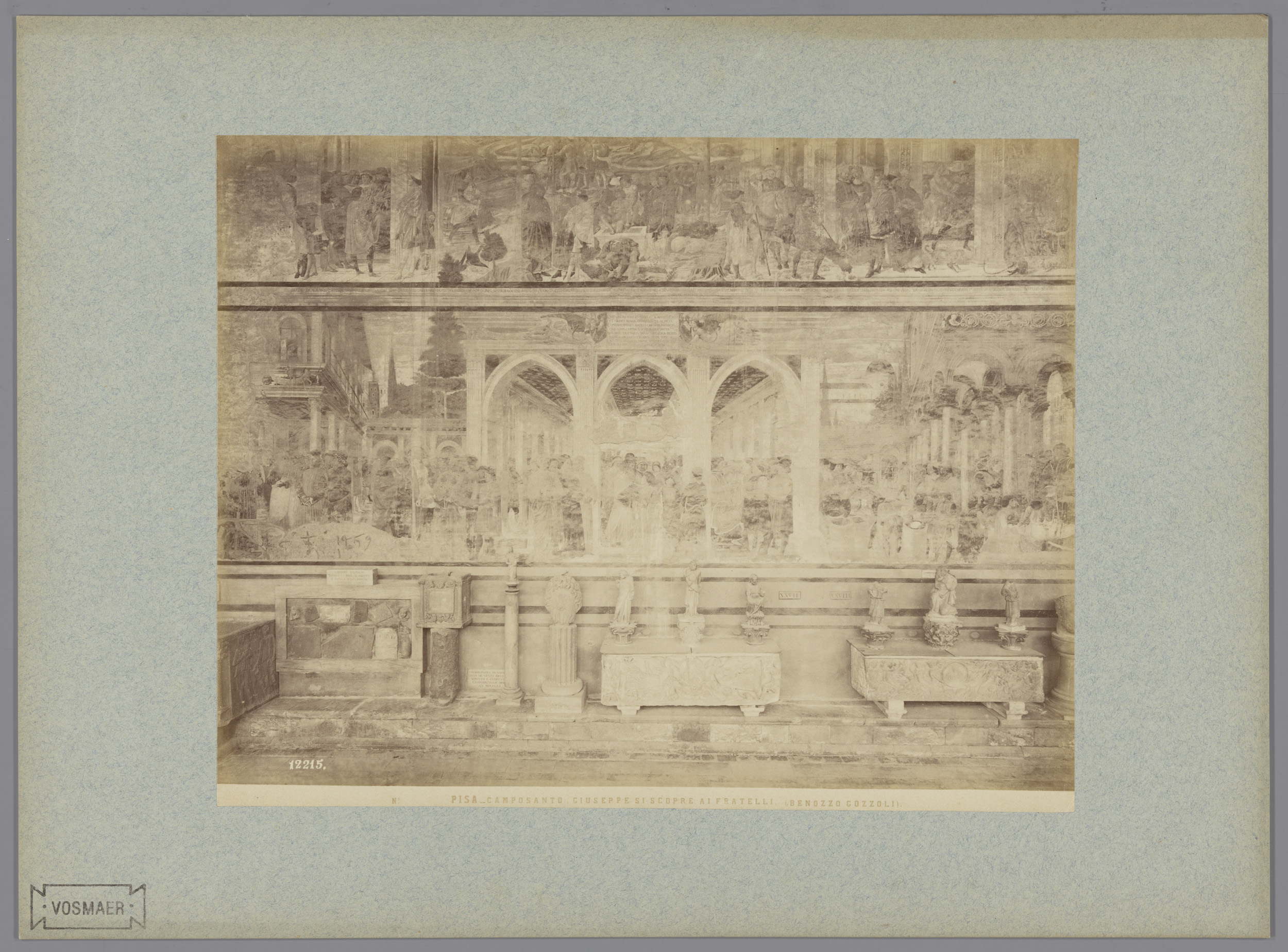
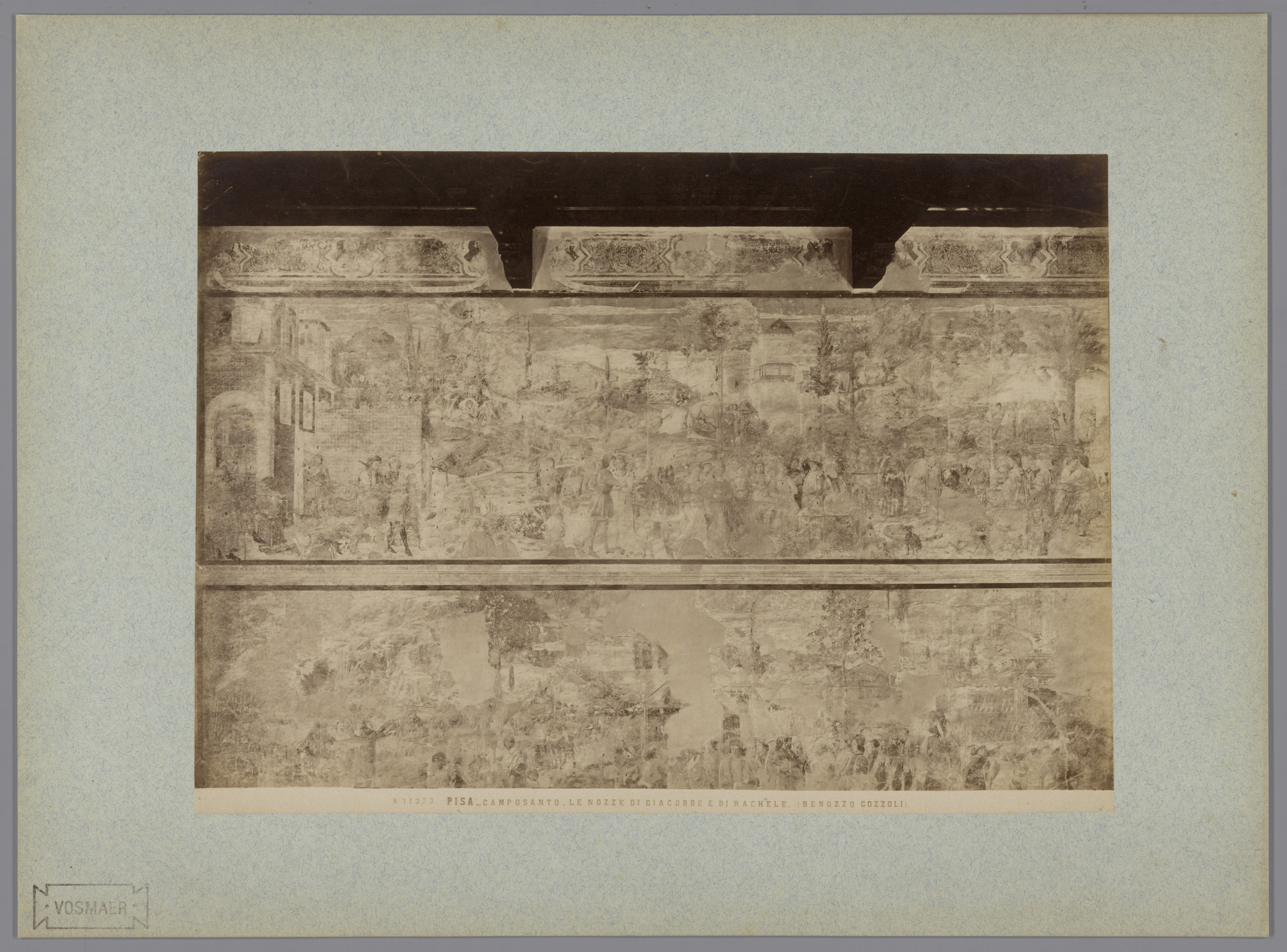
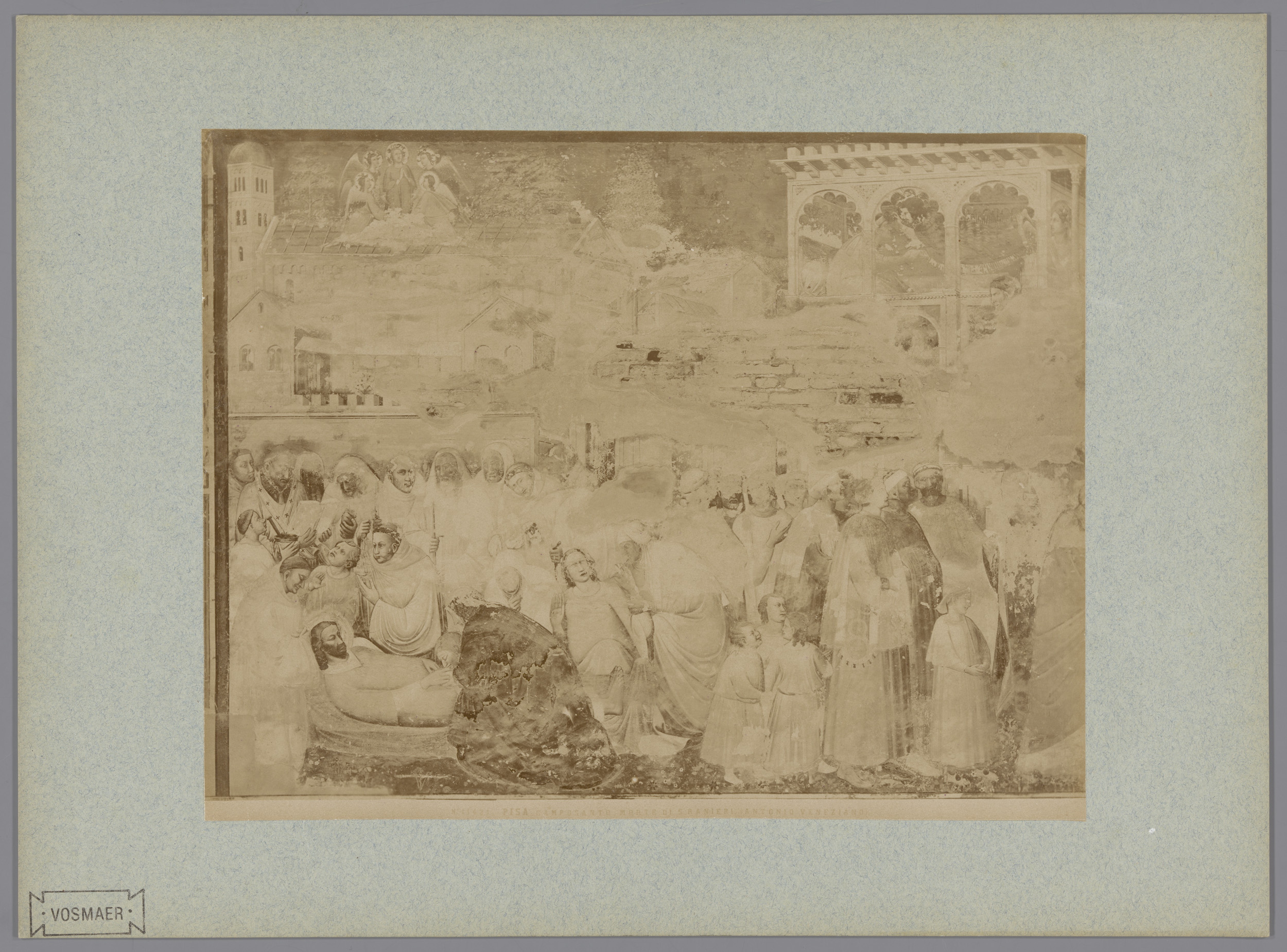
Fotoreproductie van het fresco De wonderen van S. Ranieri na zijn dood naar Antonio Veneziano in het Camposanto te Pisa, Italië — History & Analysis
“Every silence here is a confession.” Beneath the weight of history, echoes of violence linger, whispering the untold stories of those immortalized in paint. The cycle of creation and destruction is woven into the fabric of existence, forever intertwined with the beauty and chaos of life itself. Look closely at the vibrant hues that span the fresco, capturing the sacred moment of S. Ranieri. Notice how the colors radiate with an intensity that contrasts with the chilling tranquility of the scene.
The figures are rendered with meticulous care, their expressions frozen in reverence and sorrow, while the surrounding architectural elements draw the eye inward, creating a space that feels both expansive and claustrophobic. Light streams through the arches, illuminating the central figures and casting shadows that dance along the stone walls, each curve and angle leading back to the heart of the composition. Delve deeper, and you'll find the juxtaposition of divine intervention and earthly despair. The saints stand resolute, yet their serene faces are countered by the visceral tension of the narrative unfolding around them. Each gesture—raised hands, bowed heads—tells a story of conflict, of grappling with faith amid suffering.
The juxtaposition of the lush scenery against the somber undertones hints at the duality of existence: beauty amidst tragedy. Fratelli Alinari created this photographic reproduction between 1857 and 1900 in Italy, during a time when the significance of visual storytelling in art was being redefined. As the influence of the Romantic movement began to wane, his work preserved the legacies of earlier masters while reflecting the growing interest in realism and historical narrative. The world was on the cusp of change, and Alinari's capture of this fresco stands as a testament to both the past and the evolving dialogue of art.