Fotoreproductie van het fresco Het laatste oordeel naar Andrea di Cione, genaamd Orcagna, in het Camposanto te Pisa, Italië — History & Analysis
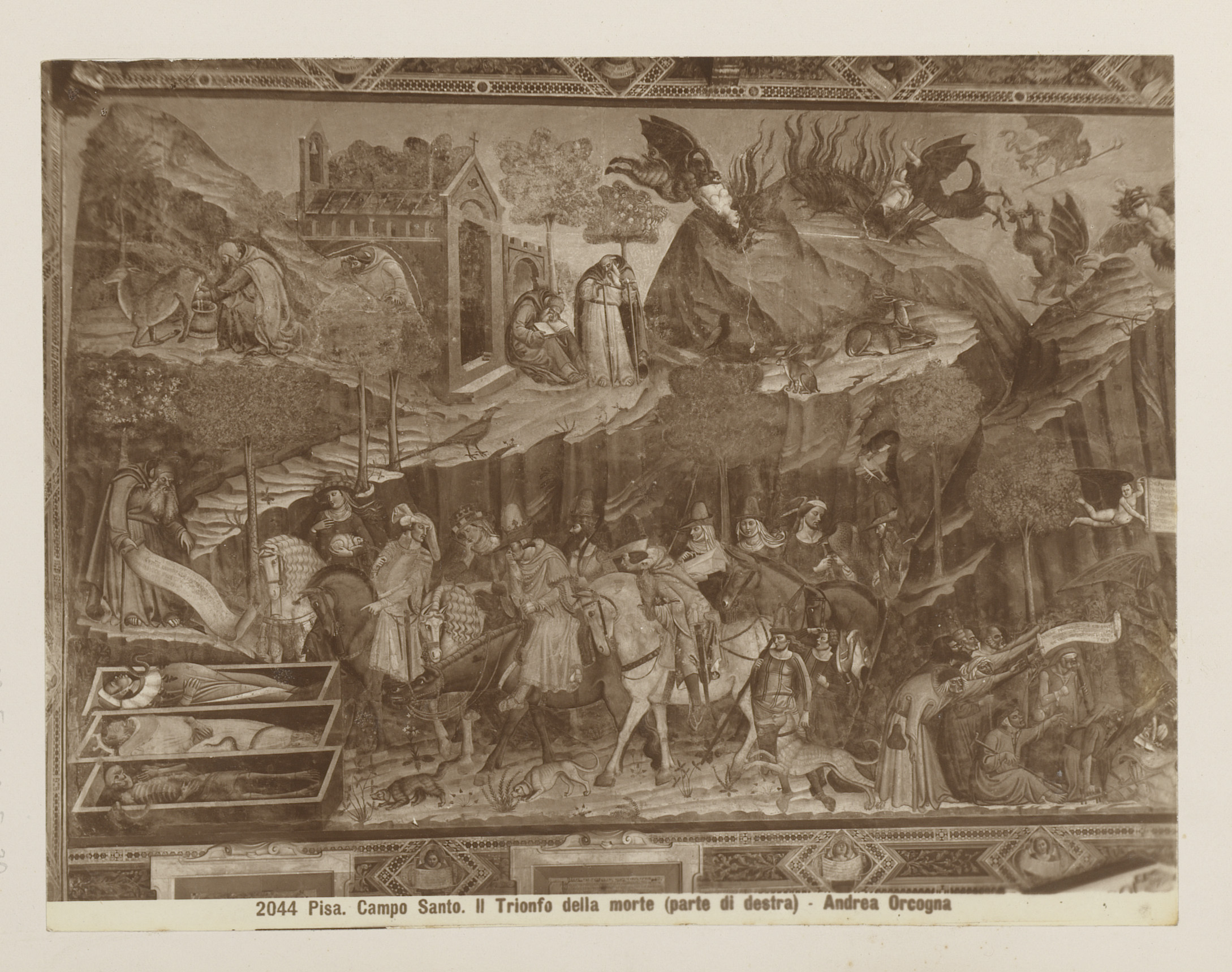
“Art reveals the soul when the world turns away.” In a realm where fleeting moments are often lost, the act of creation stands as a testament to our yearning for permanence. Through this photographic reproduction, we glimpse the profound depth that art can convey, reminding us that beauty and truth persist beyond the shadows of time. Look closely at the intricacies captured in this reproduction, where every detail of Het laatste oordeel emerges with clarity. Focus on the figures, meticulously arranged in a celestial narrative that unfolds across the space, their postures and expressions conveying a spectrum of emotions.
The vibrant colors echo the original fresco’s vibrancy, despite being confined to the medium of photography—Giacomo Brogi masterfully captures the interplay of light and shadow, allowing viewers to appreciate the textures and contours of Orcagna’s work in a new dimension. The contrast between the divine and the earthly resonates throughout this piece. The angels, with their ethereal forms, juxtapose the weight of the human figures, who grapple with their destinies. In every face, one can find a story—a blend of despair, hope, and redemption, reflecting the universal struggle for salvation.
This tension reveals not only the power of the original fresco but also Brogi's ability to immortalize its impact through his lens, bringing forth a dialogue about faith and existence. Between 1860 and 1881, Brogi meticulously documented significant works of art across Italy, including this fresco housed in the Camposanto in Pisa. His work emerged during a period when photography was establishing itself as an art form, challenging traditional notions of representation. Through this reproduction, he contributed to a cultural movement that sought to preserve the essence of masterpieces, ensuring that even as the world around them changed, the spirit of creation would endure.